03The buyer's guide
The four essentials, in buying order
1. A paddle — the only item that changes how the game feels
Buy this first and spend the most here, because it is the single piece of gear with a direct line to how the ball comes off your hand. Everything else on this list protects you, feeds you balls or carries your stuff.
What decides a good first paddle is not the brand or the face material. It is weight (mid-weight, roughly 7.8—8.4 oz, is the safe default: enough mass to be stable, not enough to hurt your arm) and shape (a wide-body face has the biggest sweet spot, which is what forgives the off-center hits that make up most of a beginner's contact). Core thickness matters next — 16mm is softer and kinder to an elbow than 13mm.
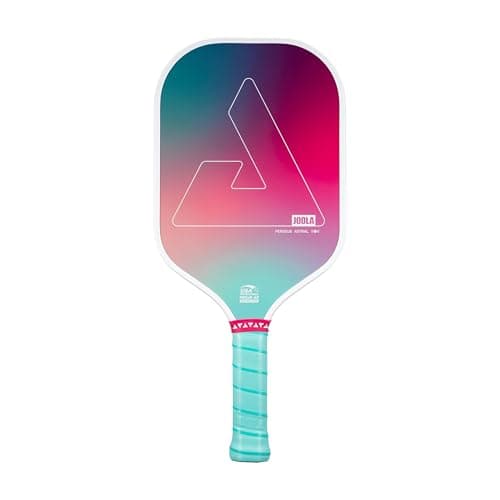
Our pick is the JOOLA Astral Perseus, which tops best pickleball paddles for beginners: light enough that a new wrist is not fighting it, a big forgiving sweet spot, and a real brand behind it so parts, warranty and resale all exist. Its honest cons are real — a committed player out-grows the lower-end power within a season, and the sandblasted face has less bite than heavily textured premium carbon. Do not buy the paddle a favorite pro uses; those are elongated power or control paddles tuned for a developed stroke and they feel unforgiving in a new hand, which is the argument in should you buy the paddle the pros use.
Budget guidance, in brackets rather than numbers that go stale: sub-$50 paddles are almost all fiberglass over a thin polymer core and are perfectly good to learn on. The next tier up buys a thicker core and often a raw-carbon face, which is where control and arm comfort genuinely improve. Above that you are paying for thermoformed construction and pro branding that a day-one player cannot use. Full breakdown in how much to spend on a pickleball paddle.
2. Court shoes — the cheapest injury prevention in the sport
This is second only because the paddle is the thing you cannot borrow. In terms of consequence it is arguably first, and it is the one item on this list where we will tell you flatly that the thing you already own is wrong.
Do not play in running shoes. Running shoes have a tall, soft, cushioned heel built to drive you forward in a straight line. Pickleball is played sideways — quick lateral cuts, hard stops, pivots in a small box — and a tall soft sole rolls under you exactly when you plant to change direction. That is the most common way new players turn an ankle, and it is a design mismatch rather than bad luck. A cheap court shoe is safer here than an expensive running shoe.
A court shoe (tennis, volleyball or pickleball-specific) sits lower and flatter, has a wider base, a supportive midfoot cage, and a non-marking outsole. Two specs are worth checking before you buy: a named shank (a TPU or nylon plate in the waist of the shoe that stops it twisting — if the listing names it, the maker is standing behind it), and non-marking, which many indoor venues require as a condition of entry and which is inconsistently published even within a single model.
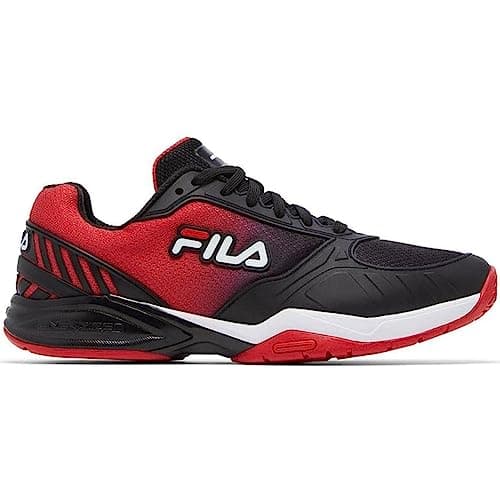
Our pick is the Fila Volley Zone, the cheapest shoe we rank that publishes a TPU midfoot shank, an Energized EVA midsole and a herringbone outsole. Its honest con is specific and matters: the men's listing makes no non-marking claim while the women's does, so if your gym enforces that rule, buy the women's cut or a shoe that puts it in writing. Alternatives and the full criteria are in best pickleball shoes for beginners, and the case for the category at all is in do you need pickleball shoes?
3. Balls — and the one fork that actually matters
Cheap, consumable, and the item people get wrong most often, because indoor and outdoor pickleballs are genuinely different balls and not marketing variants.
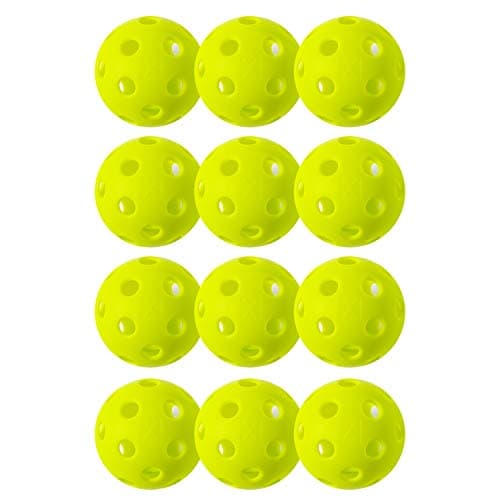
Outdoor balls have more, smaller holes (40 is standard) and a harder, heavier shell to cut through wind and survive abrasive concrete. Indoor balls have fewer, larger holes (26 is standard) and a softer shell, which is quieter, easier on the arm and better behaved on a gym floor. Use an indoor ball outside and the wind takes it; use an outdoor ball inside and it is loud and skittish.
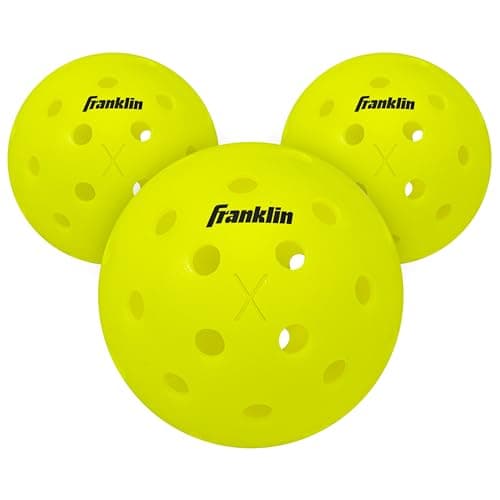
Our picks are both Franklin, which is not brand loyalty — it is that Franklin owns this category outright. The X-40 is the official ball of USA Pickleball and of the US Open Pickleball Championships, so if your league plays outdoors there is a strong chance it is already the ball in the tube. The X-26 is its indoor equivalent in a 12-pack. Honest cons: the X-40 is a hard ball and will crack in genuine cold like every outdoor ball, and buying singles instead of a tube is poor value. Check what your league mandates before stocking up. The full comparison is in indoor vs outdoor pickleball balls and the ranked fields are in best outdoor pickleballs and best indoor pickleballs.
4. A bag — once there is something to carry
Fourth because it is the first item that is genuinely optional on day one and genuinely useful by week three. A paddle loose in a tote gets its edge guard knocked and its face scuffed, and once you own a paddle, shoes, a tube of balls, water and a phone, a pocket for each stops the pre-game scramble.
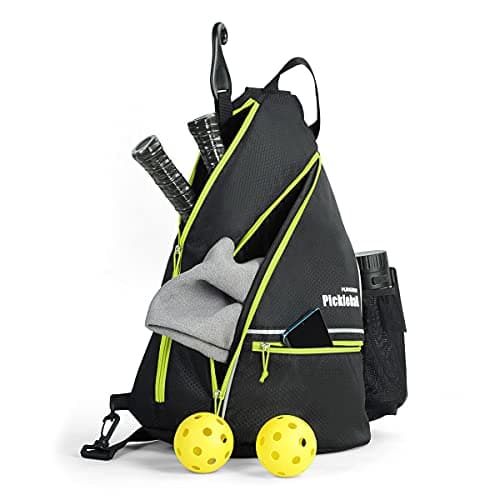
What decides a good one is simple: a dedicated paddle sleeve (so the face is not rubbing against shoes), a vented shoe compartment if you carry court shoes, and a fit for a 22—25 cm paddle. You do not need a tournament bag.
Our budget pick is the Mangrove Pickleball Backpack, which is the cheapest bag we rank that still carries paddles properly. Honest con: at this price the materials and zips are not built for daily club use, and a serious player will replace it. If you already know you are playing several times a week, skip a tier — best pickleball backpacks and how to choose a pickleball bag cover the field, and what to pack in your bag is the packing list.
The three that can wait — and when they stop waiting
An overgrip, once your hands tell you
Not day-one equipment, but the cheapest meaningful upgrade in the sport and the one we would actually push you toward early. A paddle's factory grip gets slick with sweat and wears smooth, and a slipping paddle makes you squeeze harder, which is a direct route to a sore forearm.
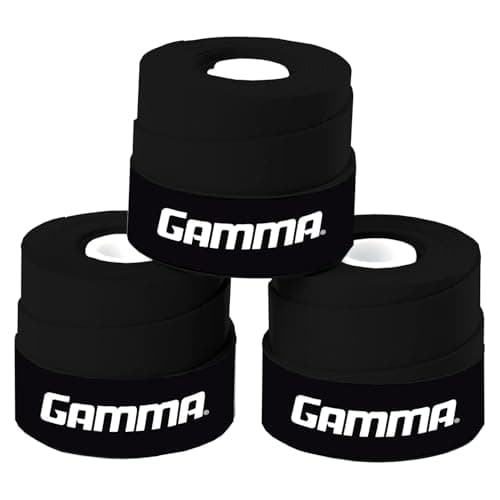
An overgrip wraps over the existing grip — it adds tack, absorbs sweat, and adds about 1/16 in to the circumference, which is also the cheapest way to make a slightly-too-small grip fit. Our pick is the GAMMA Supreme Overgrip, and the honest con is that it is a consumable: a regular player replaces it every few weeks, so treat it as an ongoing small cost rather than a purchase. Whether you need one at all is argued honestly in do you need an overgrip?, and the ranked field is in best pickleball overgrips.
A net — only if there is no court near you
This is the single biggest line item on the whole list and for most people it is money that never needed spending. The overwhelming majority of players use public, school or club courts that already have nets. Buy a net only if you intend to play in a driveway, a cul-de-sac, a park with no net, or a gym you rent.
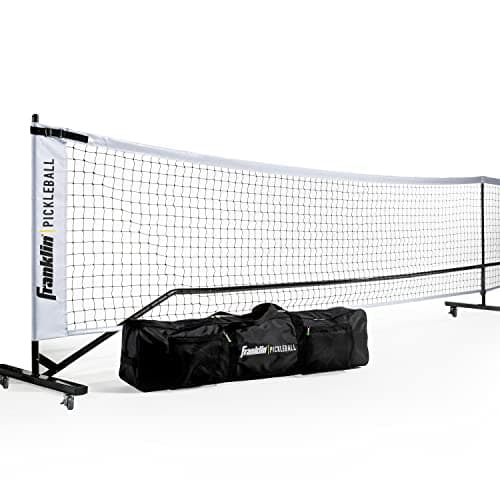
If you do, the specs that matter are regulation height (36 in at the sidelines dipping to 34 in at the center), a steel frame rather than fiberglass, and a width that matches your space. Our pick is the Franklin Portable Net, which tops best portable pickleball nets. Honest cons: it is heavy, the wheels are what make that tolerable, and setup is a genuine two-person job the first time. Measure before you buy — what size net do you need and pickleball court dimensions have the numbers, and backyard court setup is the whole project if that is where this is heading.
Eye protection, if you are honest about the risk
Genuinely optional and genuinely worth thinking about rather than dismissing. Pickleball is played with four people inside a small box swinging solid paddles at a hard plastic ball, and eye injuries in the sport are documented and permanent when they happen. It is not on the essentials list because the base rate is low; it is on this list because the downside is not recoverable.
If you wear glasses, the practical option is an over-the-glasses safety pair rather than sports goggles. The argument in full, without scaremongering, is in do you need pickleball glasses? and the ranked field is in best pickleball glasses.
The four things beginners buy first — and should not
This is the useful half of an equipment list and most of them leave it out. Every item here is a real product that solves a real problem, and none of those problems belongs to someone who has played for three weeks.
- A ball machine. The most expensive mistake available. A machine feeds you a repeatable ball, which is only valuable once you have a repeatable swing to groove against it. Before then it drills in whatever you are already doing wrong. A wall is free and better — see rebounder vs a wall and how to practice alone.
- An elbow brace, bought preventively. A brace treats a condition. If you do not have pickleball elbow, it does nothing, and the actual preventive measures are a lighter paddle, a thicker core and a grip that fits — all covered in pickleball elbow and paddles for tennis elbow.
- A second "backup" paddle. Paddles do not break mid-season; they fade over many months. A duplicate of a paddle you will out-grow is the one purchase here with no upside at all.
- A court marking kit, for a court you have not measured. Real equipment for a real job, but buy the tape measure first. Permanent options are permanent — the honest version of that decision is in best court marking kits.
The pattern is worth naming, because it will save you money for years: pickleball accessories are mostly solutions to problems you acquire later. Buy them when the problem arrives, not in anticipation of it.
One paddle or a starter set?
The fork most first-time buyers actually face. A set bundles two paddles, balls and usually a case, and it is the right answer if you need two people playing on day one and neither owns anything — it is cheaper than buying the parts and it arrives ready. Its cost is that set paddles are entry-level by definition, so you are buying two paddles you will both out-grow.
Buying separately is right if you already have a partner with gear, or if you would rather have one good paddle than two adequate ones. A single paddle plus a tube of balls is the cheaper path when a second paddle would sit in a closet. We work the arithmetic through properly in starter set vs buying separately, rank the sets in best pickleball starter sets, and put the two best head to head in Onix Z1 Kit vs the niupipo set.
What the whole setup costs
In brackets rather than a total that goes stale the week after we publish it: the four essentials together land in the range of a single mid-tier paddle from a premium brand, with the paddle itself as the largest share and the balls as a rounding error. Shoes are the second-largest and the one place we would not economize below a real court shoe. A net, if you need one, costs more than the other four items combined.
The useful way to think about it: there is no equipment purchase in this sport that will make you better. A paddle that suits your arm and shoes that stop your ankle rolling remove obstacles; they do not add skill. Once those two are handled, the next best money is lessons or court time, not gear. Our full cost breakdown by category is in how much pickleball equipment costs.
What we are not claiming
We have not swung these paddles, worn these shoes, bounced these balls or set up this net. We do not run a lab and our methodology says so in those words. Every pick on this page is the product our own category roundup already ranks at or near the top on published manufacturer specifications, and each of those roundups is linked above so you can check the reasoning rather than take our word for it. Prices render live from the retailer and are hidden rather than shown stale.
The honest bottom line
A paddle, court shoes, the right balls for your surface, and a bag. That is the equipment list. If you buy those four and nothing else, you are fully equipped for recreational pickleball and you have spent less than most "beginner bundles" charge.
Add a net only if there is nowhere to play, an overgrip when your hands start slipping, and eye protection if the downside bothers you — which is a reasonable position. Everything else on the shelf is waiting for a problem you do not have yet, and the sport is a great deal more fun once you stop shopping and start playing.