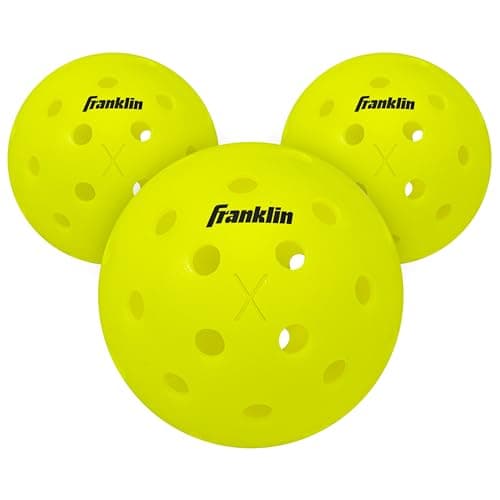
The short version: buy the Franklin X-40. It is the official ball of USA Pickleball's national championships, it is the ball most tournaments and clubs default to, and it costs less than almost everything it competes with. Unless you have a specific reason to buy something else, that reason does not exist.
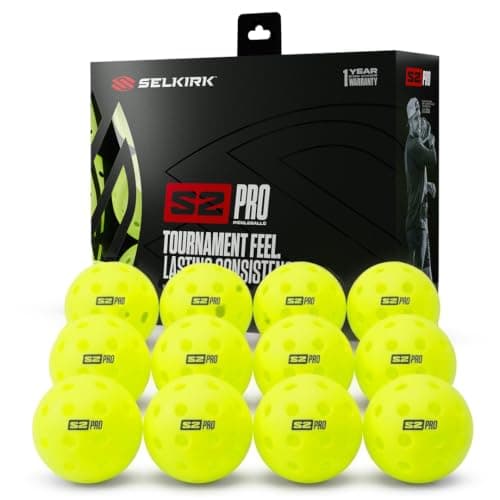
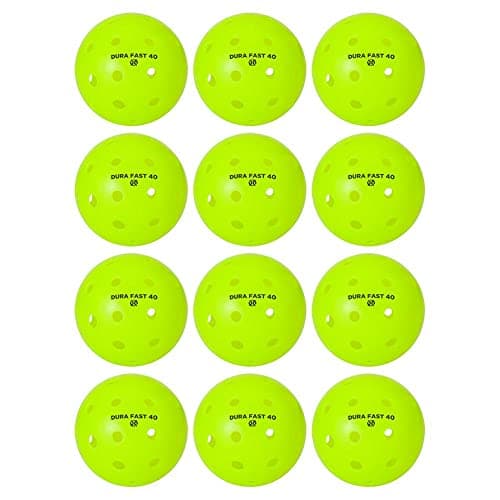
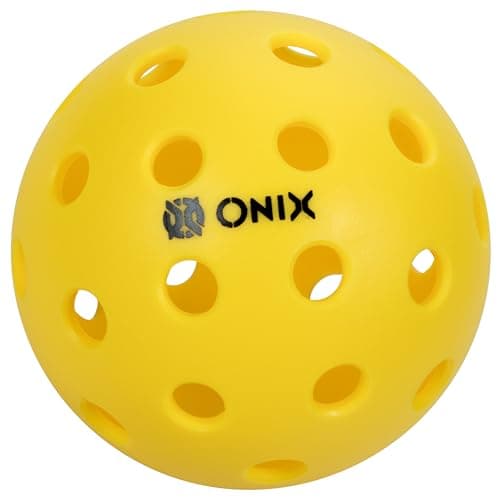
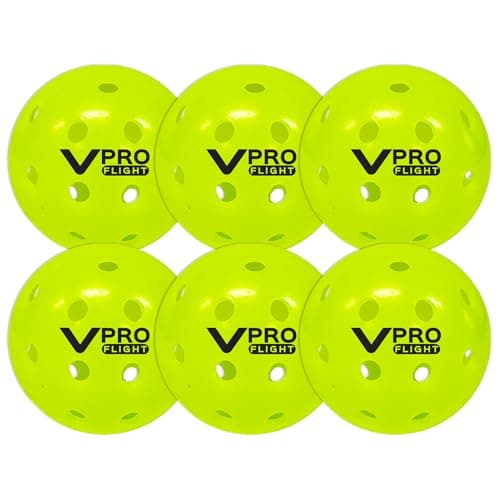
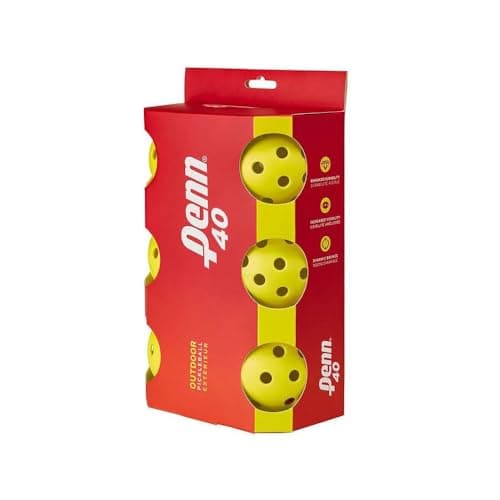
The specific reasons, when they do exist, are these. If your balls keep cracking in cold weather, the Selkirk Pro S1 is built around that complaint. If you want the ball with the liveliest, most tournament-familiar flight, that is the Dura Fast 40 — and it will crack first; the two are put side by side on published specs in Franklin X-40 vs Dura Fast 40. If you cannot track optic yellow against your court's paint, the Vulcan VPRO Flight comes in hi-vis green. If the hard balls hurt your arm, the Penn 40 is the softest approved option here. One practical warning before you order: the X-40 is sold across eight pack sizes on a single listing and the default is the smallest, so check which pack you are actually buying — how many you need settles the quantity.
03The buyer's guide
Why outdoor balls are different
An outdoor ball is not an indoor ball in a different color. It is a genuinely different object, built for a different problem: wind.
- More holes, smaller holes. Outdoor balls have 40 small holes (a few use 38); indoor balls typically have 26 large ones. Smaller holes make the ball less affected by a crosswind.
- Heavier and harder. More mass carries through wind better, and harder plastic survives an abrasive concrete or acrylic surface. That hardness is also why an outdoor ball is louder and stings more off the paddle.
- They crack rather than go soft. Indoor balls gradually deform and go out of round. Outdoor balls stay round and then split — usually along a seam, usually suddenly, usually in cold weather.
The full comparison is in indoor vs outdoor pickleballs, which is the page to read if you are not sure which you need.
What actually separates one outdoor ball from another
Hardness, which drives both durability and feel
Harder plastic resists abrasion and holds its shape longer, but transmits more shock to the arm and becomes brittle in the cold. Softer plastic is kinder to play with and goes out of round sooner. Almost every difference in this category traces back to that one axis, and neither end is correct — it depends on whether your priority is cost per hour or comfort.
Seam quality
Most outdoor balls are molded in two halves and welded. That seam is where cracks start, and it is the least visible difference between a cheap ball and a good one. A ball with a well-executed seam plays true out of the bag and survives longer; a poor one arrives slightly out of round.
Temperature
This is the biggest practical variable and almost nobody mentions it. Below roughly 50°F, outdoor balls become dramatically more brittle, and a ball that would have lasted weeks in summer can split in a single session. If you play through winter, buy in bulk, expect higher consumption, and give a ball a minute in a pocket before putting it into play. This page ranks on all-round outdoor play; if cold and wind are your conditions rather than an occasional annoyance, our best balls for wind and cold re-ranks the same field on crack warranties, ball weight and visibility, and the top pick changes.
Color
Optic yellow is the default, and it is the easiest to see under lights. Against certain blue-and-green court paint schemes in bright daylight, however, yellow can genuinely disappear at the moment of contact — which is why hi-vis green and orange exist. This is worth a lot more than it sounds if it applies to your court, and nothing at all if it does not. Check your local rules before using a non-standard color in league play.
USA Pickleball approval: what it does and does not mean
An approved ball has been tested against USA Pickleball's published specification for size, weight, bounce, hardness and roundness, and appears on their equipment list. That is a meaningful floor — an unapproved ball can be any weight and any bounce.
What approval does not mean is that a ball is durable, that it flies the same as another approved ball, or that it will be legal at every event: tournaments typically nominate one specific ball. If you are training for an event, train with the ball that event uses. Everything on this list is currently approved; the authoritative register is the USA Pickleball equipment site.
How many should you buy?
More than you think. Outdoor balls are consumables and the per-ball price drops sharply with pack size — a 12-pack is usually far better value than two 6-packs, and the 100-count boxes exist because clubs go through them. If you play weekly outdoors, a dozen is a sensible standing order; if you play in winter, more.
Expect to retire a ball when it cracks, when it goes visibly out of round, or when it starts sounding dull rather than sharp. We go through the failure modes in how long pickleballs last.
Do not use these indoors
You can, and people do, but an outdoor ball on a gym floor is hard, extremely loud, bounces higher than the indoor game expects, and skids off a smooth surface. If you play indoors, buy indoor balls — see the best indoor pickleballs.
Franklin earns its position in this category outright, which is not the same as earning it everywhere else it sells. Our Franklin pickleball gear page ranks the rest of the brand’s range on published specs — the paddles, the net, the starter set and the launcher — and says plainly which of them are merely fine.