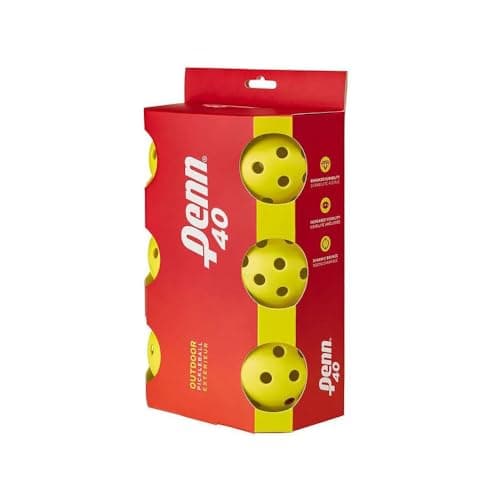
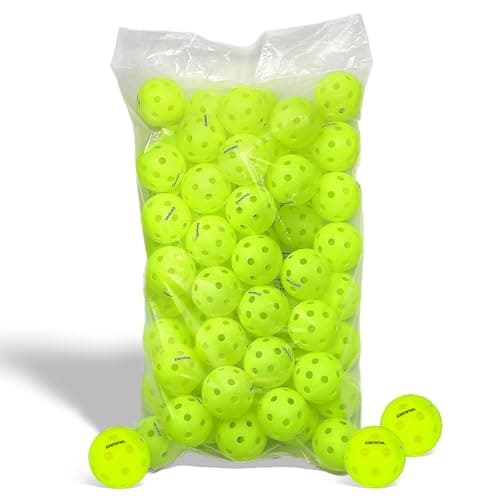
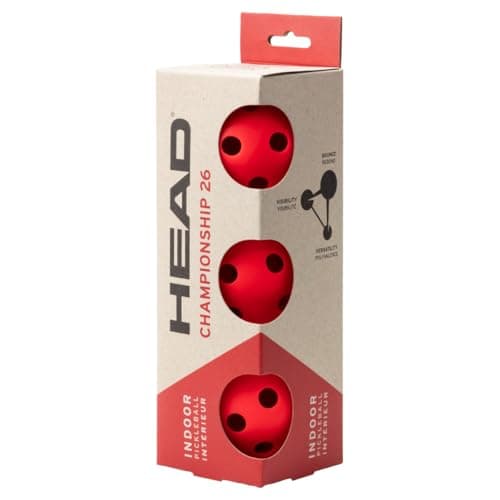
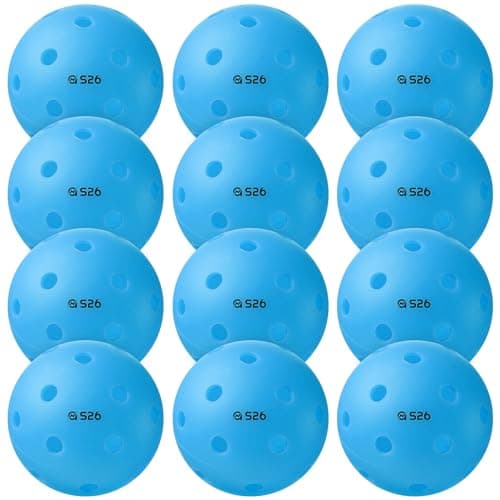
Buy a dozen. For one or two people playing regularly, a 12-pack is the right quantity and the right price per ball — the A11N S26 indoor 12-pack is the cheapest legitimate way to get there if you play on a gym floor. If you play outdoors, a 6-pack of an approved outdoor ball is the sensible starting unit, because outdoor balls crack and you would rather replace a half dozen than a crate.
Three balls is the quantity almost everybody buys first, and it is only the right answer for one job: finding out whether you like a ball before committing. The HEAD Championship 3-pack exists for exactly that. Sixty is for organizers — if you run a clinic, a class or a rec program, the Gamma Photon 60-pack is the per-ball price nothing else here touches.
The reason this question has a real answer rather than a shrug is that pickleballs are genuinely consumable. They do not wear out gradually like a tennis ball going flat; they go out of round or they crack, and then they are finished.
03The buyer's guide
What actually uses balls up
Three things, and only one of them is play. Crackingis the big one for outdoor balls: hard plastic, hard court, cold air. Dura publishes the most honest figure anybody in this category prints — "anticipate life of 3-10 games in harsh conditions" for its hardest tournament ball. Read that number carefully, because it is the whole reason an outdoor player buys in sixes rather than threes. Softer approved outdoor balls last differently: they tend to go out of round rather than crack, which is a slower, less obvious failure.
Loss is the second. On a fenced court you lose nothing; on a driveway, beside a hedge, or in a park you will quietly donate a ball or two a month. The third is practice, which is where the arithmetic really changes: a solo session against a wall is rate-limited by how often you stop to pick balls up, not by your arm. The failure modes in detail are in how long pickleballs last.
The quantity, by how you play
| How you play | Buy | Why |
|---|
| Trying a new ball | 3 | A 3-pack costs very little and answers the only question you have |
| Two of you, casual outdoor games | 6 | Covers cracking and the hedge without over-buying a ball you may change |
| Regular play, indoor or out | 12 | The best balance of per-ball price and quantity; the default answer |
| Solo practice against a wall or rebounder | 12 minimum | Fewer balls means more walking; a dozen changes the quality of the session |
| Group, class, clinic or club | 60 | The only tier where per-ball price drops sharply again |
The pack sizes actually sold
Pack size is not a minor detail on these listings — it is often the only difference between two prices for the same ball, and it is the easiest way to accidentally buy three balls when you meant twelve.
| Ball | Indoor / outdoor | Published pack | Best suited to |
|---|
| A11N S26 | Indoor (26 holes) | 12-pack, one color per pack | The default dozen for a gym floor |
| Penn 40 | Outdoor (40 holes) | 6-pack | Casual outdoor pairs; softer feel |
| Gamma Photon | Indoor | 60-pack | Clubs, classes and clinics |
| HEAD Championship 26 | Indoor (26 holes) | 3-pack | Trying an indoor ball cheaply |
| Franklin X-26 | Indoor (26 holes) | 12-pack | The big-brand indoor dozen |
| Franklin X-40 | Outdoor (40 holes) | One listing sells 3, 6, 9, 12, 36, 50, 100 and 400 | Any quantity — check which pack you are adding to the cart |
That last row is the practical warning on this page. The ball we rank first in best outdoor pickleballs is sold across eight pack sizes on a single listing, and the default selection is a 3-pack. More than one person has bought three balls at a price that felt high because of it.
Do not mix indoor and outdoor in the same bag
Not a rule, just a practical point: a 26-hole indoor ball and a 40-hole outdoor ball fly completely differently, and the fastest way to make your own dinks feel inconsistent is to grab whichever ball is nearest. Keep them separated, and if you play both surfaces, own a dozen of each rather than twenty-four of a compromise. Why they differ is in indoor vs outdoor pickleballs, and if you only want to be told what to buy, that is best pickleballs for beginners.
Colors, and the one thing people forget
Most value packs ship a single color. That matters more than it sounds indoors: a blue ball against a pale maple gym floor is genuinely hard to track, and it is the first thing to change when a group starts complaining about missed balls rather than about the ball itself. Buy the color your venue can see.
The forgotten purchase is somewhere to keep them. A dozen loose balls in a bag is a dozen balls rolling around a car trunk by Tuesday — every bag we rank in best pickleball bags has a ball pocket, and what to pack in your bag has the rest of the list. If the dozen is for solo work, the drills they feed are in how to practice pickleball alone.
How we picked
Everyone in this category says they tested twenty paddles. We haven't tested these in a lab, and we say so. Instead we compile the published manufacturer specs, do the math, weight everything toward what a beginner actually needs — forgiveness, a large sweet spot, sane weight and a fair price — and score each product against a published rubric. The scores are judgments from that research, not measurements we took. Where a fact came from someone else, we name it in Sources.