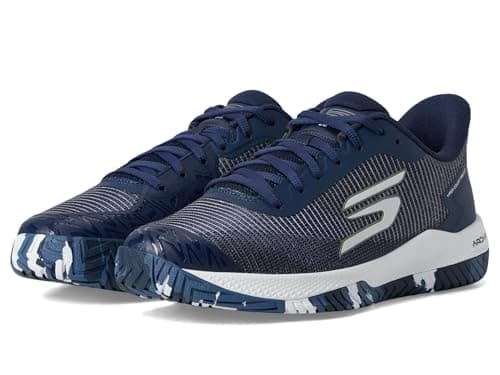
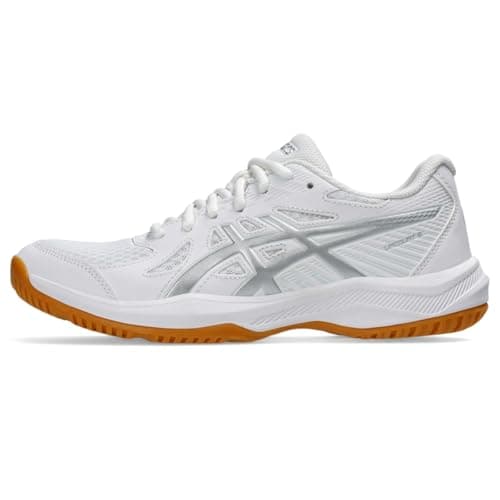
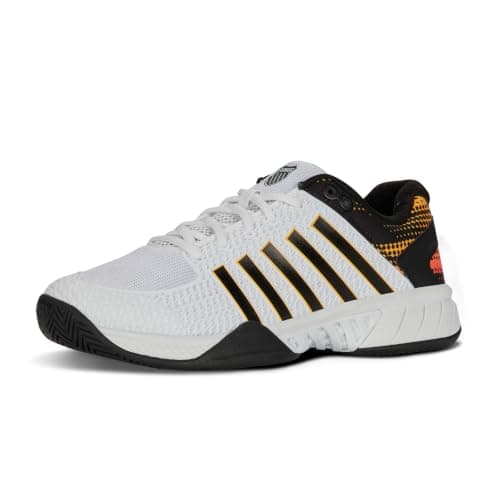
Short version: the K-Swiss Express Light is the safe all-round pick — a purpose-built pickleball shoe from a court-shoe brand, with the lateral support your running shoes are missing. Want maximum out-of-the-box comfort instead? The Skechers Viper Court. Playing mostly on a gym floor on a budget? The ASICS Upcourt.
A pickleball shoe has one job a running shoe can't do: keep your foot stable when you push off sideways. Running shoes are built for going straight, with a tall, soft sole that rolls under a hard sideways cut — the exact motion that turns an ankle. A court shoe sits low and flat, grips a smooth surface, and braces the sides of your foot. Every price below is live, and the ranking never moves for a commission — that's why a budget gym shoe sits in the same list as a premium one. Most people end up choosing between the top two, and we put them directly against each other in K-Swiss Express Light vs Skechers Viper Court Pro.
03The buyer's guide
How to choose a pickleball shoe
You do not need to overthink this. Four questions get you the right shoe.
1. Court shoe vs running shoe: this is the whole point
The single most important thing is that you buy a court shoe, not a running shoe. Running shoes are designed for repeated forward strides, so they have a tall, cushioned sole and very little side-to-side support. Pickleball is played in short, sharp lateral bursts — split-step, push off sideways, stop, change direction. On a running shoe's soft, high platform your foot rolls over the edge of the sole on those cuts, which is how new players sprain ankles. A court shoe (tennis, volleyball or pickleball-specific) sits low, flat and wide, with reinforced sidewalls that hold your foot in place. If you own tennis shoes already, you're fine — you don't strictly need a pickleball-branded pair.
2. Indoor vs outdoor sole
Where you play changes the sole you want. Indoor gym-floor play rewards a soft gum rubber outsole that grips a smooth wood or sport-court surface — the ASICS Upcourt is a good example. Outdoor concrete and asphalt courts chew up soft gum soles quickly, so you want a harder, more abrasion-resistant all-court outsole. Many shoes handle both acceptably; if you mostly play one surface, match the sole to it. And on indoor courts a non-markingsole isn't optional — most gyms require it.
3. Fit and width
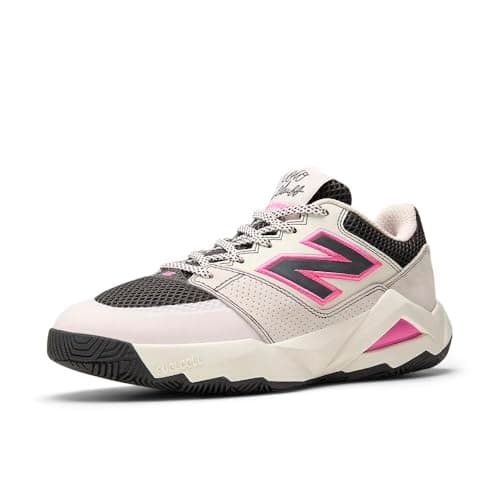
Court shoes are cut to lock your foot down for hard cuts, so they tend to run narrowerthan a roomy running shoe. If you have a wide foot, check the width feedback before buying, or choose a model that offers width options — the New Balance Coco Delray is one of the few here that does. You want the shoe snug through the midfoot and heel with a little room at the toes, so your foot doesn't slide forward when you stop.
4. How much should you spend?
A genuinely good court shoe runs roughly $60 to $120, and a first pair can sit at the bottom of that band — our best pickleball shoes for beginners ranks the cheapest models that still publish a named support component. Below that band you're often looking at a running shoe or a fashion sneaker in disguise — no lateral support, which defeats the purpose. Above it you're paying for pro-level materials a recreational player won't notice. Buy a real court shoe in the middle of that band, replace it when the outsole tread wears smooth, and your ankles will thank you.
How we picked
Everyone in this category says they tested twenty paddles. We haven't tested these in a lab, and we say so. Instead we compile the published manufacturer specs, do the math, weight everything toward what a beginner actually needs — forgiveness, a large sweet spot, sane weight and a fair price — and score each product against a published rubric. The scores are judgments from that research, not measurements we took. Where a fact came from someone else, we name it in Sources.