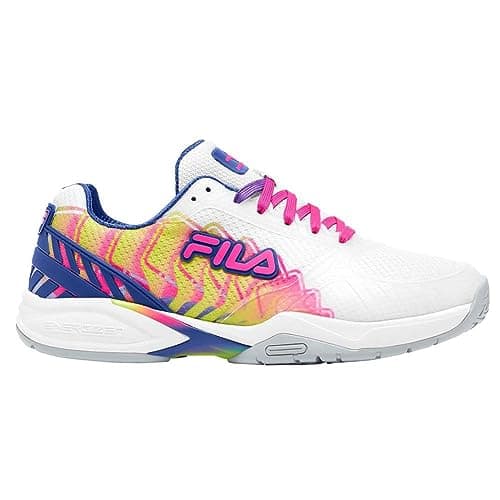
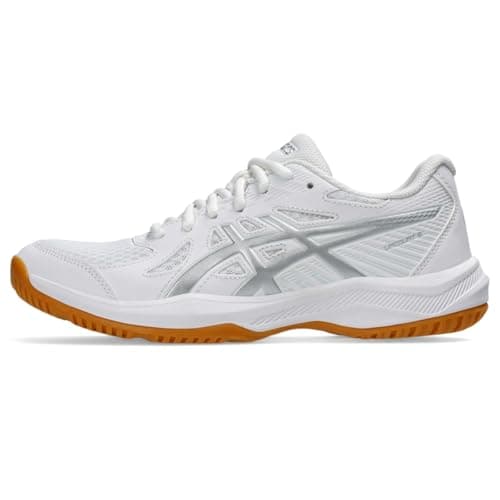
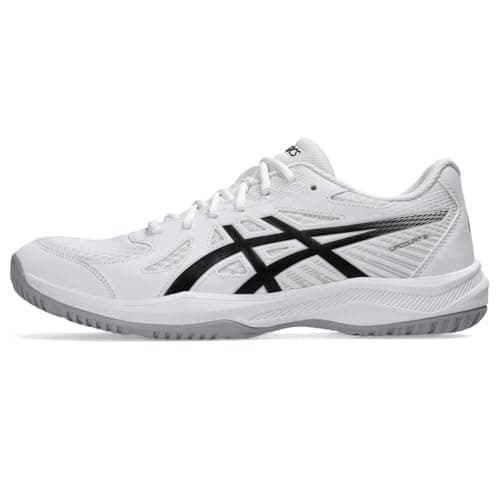
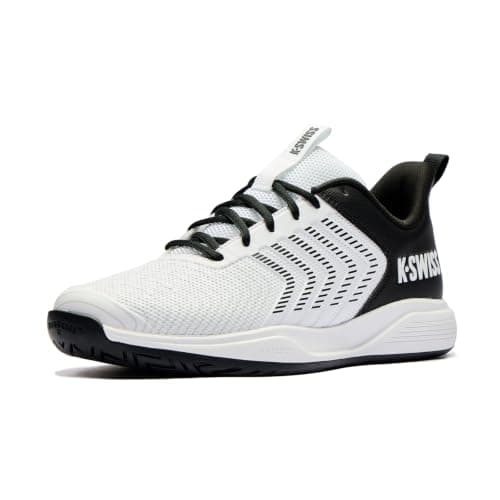
Shoes are the piece of pickleball equipment where the cheap option is genuinely worse for you, not just less good. A running shoe on a pickleball court is an ankle risk, and no paddle upgrade changes that. The encouraging part is that the price of adequate is low: a proper court shoe with real lateral support starts around $55, and everything on this list stays comfortably under $100.
The pick is the K-Swiss Ultrashot Light — a genuine tennis-court platform from a brand that has been making court shoes for decades, at a price most pickleball-branded shoes clear easily. There is a full Ultrashot Light review if you want the detail, including the narrow-fit caveat that rules it out for some people. If you want the cheapest thing on this list that we would still call a proper court shoe, that is the ASICS Gel-Rocket 11.
Prices below are live and refreshed daily. Note that shoe listings on Amazon are usually per-size, so the exact number you see can vary by size and colorway — the buy links go to the listing, not a promise about a price.
03The buyer's guide
What $100 actually buys, and what it does not
What you get under $100
Everything that matters for safety: a flat, stable platform with a low heel-to-toe drop, a lateral support structure in the upper that stops your foot sliding off the footbed sideways, a court outsole that grips without gripping so hard it catches, and a non-marking sole so you can get into an indoor venue. Those four things are the whole safety argument, and they are all present at $60.
What you do not get under $100
Mostly comfort and lifespan. Premium court shoes buy you a more sophisticated midsole (less fatigue over three hours), a tougher toe drag guard, more durable outsole rubber, and a more forgiving upper. Those are real benefits — they are just not the difference between a safe shoe and an unsafe one. If you play four times a week, the premium pairs on our main shoes list pay for themselves in replacement cycles.
Where the money is best spent under $100
Fit over features, every time
A $60 shoe that fits your foot beats a $95 shoe that does not, and it is not close. Court shoes run narrow. Try both a half size up and your normal size if you can, and pay attention to the midfoot: your foot should be held, not squeezed, and your toes should not touch the front when you push forward hard.
Match the sole to where you play
If you play indoors on a gym floor, a gum outsole grips far better — the ASICS pairs here are the indoor-specific ones. If you play outdoors on concrete or acrylic, you want a harder, more durable outsole; the K-Swiss and Fila are the all-surface choices. See the indoor list and the outdoor list for the full explanation of why the compounds differ.
Buy last season, not this season
Court shoes iterate slowly and the previous generation is frequently half price. A last-gen model from a real court brand is almost always a better buy than a current-gen shoe from a brand with no court heritage.
The one thing not to compromise on
Do not buy a running shoe because it is cheaper and more comfortable in the shop. Running shoes have tall, soft, deliberately unstable heels designed to compress on a heel strike and roll you forward — a design that works beautifully in a straight line and works against you the moment you push sideways. Pickleball's injury pattern is ankles and Achilles, not knees, and footwear is the biggest single equipment factor in it. That case in full: do you need pickleball shoes?
Men's, women's and sizing across brands
Most court shoes come in gender-specific lasts, and the women's versions are not simply smaller — they are usually narrower through the heel and shaped differently through the arch. Buying the men's version in a smaller size to save money is a false economy. Our women's picks and men's picks break the fits down by brand.
How we picked
Everyone in this category says they tested twenty paddles. We haven't tested these in a lab, and we say so. Instead we compile the published manufacturer specs, do the math, weight everything toward what a beginner actually needs — forgiveness, a large sweet spot, sane weight and a fair price — and score each product against a published rubric. The scores are judgments from that research, not measurements we took. Where a fact came from someone else, we name it in Sources.