If you play indoors, the single most useful thing you can know is this: the shoe category you want is "indoor court", not "pickleball". Volleyball and badminton have been played on gym floors for decades, and the shoes built for those sports — gum rubber outsole, low profile, light — are exactly what indoor pickleball needs. They are also usually cheaper than anything with a pickleball logo on it.
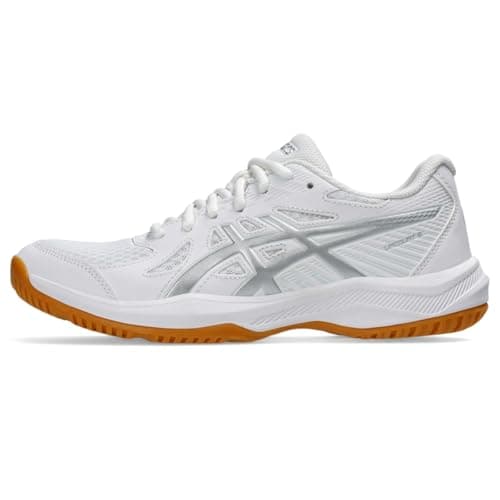
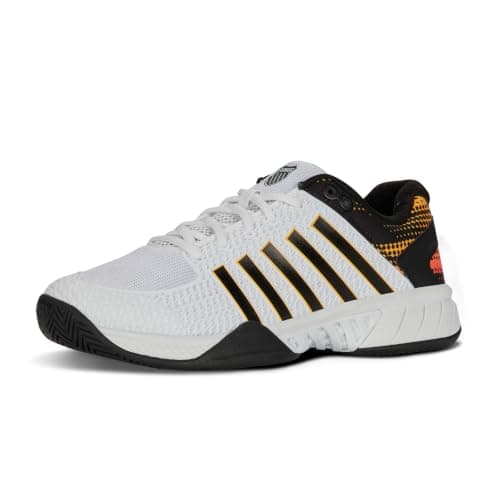
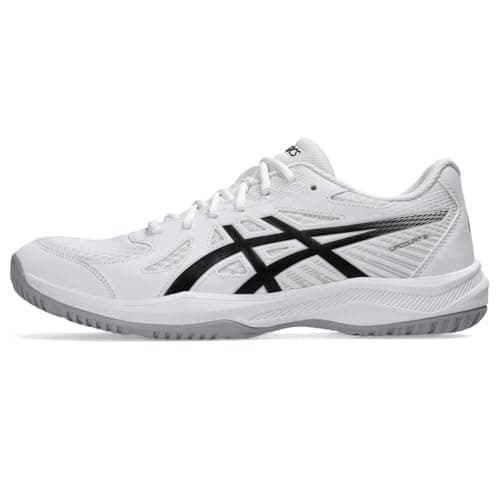
Our pick is the ASICS Upcourt 6, available in men's and women's versions and about as much shoe as an indoor player needs. If you want more cushioning under the forefoot for long sessions, the ASICS Gel-Rocket 11 is the pick. If you split your time between indoor and outdoor courts, skip the gum sole entirely and buy the K-Swiss Express Light instead — reasons below, and the full comparison is in indoor vs outdoor pickleball shoes.
03The buyer's guide
Why indoor is a different shoe
Gum rubber grips a sealed floor; hard rubber does not
A gym floor is wood or vinyl with a hard sealed finish. Soft gum rubber deforms slightly into that finish and grips it; the harder, more abrasion-resistant rubber used on outdoor court shoes skates across it. That is the entire mechanism. It is also why gum soles wear out fast outdoors: the same softness that grips a gym floor gets chewed up by concrete and rough acrylic in weeks.
Non-marking is mandatory, and it is not the same thing
Almost every gym requires non-marking soles — soles that do not leave black scuffs. That is a separate property from grip: plenty of non-marking shoes still slip on a gym floor. If a venue asks for non-marking shoes, any court shoe qualifies; if you want to actually stop and change direction, you want gum specifically.
Lower and lighter, because indoor pickleball is quicker
Indoor courts are usually smoother and faster than outdoor ones, and rallies at the kitchen line involve constant small adjustments rather than long sprints. A lower-profile shoe puts your foot closer to the floor, which makes those adjustments more stable and reduces the risk of rolling an ankle on a hard lateral push. That is why volleyball lasts work so well here.
What NOT to wear indoors
Running shoes. This is the most common and most consequential mistake in the sport. Running shoes are built for forward motion with a tall, soft, unstable heel stack and no lateral support at all. Pickleball is a lateral game. We put the full argument in do you need pickleball shoes?, and it is the one piece of gear advice on this site we would call safety-relevant rather than performance-relevant.
Outdoor court shoes with a hard herringbone outsole. They will not grip a sealed floor properly and you will feel it the first time you push off hard. That compound is the right tool in exactly one place — see the outdoor list.
Anything with a black sole. Many venues will refuse entry.
Indoor plus outdoor: one shoe or two?
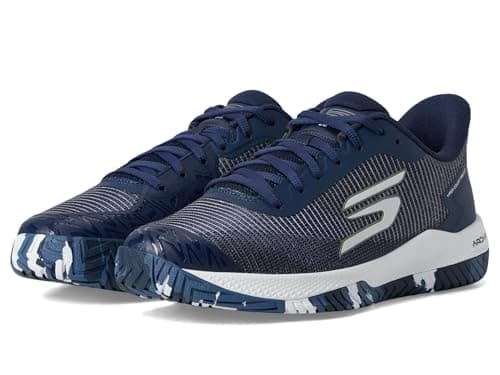
If you play both, you have two honest options. Buy two pairs — a gum-soled indoor shoe and a durable outdoor shoe — which is what regular players end up doing, because a gum sole taken outdoors lasts a fraction as long. Or buy one non-marking court shoe like the K-Swiss Express Light or Skechers Viper Court Pro and accept slightly less indoor bite in exchange for a sole that survives concrete. There is no shoe that is genuinely optimal at both.
Sizing court shoes
Court shoes generally run narrower than running shoes, and the volleyball-derived indoor lasts here are among the narrower ones. If your feet are wide, size up half a size or choose the roomier pickleball-specific shoes on our main shoes list. You want the foot held firmly across the midfoot with the toes not touching the front — a foot sliding inside the shoe on a lateral push is how toenails die.
How long will they last?
Indoors, longer than outdoors — the floor is far kinder than concrete. There is no honest hour figure, but the practical signals are the same as any court shoe: the outsole tread smoothing out under the ball of the foot, the upper stretching so your foot moves inside the shoe, and the midsole compressing until impacts feel harsher. We go through the signs in how long pickleball shoes last.