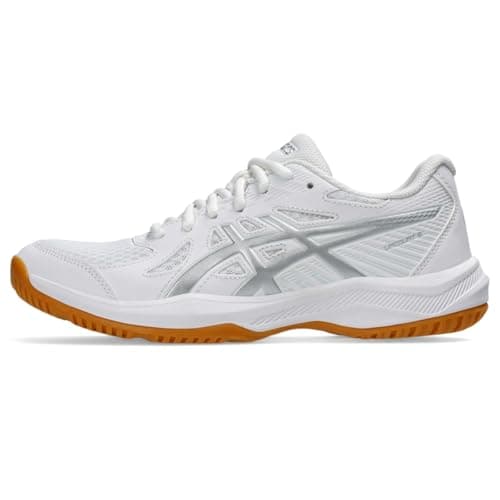
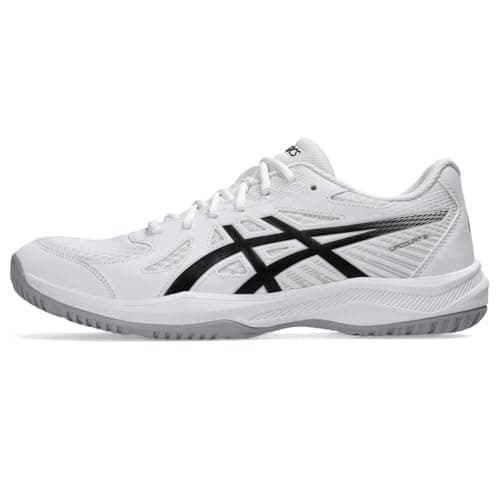
The ASICS Upcourt 6 was designed for indoor volleyball, and that is exactly why it works for indoor pickleball. Volleyball demands the same things a gym-floor pickleball session does: hard lateral pushes, sudden stops, constant small adjustments, all on a clean varnished surface. The shoe is built around a gum rubber outsole tuned for precisely that.
It is also cheap by court-shoe standards, which is why it turns up on so many pickleball recommendation lists. Below is what you actually get, how it fits, and the single condition under which you should not buy it. If you are weighing it against the other value pick we rank, that is ASICS Upcourt 6 vs Fila Volley Zone, and the construction behind both is explained in what is a court shoe.
03The buyer's guide
The gum outsole is the whole point
Gum rubber is a soft, tacky compound. On a clean indoor floor it grips harder than a standard court compound, which is what lets you plant and change direction without a slip. It is also non-marking, which matters because most rec centers and school gyms require non-marking soles as a condition of entry.
The cost of that softness is durability on rough surfaces. Take a gum sole onto an outdoor court — silica-sand-filled acrylic over concrete — and the abrasion chews through it far faster than a purpose-built outdoor compound. This is not a defect. It is the trade the compound exists to make. If you play outdoors, read best outdoor court shoes instead; the whole list there is built on the opposite priority.
Fit: snug, low, volleyball-derived
ASICS court lasts run narrow, and the Upcourt is no exception. The upper is low-profile and the midfoot is snug, which is a feature if you have a narrow foot and a problem if you do not. If you already know you need width, this is not the shoe — see our note on pickleball shoe brands for the brands that publish widths.
Both the men's and women's versions are shown above, cut on their own lasts rather than being the same shoe in different colors. That is worth noting because plenty of court shoes are unisex sizing with a color change, which fits nobody especially well.
Cushioning: adequate, not plush
The Upcourt is a lean shoe. There is enough underfoot to take the edge off a gym floor, but it is not a cushioned comfort shoe and it does not pretend to be. If you play two or three hours at a stretch on hard wood and your feet complain, the indoor court list includes models with more forefoot cushioning, and our most comfortable shoes page ranks specifically on that axis.
The upside of lean is quickness. A low, light shoe is easier to make the constant small adjustments the kitchen line demands, and it gives more feedback about where your weight is. For a shorter session or a lighter player, that trade often reads as better rather than worse.
Where it beats pickleball-branded shoes
Price, mostly, and it is not close. Pickleball-specific models carry a category premium, and for indoor play you are paying that premium for features — outdoor-durable outsoles, toe drag guards — that a gym floor does not ask for. Buying a proven volleyball shoe for indoor pickleball is one of the few genuinely free wins in this category.
The exception is toe drag. Pickleball players slide the front foot at the kitchen line more than volleyball players do, and the Upcourt does not carry a heavy drag guard. If you know you drag, expect the toe to be the first thing to go.
What we did not test
We have not worn these, timed the outsole wear, or measured the cushioning. Everything here is read from published specifications, the known behavior of gum rubber compounds, and ASICS's documented court lasts. Where we are inferring, we have said so. Our methodology page sets out the whole approach.
The verdict
If you play indoors, this is one of the best value decisions available in pickleball equipment — a proper court shoe with the right compound at well under pickleball-branded prices. If you play outdoors, it is the wrong shoe and no amount of value changes that. If you split your time, buy for wherever you play most and accept that the other surface will wear it faster.