Most recreational pickleball in the US is played outdoors, on concrete or asphalt finished with an acrylic coating — and that coating gets its grip from silica sand mixed into the paint. You are, quite literally, playing on sandpaper. That single fact decides which shoe to buy: outdoors the problem to solve is abrasion, not traction. Indoors it is the other way round.
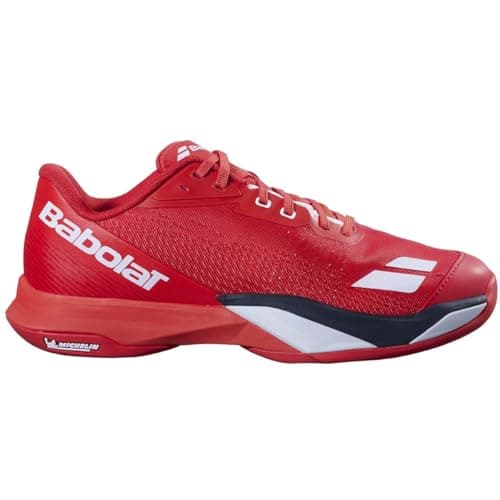
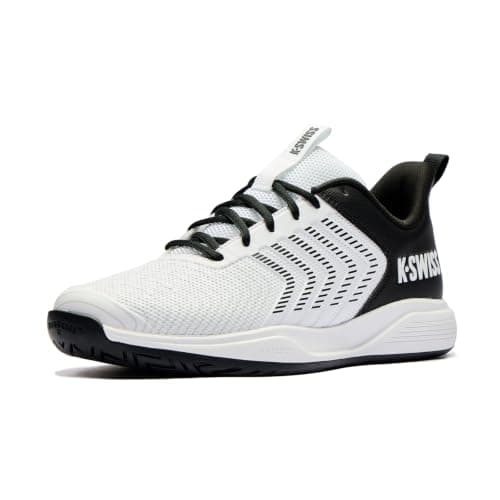
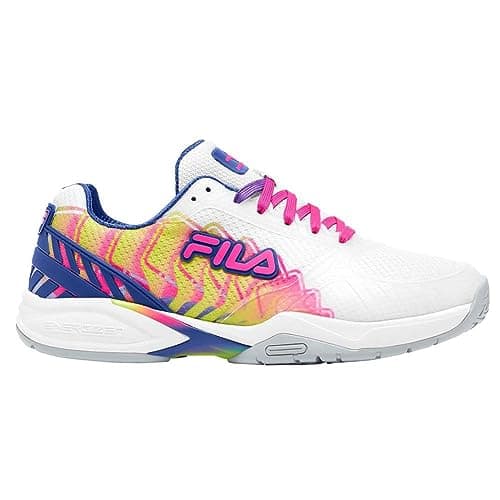
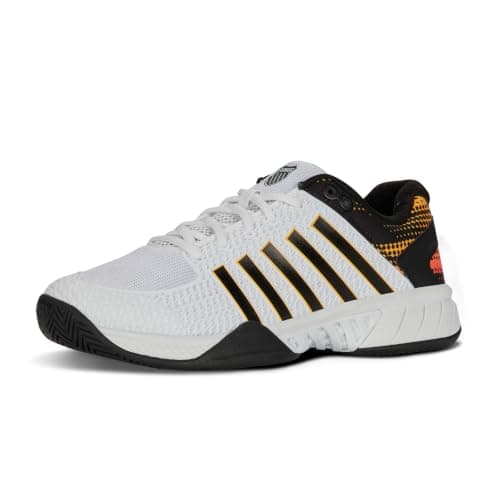
Our pick is the K-Swiss Express Light — a pickleball-specific court shoe with a durable outsole and, more importantly, a toe drag guard over the part of the shoe outdoor courts destroy first. If you are a quick, aggressive mover who wants a lighter, lower shoe, the Babolat Jet Mach 4 All Court is the pick. If you want the most durable outdoor shoe that stays under $100, that is the K-Swiss Ultrashot Light, and the Fila Volley Zoneis the women's-last equivalent.
What is not on this list is as important as what is. The gum-soled ASICS court shoes we recommend for gym floors are deliberately absent: gum rubber is soft so it can grip a sealed indoor floor, and that same softness is shredded by grit. Those picks live on the indoor list, where they belong — and indoor vs outdoor pickleball shoes sets the two side by side if you are deciding whether one pair can cover both.
Prices below are live and refreshed daily. Shoe listings on Amazon are usually per-size, so the exact figure moves with size and colorway — the buy links go to the listing, not to a promise about a price.
03The buyer's guide
Outdoor is an abrasion problem, not a grip problem
An outdoor court is designed to be slightly rough. Acrylic court coatings are sand-filled precisely so the surface holds a foot and a ball instead of turning slick when damp. Raw concrete and asphalt are rougher still. Grip, in other words, is largely free outdoors — the court supplies it. What the court takes in exchange is rubber.
So the specification that matters outside is the one nobody puts on the front of the box: how hard, how dense and how thick the outsole rubber is, and whether the parts of the shoe that touch the ground first are reinforced. Everything below follows from that.
The outsole compound
Outdoor and all-court outsoles use a harder, denser rubber than indoor gum. It grips a gritty surface perfectly well and resists being ground away. The trade is real and worth knowing: that same compound is noticeably slipperier on a sealed gym floor, which is why one shoe cannot be optimal in both places.
The tread pattern
Look for a herringbone or modified-herringbone pattern — the zig-zag tread borrowed from tennis. It bites in every direction, clears grit instead of packing it in, and wears evenly. Shallow pivot circles and near-flat patterns are indoor designs; outdoors they smooth out fast and then you are sliding on plastic.
The toe drag guard
This is the single most useful outdoor feature and the one most beginners have never heard of. Most players drag the toe of the trailing shoe on serves and forehands. On a gym floor that is harmless. On sand-filled acrylic it is a belt sander, and it is why an otherwise healthy pair of shoes develops a hole in the outer toe months before the tread wears out. A reinforced toe wrap — K-Swiss calls its version a drag guard, and every serious court brand has one — is what stands between you and that hole.
The upper, which people forget
Outdoor wear is not confined to the sole. The lateral panel above the outsole scrapes the court on hard cuts, and thin mesh gives way there first. Shoes built for outdoor courts wrap synthetic overlays around the forefoot for exactly this reason. If a shoe is marketed on how light and breathable its upper is, look closely at what is protecting the outside edge.
Indoor sole vs outdoor sole, side by side
| | Indoor (gum) sole | Outdoor / all-court sole |
|---|
| Built for | Sealed wood or vinyl gym floors | Concrete, asphalt, acrylic-coated hard court |
| Rubber | Soft gum — deforms into the floor finish | Harder, denser, abrasion-resistant |
| Typical tread | Shallow pivot / near-flat pattern | Herringbone or modified herringbone |
| Used on the wrong surface | Wears out several times faster outdoors | Feels slippery on a sealed indoor floor |
| Toe protection | Usually minimal — not needed | Reinforced drag guard, and you want it |
| Venue access | Non-marking by design | Usually non-marking — check before a gym booking |
Not all outdoor courts are equally rough
Acrylic-coated concrete — the standard
The blue-and-green surface at most dedicated pickleball facilities and converted tennis courts. Sand-filled, consistent, and moderately abrasive. Every shoe on this list is appropriate here.
Bare concrete — harder on shoes and legs
Church lots, driveways and multi-use slabs. Rougher than a coated court and completely unforgiving underfoot, so cushioning matters more than it does elsewhere. If this is your regular venue, weight the comfort of the shoe more heavily than its lightness.
Asphalt — the outsole killer
Older neighborhood and school courts. The most abrasive of the three, and the hottest in summer, since dark asphalt absorbs sunlight. Expect the shortest outsole life here and buy accordingly.
Sport tiles and modular surfaces
The snap-together plastic tiles used on some backyard and community courts. Far less abrasive than acrylic, but they can be slick when dusty. A herringbone all-court sole is still the right choice; you will simply get more life from it.
Heat is an outdoor variable indoors never has
A dark court surface in direct summer sun runs far hotter than the air temperature, and that heat reaches your feet through the outsole. Two practical consequences. First, foam midsoles soften as they warm, so a shoe that feels supportive in an air-conditioned store can feel vaguer at 2pm in July — another argument for a firmer, lower court platform rather than a plush one. Second, feet swell in heat: fit a shoe you will play in outdoors with a little more room than you would take for an indoor pair, and use a real sports sock rather than a thin cotton one.
You do not need a shoe with "pickleball" on the box
The category you want is tennis all-court, and it has existed for fifty years. Tennis is played on the same abrasive coated hard courts, demands the same lateral movement, and its all-court models are engineered for exactly this wear problem — often at a lower price than a pickleball-branded shoe, because the market is bigger. The Babolat and the K-Swiss Ultrashot on this list are tennis platforms, and that is a feature.
One genuinely useful thing to look for while comparing: some tennis brands publish an outsole durability guarantee on their all-court models. Where that exists it is stated on the product listing — it is a manufacturer's claim rather than something we have verified, but a brand willing to make it is telling you which compound it used.
One pair or two?
If you play outdoors only, buy one outdoor pair and ignore the indoor question entirely. If you split your week between a gym and a park, you have two honest options, and neither is wrong:
- Two pairs. A gum-soled indoor shoe plus a durable outdoor shoe. This is what regular players converge on, and the pairs last longer than the sum of their parts because midsole foam gets recovery time between sessions.
- One non-marking all-court shoe. The K-Swiss Express Light or Ultrashot Light will do both jobs, with slightly less bite on a sealed floor in exchange for a sole that survives concrete. For a beginner playing two or three times a week, this is the sensible answer.
What does not work is the reverse compromise — buying the gum indoor shoe and using it outside. It grips beautifully for a few weeks and then it is finished.
Grip is not a virtue you want unlimited amounts of
A court shoe should grip and release. Outdoor surfaces are grippy to begin with, and a sole that also sticks aggressively can hold your foot planted while your body keeps turning — which is how ankles and knees get loaded in exactly the way they should not be. This is a real argument against wearing a soft, tacky indoor sole outdoors even while it is still fresh, and it is why the harder all-court compounds are not a compromise outside; they are the correct tool. The wider safety case for court shoes is in do you need pickleball shoes?
Fit, socks and grit
Court shoes run narrower than running shoes, and the tennis-derived lasts here are among the more locked-down ones. Your foot should be held across the midfoot without being squeezed, and your toes should not touch the front when you push forward hard. Wide feet should size up a half, or start with the roomier options on our main shoes list.
Two outdoor-only habits worth adopting. Knock the sand out of your shoes before you get in the car — grit works its way under the insole and abrades the footbed from the inside. And if you play on wet-then-dried courts, brush the outsole occasionally; packed grit in a herringbone tread is the same as no tread at all.
How long they last, and what kills them
There is no honest hour figure — it depends on the surface, your weight, and how much you drag your toe. What is reliable is that outdoor courts wear an outsole several times faster than an indoor floor, and that outdoor shoes usually die from one of two specific injuries rather than general old age: a hole worn through the toe, or the tread smoothed flat under the ball of the foot. Check both monthly. The full set of replacement signals is in how long do pickleball shoes last, and if the toe is the failure point, adhesive toe guards cost a fraction of a new pair and buy months.
What not to wear outdoors
Running shoes. The tall, soft, deliberately unstable heel is designed to roll you forward and works against you the moment you push sideways. This is the one piece of gear advice on this site we would call safety-relevant rather than performance-relevant.
A gum-soled indoor court shoe. Excellent shoes, wrong surface — see the table above.
Anything with the tread already smoothed. Worn outdoor shoes do not warn you gradually. They grip until the day they do not, usually on a wet-ish court.