03The buyer's guide
What changes at three sessions a week
A court shoe fails in a specific order, and the order depends entirely on how often you play. For a once-a-week player the upper usually outlives their interest in the shoe. For a club player the failure is almost always the same one: the outsole wears through under the pivot points, long before anything else looks tired.
That single fact should drive the whole purchase. Cushioning, breathability and looks are real considerations, but they are not what ends the life of your shoes. Outsole rubber is. We cover the general wear timeline in how long do pickleball shoes last; this page is about buying against it deliberately.
The four criteria, in order
1. A published outsole warranty
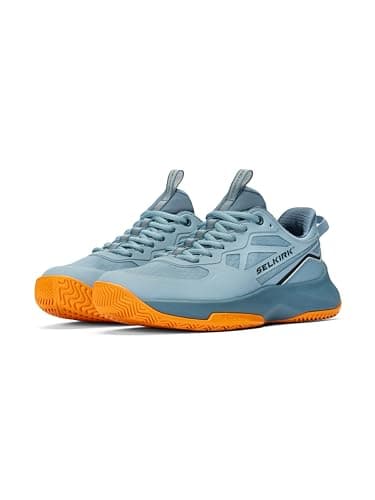
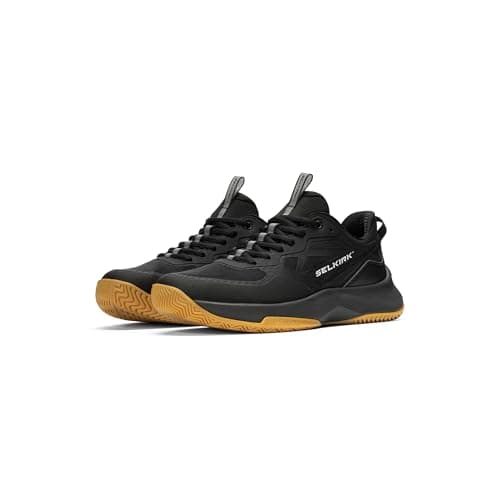
This is the criterion that separates the field, and it is rarer than you would expect. Selkirk states a six-month outsole warrantyon the CourtStrike Pro 3.0. That is a commitment the brand has to honor, which makes it categorically different from an adjective like "durable" — and it is the reason that shoe tops this list.
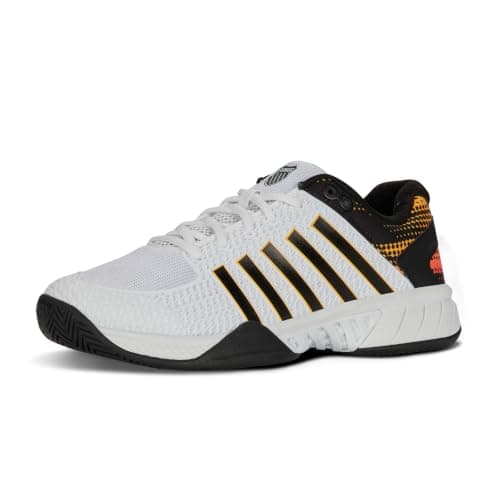
Be precise about what it is, though. An outsole warranty covers the outsole wearing through in the stated window. It is not a general returns policy, and it does not mean the shoe is the best shoe. It means the maker has publicly accepted the risk on the component that actually fails. Where a brand makes no such claim we say so — the K-Swiss Hypercourt Express 3 is a well-built hard-court shoe, and K-Swiss does not state a durability guarantee on that listing.
2. Lateral support you can name
Pickleball is a side-to-side game played in a small box, and the failure mode is the foot rolling over the edge of the platform on a hard lateral push. Two named components resist it: a TPU shank under the arch that stops the shoe twisting along its length, and an outrigger — a flared section of outsole under the forefoot that widens the base exactly where the load lands.
Selkirk publishes both on the CourtStrike Pro. Ask for named components rather than "supportive design", which appears on every listing and means nothing. Our do you need pickleball shoes guide explains why a running shoe has neither.
3. Reinforcement where you actually wear it
Pickleball players drag the front foot on lunges, which is why pickleball-specific shoes add material over the medial toe that tennis shoes often skip. Selkirk lists protective overlays in heavy-wear areas; K-Swiss builds the Express Light as a pickleball-specific model. If a shoe is a borrowed tennis or volleyball model — which many good ones are — check that the toe area is reinforced, because that is the second thing to go after the outsole.
4. Fit that survives hour five
A tournament day is not three one-hour sessions. Feet swell, and a shoe that is perfect at 9am can be painful by mid-afternoon. This is the one place where the roomier shoe wins: the Hypercourt Express 3 has a deliberately more generous forefoot and K-Swiss states it needs no break-in, which is worth a lot when day one is a competition.
The trade is real and we are not going to hide it — room in the forefoot is movement inside the shoe, and movement inside the shoe is lost lockdown on a hard cut. Narrow feet should go the other way. See how to choose pickleball shoes for the full fit rules.
Indoor, outdoor, or both?
At this volume the surface question stops being academic. A soft gum indoor outsole grips a gym floor beautifully and is destroyed by outdoor concrete in a matter of weeks if you play on it often. A harder all-court compound gives up a little indoor bite and survives.
The honest answer for a club player who splits surfaces is two pairs, each used for one surface. That sounds like an upsell and it is genuinely cheaper than replacing a gum sole every two months. If you only ever play on one surface, buy for that surface — best indoor court shoes or best outdoor court shoes.
What we are not claiming
We have not worn any of these shoes, run an outsole through a wear test, or timed how long a pair survives on concrete. Every claim above is read from the manufacturers' published specifications and warranty statements, with the trade-offs reasoned from how these constructions behave as a category. Where a brand publishes a number we quote it; where it does not, we say that too rather than filling the gap. Our methodology sets out the approach.
The honest bottom line
If you play three or more times a week, buying the durability tier is straightforwardly cheaper than replacing a rec shoe three times a year, and the warranty is the closest thing to a guarantee available in this category. That is the case for spending here.
If you play once or twice a week, nothing on this page will make you better and a court shoe under $100 will last you years. The spec sheet does not care how seriously you take the sport — only how many hours you put on the outsole.
The warranty in that bottom line is a specific document rather than a general promise, and it is worth reading before you spend at this level: what the six months covers, what it does not, and the four specs its maker declines to publish are all in our Selkirk CourtStrike Pro 3.0 review.