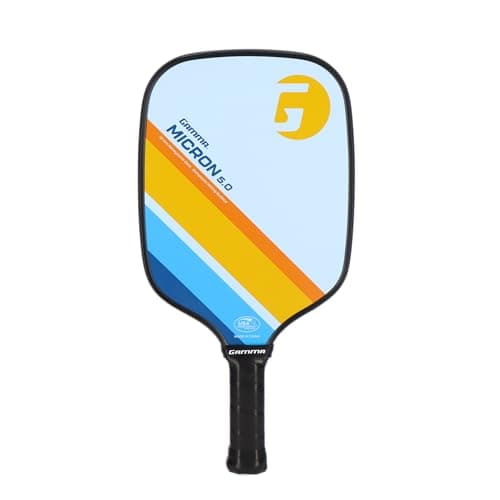
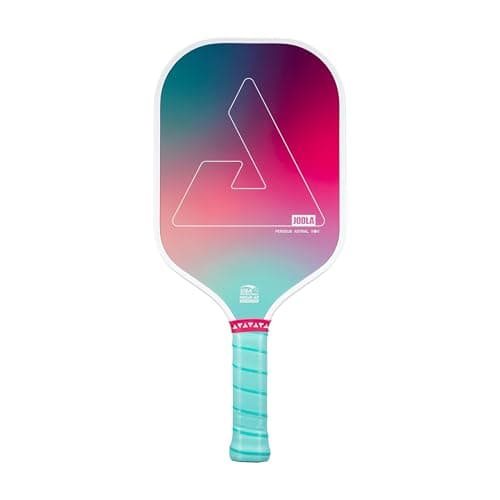
If you want the short version: get the JOOLA Astral Perseusand stop reading. It's light, forgiving, from a real pickleball brand, and priced for a first paddle. Everything below is for people who want to understand why, or who have a specific need — a bigger sweet spot, the lowest price, a tennis background, or a sensitive elbow.
A first paddle has exactly one job: be easy to hit with so you can learn the game, not fight the equipment. That means forgiveness (a large sweet spot that rewards an off-center hit), a manageable weight so your arm lasts a session, and a fair priceso you're not out much if the sport doesn't stick — or if you upgrade fast because it does. None of these picks is the most expensive paddle we could name, and that's the point. If you want the reasoning behind weight, shape and face material before you buy, read how to choose a pickleball paddlefirst — then come back here. And if you are torn between this list's number one and the upgrade paddle everyone recommends next, we settle it in Astral Perseus vs GRAF Edge.
03The buyer's guide
How to pick your first paddle in 60 seconds
You do not need to understand paddle engineering to buy a good first paddle. You need four quick decisions.
1. Weight: go mid-weight unless your arm says otherwise
Most beginners are best served by a mid-weight paddle — roughly 7.8 to 8.4 ounces. It gives you enough mass to punch the ball through without a big swing, and enough stability that a slightly-off hit still goes where you meant. Go lighter(a "lightweight" paddle under ~7.8 oz) if you have any history of tennis elbow, wrist trouble or a sensitive arm — a lighter paddle is quicker at the net and transmits less strain. Full breakdown in our paddle weight guide.
2. Shape: wide-body is the beginner's friend
A wide-body (standard) paddle has the largest, most forgiving face — the biggest sweet spot for learning where the middle is. An elongated paddle adds reach and a little power but shrinks the sweet spot, which is a poor trade when your contact is still inconsistent. Start wide; go elongated later if you develop a driving, baseline game.
3. Face material: fiberglass is fine; carbon is a nice-to-have
Fiberglass faces are forgiving, powerful and cheap — a great learning surface. Graphite is a touch stiffer and more controlled. Textured carbongrips the ball for spin and costs more; it's a want, not a need, on day one. We compare them in graphite vs fiberglass.
4. Grip size: smaller is safer, and you can always build it up
When in doubt, pick the smallergrip. You can add an overgrip to make a handle bigger, but you can't shrink one. A grip that's too big forces you to squeeze, which is a fast track to elbow pain. Measure yours with our grip size guide.
How much should a beginner spend?
Somewhere between $40 and $80is the sweet spot. Below $40 you're into thin, firm paddles you'll out-grow in weeks; above ~$130 you're paying for thermoformed construction and pro branding a new player can't yet use. Spend the middle, learn the game, and upgrade with real preferences later — that's cheaper than buying a $200 paddle you don't know how to use.
How we picked
Everyone in this category says they tested twenty paddles. We haven't tested these in a lab, and we say so. Instead we compile the published manufacturer specs, do the math, weight everything toward what a beginner actually needs — forgiveness, a large sweet spot, sane weight and a fair price — and score each product against a published rubric. The scores are judgments from that research, not measurements we took. Where a fact came from someone else, we name it in Sources.