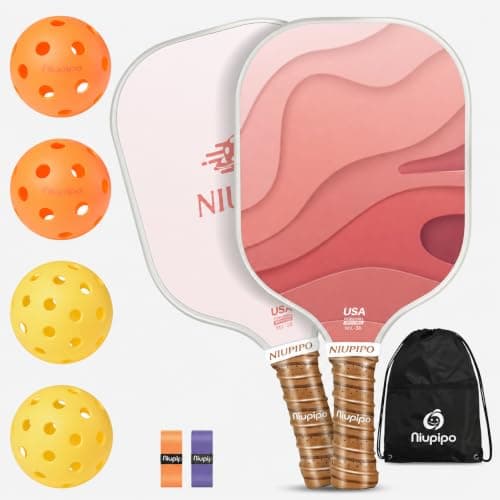
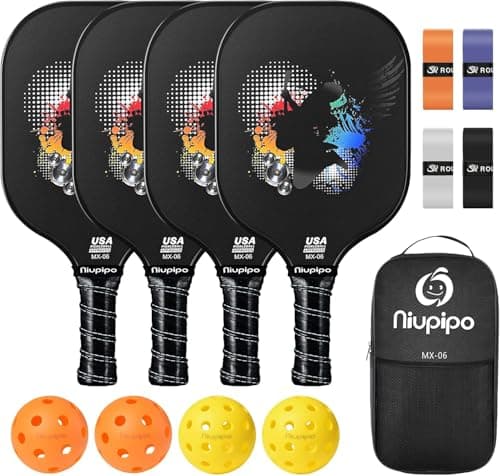
USA Pickleball approval means a paddle has been submitted, tested against the organization's equipment standards, and cleared for use in sanctioned play. It certifies that the paddle's dimensions, surface and construction fall inside the rules. It says nothing at all about whether the paddle is good.
That distinction matters because paddle listings use the badge as a quality signal, and it is not one. A cheap, unremarkable paddle can be approved. An excellent paddle can be unapproved simply because the maker never paid to submit it. Here is what the badge does and does not buy you, and when you should care. The same logic applies to the pro-tour testing badges and signature names, which we unpack in should you buy the paddle the pros use?
03The buyer's guide
What the approval actually covers
USA Pickleball publishes equipment standards and maintains a public list of approved paddles. Approval is checked against measurable properties of the paddle — its dimensions, its surface, its construction, and, since the PBCoR test was added, how hard it hits:
- Size. The combined length and width of the paddle cannot exceed 24 inches, and length alone cannot exceed 17 inches.
- Surface. The hitting surface must stay inside the permitted roughness limits rather than adding extra spin, and it must not be reflective enough to interfere with an opponent.
- Construction. No moving parts, no springs, no anti-vibration devices inside the hitting surface, and no alterations after manufacture beyond permitted grip changes and edge tape.
- Power. A paddle also has to pass PBCoR testing — a measurement of how much the face springs the ball back, capped at .43. This is the newest part of the standard and the one that has cost several well-known premium paddles their place in sanctioned play, so an approval you read about two years ago is not proof of anything today.
- Markings. The paddle must carry the manufacturer's name or logo.
The exact wording and current numbers live in the official standards, linked in Sources below. They are revised periodically and paddles can be de-listed — another reason to check the live list rather than trust a printed badge.
When you actually need an approved paddle
| Where you play | Approved paddle needed? |
|---|
| Driveway, park, open play with friends | No. Nobody will check, and no rule applies. |
| Club ladder or rec-center league | Sometimes. Many leagues adopt USA Pickleball rules by default — ask. |
| Sanctioned tournaments | Yes. This is exactly what the list exists for. |
For most people reading this, the honest answer is that you do not need it today and might need it in a year. Since approved paddles are not more expensive as a class — the two picks above are among the cheapest paddles we recommend anywhere — buying an approved one costs you nothing and removes a future problem.
How to check a paddle yourself
Do not trust the marketplace bullet points. Sellers copy the badge onto listings for models that were never submitted, and older approvals sometimes lapse. Instead:
- Find the exact model name and, where it exists, the model year or version number.
- Search that exact string on USA Pickleball's equipment site, linked in Sources.
- Confirm the entry matches your version. Brands reuse names across generations, and only the submitted generation is approved.
A worked example, using one of the two picks above. The niupipo Lightweight's Amazon page never shows a model number in its title, but Amazon's product-details block gives it as MX-38. Search that string on the equipment site and the entry comes back: Niupipo, MX-38, added 07/02/2023, status Pass — along with specs the retail listing never publishes, including a 9.8mm core. That is the whole method, and it takes a minute. Our niupipo Lightweight review walks through what else that record turned up, including the places niupipo's own website contradicts its Amazon copy.
Why approval is not a quality rating
Submission costs money and takes time, so approval mostly tells you a company decided the tournament market was worth paying for. Small brands selling to recreational players often skip it. That is a business decision, not a verdict on the paddle. Conversely, plenty of approved paddles are mediocre — passing a dimensional test is a low bar.
Judge a paddle the way we do: core thickness, face material, weight, shape and grip, against your own game. Our how to choose a pickleball paddle guide walks the whole decision, and control vs power covers the trade-off that matters most.
The same question for balls
Balls have their own approved list, and there it matters more often, because leagues routinely specify a ball for match play even when they never look at paddles. See types of pickleball balls for which balls carry approval and what changes between them.
What we would do
Buy an approved paddle if the one you want is approved, and do not pay a premium for the badge if it is not. The two paddles above are both listed as approved and both cheap, which makes the decision easy for a first purchase. When you upgrade, check the live list for the specific model you are eyeing before you buy — it takes thirty seconds and it is the only reliable source.