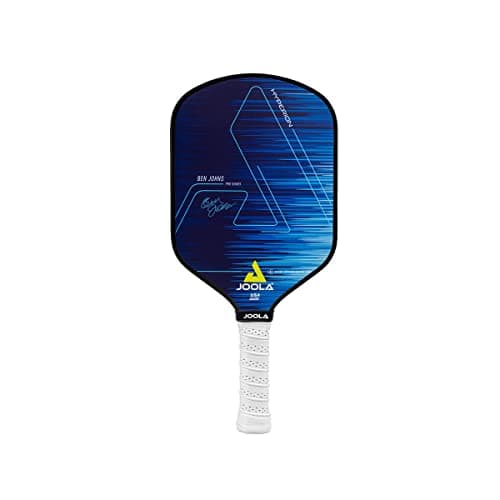
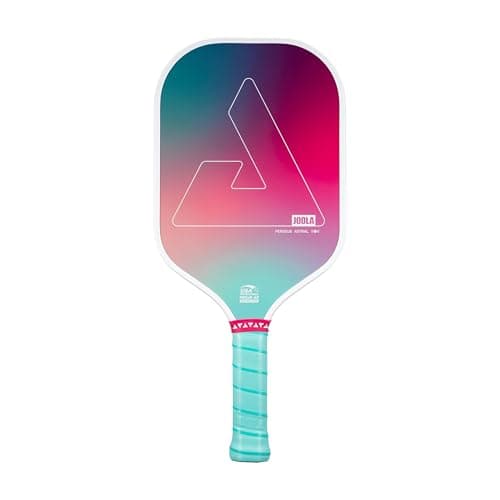
Usually no — not as a first paddle. A signature pro paddle like the JOOLA Ben Johns Hyperion CAS 16is a genuinely excellent piece of equipment, and it is tuned around a stroke that already exists: elongated shape, a 16mm core that mutes the ball, and a carbon abrasion surface built to turn a brushing swing into spin. In a new hand, all three of those read as "unforgiving". Buy the Astral Perseus instead, learn the game, and come back.
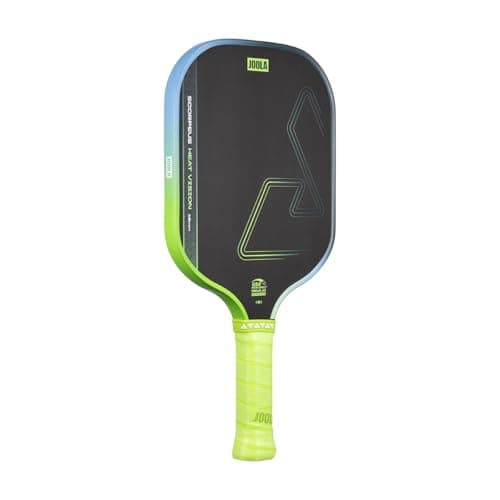
Yes if you are already an improving player who knows whether you prefer control or power, and the honest middle answer is the JOOLA Scorpeus Heat Vision 16mm — a 16mm carbon paddle in a standard shape, which keeps the forgiving width while giving you the core and the face the pro paddles use. It is the upgrade that does not punish you for still being inconsistent.
The reason this question matters is money. The gap between a sensible first paddle and a signature model is the largest price jump in the sport, and it is the one purchase where the expensive option can make you play worse.
03The buyer's guide
What a signature paddle is actually optimized for
Three design choices turn up again and again on paddles built for high-level play, and each has a cost a beginner pays and a pro does not.
Elongated shape
Length buys reach and leverage, and it costs width. Because USA Pickleball caps combined length plus width at 24 in with length capped at 17 in, every inch of length is an inch of width given up — and width is the sweet spot. A pro places contact where they intend to; a new player does not yet, and a narrower face punishes that. Detail in elongated vs widebody.
A thick, muted core
16mm and up is the control-first thickness, and it works by absorbing the ball rather than returning it. That is a feature if you can already aim and want to take pace off a drive; it feels lifeless if you are still trying to get the ball deep. See the core thickness guide.
A heavily textured carbon face
A grippier face converts a brushing stroke into spin. No brushing stroke, no spin — just a face that reacts differently depending on how cleanly you happened to hit the ball. Spin is a skill you build, which is the thing paddle marketing most reliably obscures.
The badges, and what each one promises
Two different things get conflated here, and both appear on pro-adjacent paddles.
| Badge | What it certifies | What it does not mean |
|---|
| USA Pickleball approved | The paddle is legal for sanctioned play under the equipment standards | That it is better, faster or more suitable for you |
| UPA-A paddle testing / certification | The paddle has been through the pro tour's own testing program, which covers deflection and spin limits | Anything about forgiveness, comfort or how it suits a beginner |
| Signature or pro-series name | A branding and endorsement arrangement | That the retail paddle is identical to whatever that player competes with |
That last row is the one worth internalizing. A signature retail paddle is a production model sold under a player's name; what a touring professional actually uses may be weighted, gripped or specced differently, and none of that is published. We take the same line on approval badges generally in USA Pickleball approved paddles, explained.
When a premium paddle genuinely does help
We are not arguing that expensive paddles are a con. They are not. A thicker core, a grippier face and thermoformed construction all do measurable things, and they help a player who has the stroke to use them. The honest test is three questions:
- Can you say whether you prefer control or power? If not, you do not yet have the preference a premium paddle is built to serve — control vs power is the primer.
- Is your contact consistent? If most balls find the middle of the face, you can afford to trade width for reach. If not, keep the width.
- Are you playing weekly? A paddle that costs several times a beginner model needs more than a few sessions a season to justify itself.
Three yeses and the upgrade is a good purchase. Our upgrade tier is ranked in best paddles for intermediate players, with the construction explained in thermoformed paddles, and the spending question handled directly in how much to spend on a paddle.
The cheaper way to get most of it
Here is the part nobody selling paddles says out loud: most of what a premium paddle gives an improving player is available at the bottom of the carbon tier. A 16mm core and a textured carbon face from a major brand can be had for a fraction of a signature paddle, and we rank those in best carbon fiber paddles and best paddles under $100. What the extra money buys above that is thermoformed construction, a foam-injected edge and brand — real things, with diminishing returns for a 3.0 player.
If you are choosing between the two paddles we recommend most often, that comparison is Astral Perseus vs GRAF Edge. And if what you actually want is to understand paddles rather than be sold one, start at how to choose a pickleball paddle.