PPost & Paddle
01Paddles

How much should you spend on a pickleball paddle?

Paddles run from about $20 to over $250 and the difference is real up to a point. Here is exactly where that point is, and what each tier actually buys.

By Stephen V.Editor, Post & PaddleUpdated

Heads up: Post & Paddle is reader-funded. If you buy through our links we may earn a commission, at no extra cost to you. It never changes which product we recommend. How this works.

Short answer: about $50 to $80 for a first paddle, and there is very little reason for a beginner to go past $100. Under $40 you are buying a paddle you will replace. Over $120 you are buying performance tuned for a stroke you have not built yet.

The longer answer is that paddle price buys three things, and they stop arriving at different points. Build quality improves sharply up to about $50 and then flattens. Face technology — textured carbon, raw carbon — arrives around $45 and improves to about $100. Construction — thermoformed unibody, foam-injected perimeters — starts around $100 and keeps going, but it is the one a new player can feel least.

Before you spend anything: what you are actually buying

  • A legal paddle. USA Pickleball approval costs the manufacturer money, which is why the very cheapest paddles skip it. It matters the moment you join a club ladder.
  • A core that lasts. Polymer honeycomb cores soften with use. Cheaper cores soften faster, which is the main reason a $25 paddle feels dead after a season — our replacement guide covers the signs.
  • A face that keeps its texture. Budget textured carbon wears smooth. Raw carbon on a premium paddle holds its grit far longer, and that is a genuine durability difference rather than a marketing one.

Here is one paddle per tier, at live prices, so you can see what each step actually costs.

01The short answer

Quick picks

#ProductBest forScorePrice
01
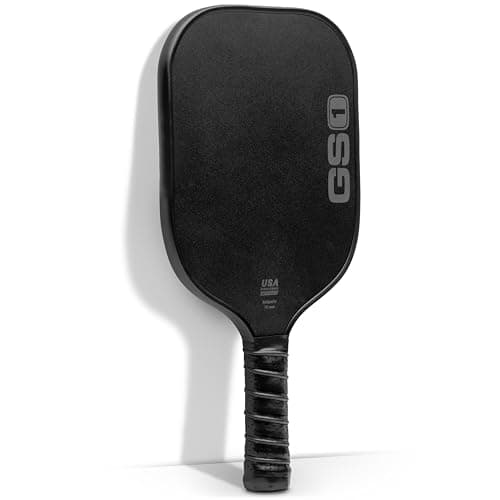
GoSports GoSports GS1
GoSports GS1

The cheapest paddle we'll point you at that's still tournament-legal — a real paddle rather than a toy.

The lowest honest price
7.2
$23.82Amazon
02
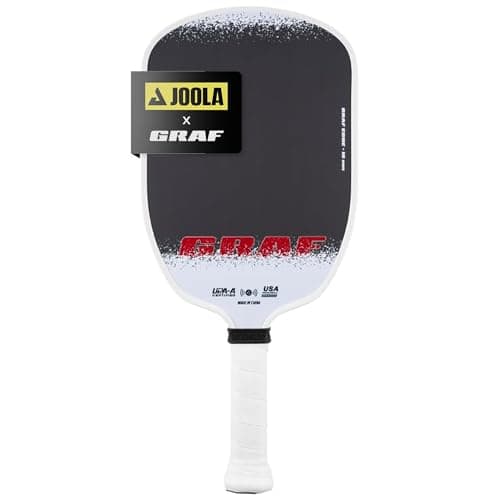
JOOLA JOOLA GRAF Edge 16mm
JOOLA GRAF Edge 16mm

The cheapest way into a real 16mm carbon paddle from a top-tier brand — the natural step up from a fiberglass beginner paddle.

The first proper upgrade
8.2
$49.95Amazon
03
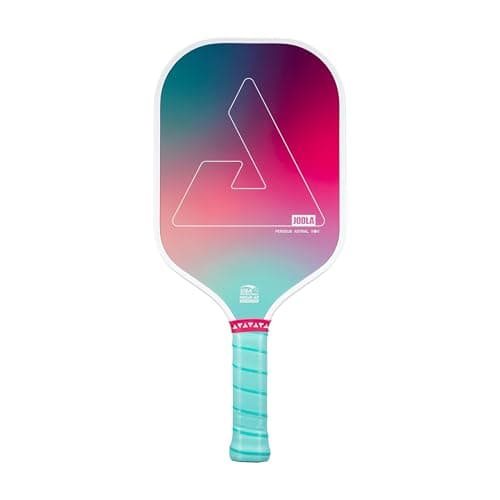
JOOLA JOOLA Astral Perseus
JOOLA Astral Perseus

The one we'd hand a friend on day one: forgiving, light, from a brand you can trust, at a fair beginner price.

The safe default first paddle
8.0
$79.95Amazon
04
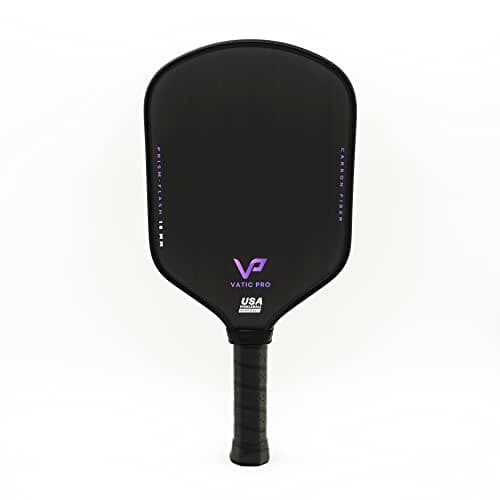
Vatic Pro Vatic Pro Prism Flash
Vatic Pro Prism Flash

The enthusiast's value darling: thermoformed carbon performance for roughly half what the big brands charge for it.

One paddle to grow into
8.2
$99.99Amazon

#ad · Live prices from the Amazon Product API, as of Sep 17, 2026. Where we have no verified live price, we show none — we would rather leave a gap than print a number that has rotted.

02In detail

The picks, in full

01
GoSports GoSports GS1

The lowest honest price

GoSports GS1

Fiberglass facePolymer honeycomb coreUSA Pickleball approvedCushion grip
7.2/10

The cheapest paddle we'll point you at that's still tournament-legal — a real paddle rather than a toy.

Forgiveness
7
Control
7
Power
6
Comfort
7
Value
9

Pros

  • USA Pickleball approved, so it's legal in organized play despite the price
  • Fiberglass face is forgiving and easy to hit with while you learn
  • Cheap enough that buying a second one for a friend is painless

Cons

  • Basic construction — you'll feel the ceiling within a season if you play often
  • Thin edge guard and a simple grip compared with paddles even $20 above it

Don't buy this if…

you already know you're hooked. Spending $60-80 once beats buying this and replacing it three months later.

$23.82View on Amazon

$27.9915% off

Price as of Sep 17, 2026. Prices change — Amazon's is the one that counts.

#ad · we may earn a commission from this link to GoSports GS1

02
JOOLA JOOLA GRAF Edge 16mm

The first proper upgrade

JOOLA GRAF Edge 16mm

Textured carbon fiber face16mm polypropylene core16.5 x 7.5 in (elongated)4-1/8 in small grip
8.2/10

The cheapest way into a real 16mm carbon paddle from a top-tier brand — the natural step up from a fiberglass beginner paddle.

Forgiveness
8
Control
9
Power
7
Comfort
8
Value
9

Pros

  • A 16mm core is the control-first thickness most improving players settle on
  • Carbon face adds genuine bite for spin without the premium-paddle price
  • JOOLA is a major brand, so warranty, stock and resale all actually exist

Cons

  • Less raw power than the thermoformed paddles a tier above
  • The 16.5 in elongated shape is 0.5 in narrower than a widebody, so off-center contact punishes a little more
  • The 4-1/8 in grip is the small circumference — an average adult hand wants the identically specced Agassi Edge instead

Don't buy this if…

you have never played. This rewards a stroke that already exists — start on a lighter, more forgiving fiberglass paddle and come back to it in a season.

$49.95View on Amazon

Price as of Sep 17, 2026. Prices change — Amazon's is the one that counts.

#ad · we may earn a commission from this link to JOOLA GRAF Edge 16mm

03
JOOLA JOOLA Astral Perseus

The safe default first paddle

JOOLA Astral Perseus

Sandblasted carbon fiber facePolymer honeycomb coreLightweightCushion grip
8.0/10

The one we'd hand a friend on day one: forgiving, light, from a brand you can trust, at a fair beginner price.

Forgiveness
9
Control
8
Power
6
Comfort
9
Value
8

Pros

  • Light and easy to swing, so a new player's wrist and elbow aren't fighting the paddle
  • JOOLA is a real, established pickleball brand — parts, warranty and resale all exist
  • Big, friendly sweet spot that forgives an off-center hit, which is most of your hits at first

Cons

  • A committed player will out-grow the lower-end power in a season
  • The sandblasted face has less bite than the raw, heavily textured carbon on premium spin paddles

Don't buy this if…

you already know you want to play competitively within months. You'll want a 16mm control paddle sooner than this can take you — start one tier up.

$79.95View on Amazon

Price as of Sep 17, 2026. Prices change — Amazon's is the one that counts.

#ad · we may earn a commission from this link to JOOLA Astral Perseus

04
Vatic Pro Vatic Pro Prism Flash

One paddle to grow into

Vatic Pro Prism Flash

Raw carbon fiber face16mm foam-injected coreElongated shapeThermoformed unibody
8.2/10

The enthusiast's value darling: thermoformed carbon performance for roughly half what the big brands charge for it.

Forgiveness
7
Control
9
Power
8
Comfort
8
Value
9

Pros

  • Thermoformed foam-wall construction — the same tech the $200+ paddles use — at a mid-range price
  • The raw carbon face is one of the grippier surfaces you can buy for spin
  • The one paddle here a beginner can keep well into intermediate play

Cons

  • Elongated and a touch heavier — less forgiving than a widebody on day one
  • Frequently sells out; stock comes and goes

Don't buy this if…

this is your very first day and you've never held a paddle. It rewards a developing stroke; a rank beginner is better served by a lighter, wider, more forgiving face first.

$99.99View on Amazon

Price as of Sep 17, 2026. Prices change — Amazon's is the one that counts.

#ad · we may earn a commission from this link to Vatic Pro Prism Flash

03The buyer's guide

The tiers, and what each one buys

Under $30 — a paddle to find out with

At this price you get a fiberglass face, a basic polymer core, a thin edge guard and a simple grip. The GoSports GS1 is the cheapest paddle we will point at that is still USA Pickleball approved, and that approval is the whole reason it is here rather than something cheaper. Buy at this tier if you genuinely do not know whether the sport will stick, or you need a spare for guests. Do not buy here if you already play weekly — you will be shopping again in three months and will have spent more in total.

$40 to $60 — the value sweet spot

This is where the category gets good and it is the tier most people should buy in. The JOOLA GRAF Edge 16mm is the clearest example: a 16mm polypropylene core and a textured carbon face from a top-tier brand, at about the price of two sleeves of balls and a coffee. Five years ago this specification cost three times as much. Our under $50 roundup is the full list at this tier.

$70 to $90 — the safe first paddle

A little more money buys forgiveness rather than performance: a bigger, friendlier face, a cushioned grip that does not need replacing immediately, and a brand with a real warranty. The JOOLA Astral Perseus is the paddle we hand a friend on day one, and the full review explains why we rank forgiveness above spin for a first paddle. If you already know you enjoy the sport but have not developed a stroke, this is your tier.

$95 to $120 — buy once

Here you get modern construction: thermoformed unibody builds, foam-injected perimeters, raw carbon faces that keep their texture. The Vatic Pro Prism Flash is the value leader and the one paddle on this page a beginner could keep well into intermediate play. That is the argument for spending here: not that it plays better on day one — it does not, it is less forgiving — but that you do not buy twice. We make that case at length in paddles for beginners moving to intermediate.

Above $150 — what you are actually paying for

Pro-signature branding, marginal gains in spin and power, and the newest construction before it filters down. These paddles are genuinely better in a good player's hands. In a new player's hand they are less forgiving, which means more balls in the net, not fewer. Our intermediate roundup is where this tier makes sense, and it opens by telling beginners to come back later.

Three ways people overspend

  • Buying the paddle a good player uses. Pro paddles are tuned for pro strokes. Copying the equipment does not copy the stroke.
  • Paying for spin you cannot yet produce. A textured carbon face only generates spin if you brush the ball. Without that stroke it is an expensive surface that does nothing. See the carbon fiber guide.
  • Buying a second paddle instead of a first pair of court shoes. If you are spending $100 and do not own court shoes, spend it there instead — read do you need pickleball shoes.

One way people underspend

The grip. A $10 overgrip on a $50 paddle changes how the paddle feels more than another $50 on the paddle itself, because grip size and tackiness change how hard you squeeze on every swing. Our overgrip picks are the cheapest genuine upgrade in the sport.

Should you buy a set instead?

If nobody in your household owns a paddle, a two-paddle set at $30 to $60 delivers more playing time per dollar than one better paddle, because you can bring someone with you. We work through the maths in starter set or buy separately.

How we picked

We do not run a testing lab

Everyone in this category says they tested twenty paddles. We haven't tested these in a lab, and we say so. Instead we compile the published manufacturer specs, do the math, weight everything toward what a beginner actually needs — forgiveness, a large sweet spot, sane weight and a fair price — and score each product against a published rubric. The scores are judgments from that research, not measurements we took. Where a fact came from someone else, we name it in Sources.
04Questions

Frequently asked

How much should a beginner spend on a pickleball paddle?

Between $50 and $80 for most people. That buys a 16mm core, a decent face, a cushioned grip and a real brand with a warranty. Spend under $30 only if you are still finding out whether you like the sport, and do not go past $100 until you have a stroke that can use the extra performance.

Do expensive pickleball paddles make a difference?

Yes, in the right hands. A premium paddle offers more spin, more power and a more stable perimeter — all of which reward a developed stroke and punish an undeveloped one with a smaller effective sweet spot. For a beginner, the difference between a $50 and a $200 paddle is far smaller than the difference between a $20 and a $50 one.

Is a $100 pickleball paddle worth it?

It is if you intend to keep playing and do not want to buy twice. Around $100 is where thermoformed construction and raw carbon faces start, and a paddle bought there can last into intermediate play. It is not worth it if this is your first week — a more forgiving $70 paddle will teach you more.

Why are some pickleball paddles $250?

Newest construction, pro-signature licensing, premium raw-carbon faces and brand positioning. The engineering is real, but the returns above about $120 are incremental and they are measured in a good player's stroke, not a new one.

How often will I have to replace a cheap paddle?

It depends on how often you play, but the failure modes are predictable: the core softens and the paddle goes dead, or the face texture wears smooth. A regular player on a sub-$30 paddle often notices within a season. Our when to replace your paddle guide lists the signs so you are not guessing.

06Read next
05Sources

Where our facts come from