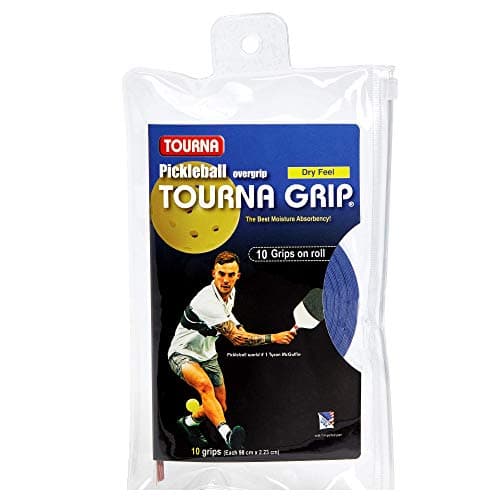
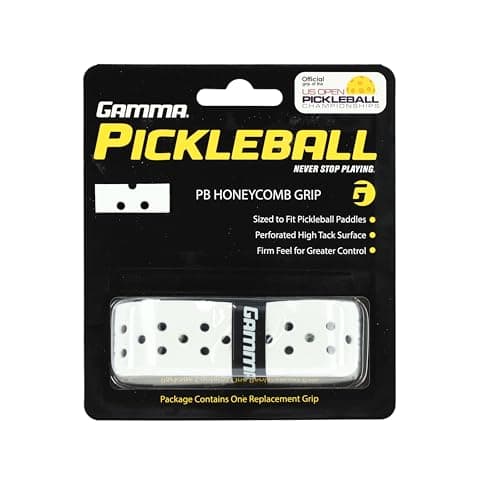
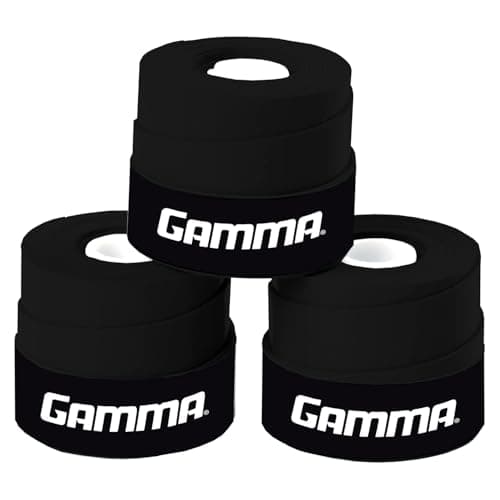
No, not to start — a new paddle arrives with a usable grip on it. Buy one when one of three things is true: your hands sweat and the paddle twists, the handle feels slightly too thin, or the original grip has gone slick and shiny. For the first, buy a dry grip like Tourna Grip; for the second and third, a tacky overgrip like GAMMA Supreme or a cushioned replacement grip like the GAMMA Honeycomb.
The distinction that trips people up is overgrip versus replacement grip. An overgrip goes over the grip the paddle came with: it is thin, it adds a small amount of thickness, and it is designed to be peeled off and replaced every few weeks. A replacement grip replaces the original entirely: it is thicker, usually cushioned, and you fit it once. Most people asking this question want an overgrip. People with a hand that hurts usually want the replacement.
Either way this is an eight-to-nineteen-dollar decision, which makes it the best value-for-money change available to a paddle you already own — and a far better first move than replacing a paddle that is only annoying you at the handle.
03The buyer's guide
What an overgrip actually changes
How hard you have to hold on
A slick handle makes you squeeze, and squeezing costs you touch on every soft shot as well as tiring your forearm. That is the real function here: a grip you trust is a grip you can hold loosely. Our grip guide covers how light "light" should be.
Grip size, by a small but useful amount
An overgrip adds thickness. That matters because paddle grips come in a narrow range — roughly 4-1/8 to 4-1/2 inches in circumference — and the standard advice when you are between sizes is to buy the smaller one, precisely because you can build it up this way and cannot shave one down. Measure yours with the grip size guide before you decide whether you want a thin overgrip or a thicker cushioned one.
Sweat, in one of two opposite ways
This is where most people buy the wrong thing. Tacky grips are grippy when dry and get slippery when soaked. Dry grips — the classic is Tourna Grip, sold in ten-packs for exactly this reason — feel less grippy to a dry hand and work better the wetter you get. If you play in heat or your hands run damp, a tacky grip is actively the wrong choice no matter how good it feels in the shop.
What it does not change
Not the swing weight in any way you will notice, not the paddle's power, and not its face. An overgrip is a handle change. If the paddle itself is wrong, see how to choose a pickleball paddle rather than re-wrapping it.
So do you need one? Three yeses and a no
| Situation | Buy | Why |
|---|
| Hands sweat; paddle rotates mid-rally | A dry/absorbent overgrip | Works wet; replace often. Sold in multipacks because it is a consumable. |
| Handle feels a touch thin, or you bought the smaller grip size | A tacky overgrip | Adds a small amount of circumference and a confident, dry-hand grip. |
| Hand or finger joints ache; original grip is worn through | A cushioned replacement grip | Cushions impact and adds more thickness than an overgrip. Fit once. |
| New paddle, dry hands, handle feels right | Nothing | You do not need one. Spend the money on balls. |
When to replace it
An overgrip is a consumable, not a component. Replace it when it stops doing its job: when a tacky grip has gone shiny and smooth, when a dry grip has gone grey and stiff, or when you notice yourself gripping harder than you used to. For a weekly player that is a few months; for someone playing four times a week in summer it can be a few weeks, which is why dry grips are sold ten at a time. A replacement grip lasts much longer — it is a once-a-season job at most.
While you are at it: a grimy paddle face loses texture and therefore spin, and that is a separate maintenance job with a different answer. Our how to clean a paddle guide covers both ends of the paddle, and when to replace your paddle is the honest version of when re-gripping has stopped being the answer.
Three cases where this is the right first purchase
You have arthritic hands. A cushioned replacement grip is the cheapest genuinely effective change available, because it cushions the joints and thickens the handle at the same time. Our paddles for arthritic hands roundup ranks it alongside the paddles for that reason.
Your elbow complains. Grip pressure and impact shock both reach the forearm, and a cushioned handle reduces one of them for under ten dollars — worth trying before a new paddle. See paddles for tennis elbow and elbow supports.
You bought a paddle with a small grip deliberately. Then the overgrip is not an accessory, it is the second half of the purchase. Buy both at once.
The full ranked comparison of tacky, dry and cushioned options — five products, with live prices — is our best pickleball overgrips roundup.