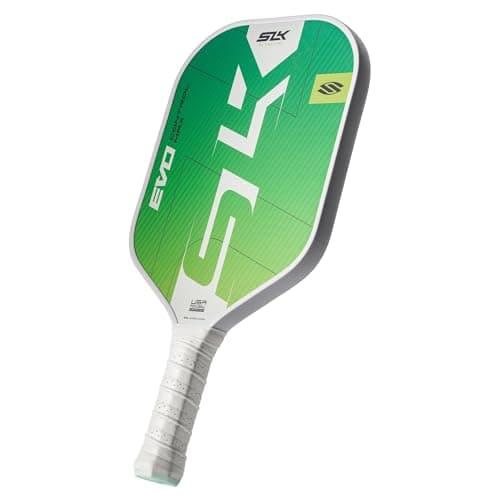
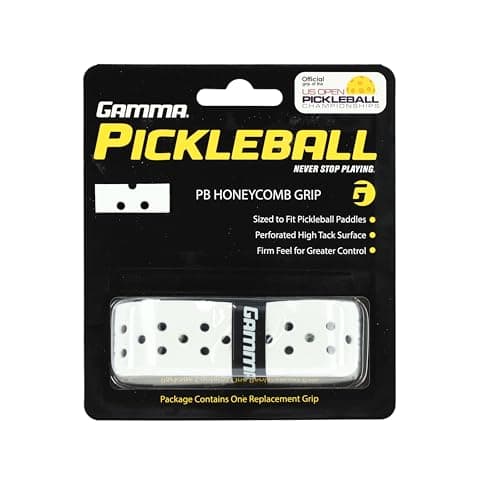
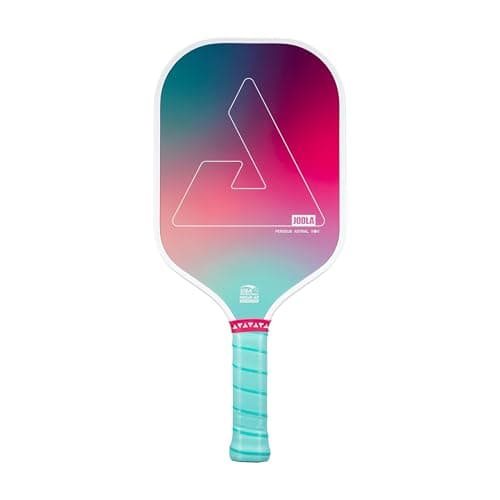
For arthritic hands, buy the JOOLA Astral Perseus. It is light, it is forgiving enough that you are not swinging hard to rescue off-center hits, and it ships with a cushioned grip — which is the part of a paddle an arthritic hand actually argues with. If the pain is impact rather than gripping, the Selkirk SLK Evo Control Max and its 16mm core is the better buy. And if you already own a paddle you like, start with the GAMMA Honeycomb Cushion Grip at the bottom of this list before you spend anything on a new one.
The reason grip leads this page and not weight is in the symptom itself. AAOS OrthoInfo describes hand-arthritis pain as typically arriving after periods of increased joint use, such as heavy gripping or grasping, often hours later or the next day. A paddle cannot treat arthritis. What it can do is change how hard and how often you have to clamp your hand shut over a two-hour session — and that is a function of grip circumference, grip cushioning and how much the paddle wants to twist when you miss the middle.
That is an equipment observation, not medical advice. Persistent joint pain is a question for a clinician, not a shopping decision, and nothing on this page is a treatment. What we can do honestly is read the published specs, say which numbers matter for this buyer and in what order, and name the figures manufacturers do not publish — because on this criterion the gaps matter as much as the numbers.
03The buyer's guide
The four specs that matter, in order
1. Grip circumference — and err small
A handle that is too big forces your fingers to stay open and your palm to do the clamping, which is the exact motion that hurts. A handle that is slightly too small lets you close your hand naturally. Crucially, the error is only recoverable in one direction: you can build a thin handle up with an overgrip or a replacement grip, but you cannot shave one down. So when you are between sizes, take the smaller one. Measure your hand first with our grip size guide — it takes a ruler and thirty seconds.
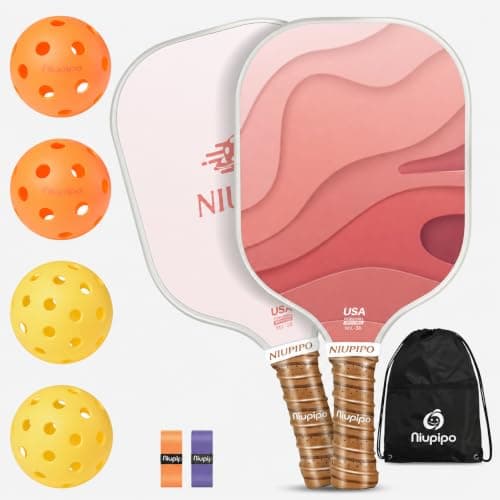
Only two paddles we rank publish a circumference at all. Selkirk gives the SLK Evo Control Max a 4-1/4 in grip, and niupipo publishes 4.25 in for the Lightweight — both at the small end of the normal 4-1/8 to 4-1/2 inch range, which is the right end for this buyer. Everyone else describes the grip and leaves the number off, which is why the table below has blanks in it rather than guesses.
2. Grip cushioning, which you can change for eight dollars
Cushioning is the one paddle variable you can upgrade after the fact, on any paddle, for less than the price of a sleeve of balls. A cushioned replacement grip does two useful things at once for an arthritic hand: it absorbs some of the shock that reaches the finger joints, and it adds a little circumference, which is the right way to dial in a handle that came out slightly thin. That is why the GAMMA Honeycomb Cushion Grip is on this list at all — it is ranked last because it is not a paddle, not because it matters least. Our overgrip roundup covers the tacky-versus-dry question separately.
3. Swing weight, not just static weight
A light paddle asks less of the wrist and hand across the several hundred swings in a session. The only published weight among our picks is niupipo's 7.6 oz, which is genuinely light; JOOLA and GAMMA both describe their paddles as lightweight without giving a figure. Shape matters here too, and it is not on any spec sheet: a widebody paddle puts its mass closer to your hand than an elongated one of the same weight, so it feels lighter to swing and twists less on an off-center hit. Our shape guide explains the trade, and the weight guide covers the ranges.
4. Core thickness — if impact is the problem
Thicker polymer cores transmit less shock into the hand. A 16mm core is the soft end of what the market sells and the reason the Selkirk sits at number two here despite being the most expensive pick. The honest counterweight: our lightest pick has the thinnest core on the site. USA Pickleball's certification record for the niupipo Lightweight publishes a 9.8mm core— a figure neither its Amazon listing nor niupipo's own page states. It is a paddle for a hand that tires, not a hand that is jarred. Full detail in our core thickness guide and the niupipo Lightweight review.
What each listing actually publishes
Every cell below is a figure the manufacturer, the retailer or USA Pickleball publishes. Where a maker does not state a number we say so rather than estimating it — a guessed grip circumference is worse than no number for someone buying on exactly that spec.
| Pick | Grip circumference | Core | Published weight | Grip type |
|---|
| JOOLA Astral Perseus | Not published | Polymer honeycomb, thickness not published | "Lightweight", no figure | Cushion grip |
| Selkirk SLK Evo Control Max | 4-1/4 in | 16mm Rev-Control polymer | Not published | Selkirk comfort grip, 4.85 in handle |
| niupipo Lightweight (set of 2) | 4.25 in | 9.8mm polypropylene (per USA Pickleball) | 7.6 oz | Cushion grip, 4.72 in handle |
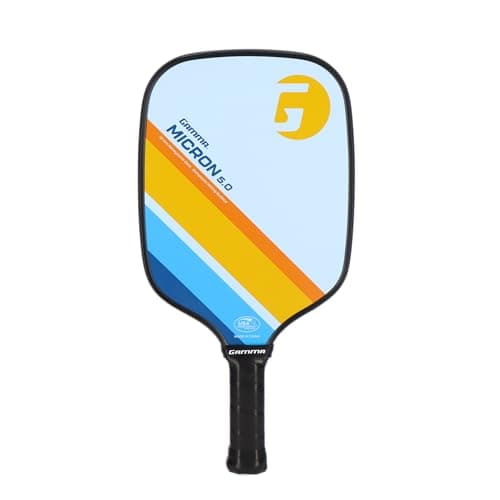
| Gamma Micron 5.0 | Not published | Polypropylene honeycomb, thickness not published | "Lightweight", no figure | Cushion grip |
| GAMMA Honeycomb Cushion Grip | Adds circumference to any handle | n/a — replacement grip | n/a | Cushioned, moisture-wicking |
Three things that help more than a new paddle
Loosen your grip. Most new players hold the paddle far harder than the shot requires, and a hard grip is both the thing that hurts and the thing that costs you touch on a dink. Our grip guide covers the continental hold and how light "light" should be.
Play more soft game. Dinks and resets are played at a fraction of the grip pressure a drive needs. The paddles on this page are control-biased for exactly that reason — see control vs power and how to dink.
Deal with the forearm separately. Hand arthritis and tennis elbow are different problems that often arrive together, and a forearm strap costs about as much as a sleeve of balls. Our elbow support roundup and paddles for tennis elbow handle that side.