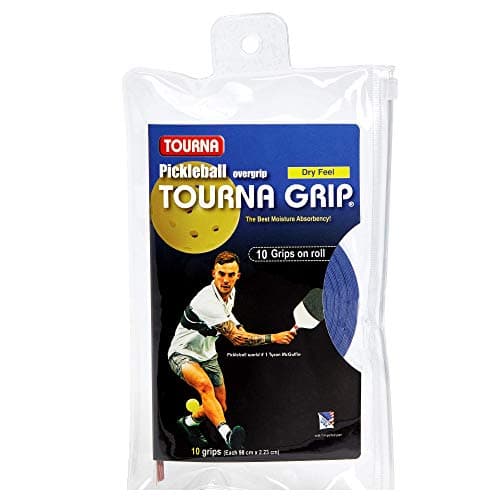
If your hands sweat, buy Tourna Grip. If they don't, buy GAMMA Supreme. If your handle is genuinely too thin rather than just slick, you want a replacement gripinstead of an overgrip. That's the entire decision, and it costs under $10 either way. Both are GAMMA products, and the rest of that range — the balls and the one paddle — is ranked on GAMMA pickleball gear.
This is the least glamorous page on this site and possibly the most useful. A slick handle makes you squeeze the paddle, squeezing tightens your forearm, and a tight forearm is how recreational players give themselves elbow pain. People spend $150 on a new paddle to fix a problem an $8 grip would have solved. The other half of that job is the face: a paddle that feels dead is often just dirty, and how to clean a pickleball paddle has the five-minute routine and the three things that will wreck one.
Prices below are live from Amazon and stamped with the date we checked them. Grips are cheap and stock is volatile; where we can't verify a current price we show none.
03The buyer's guide
Overgrip vs replacement grip: know which you need
These are different products and the words get used interchangeably, which causes most of the confusion.
An overgrip goes ON TOP of what's already there
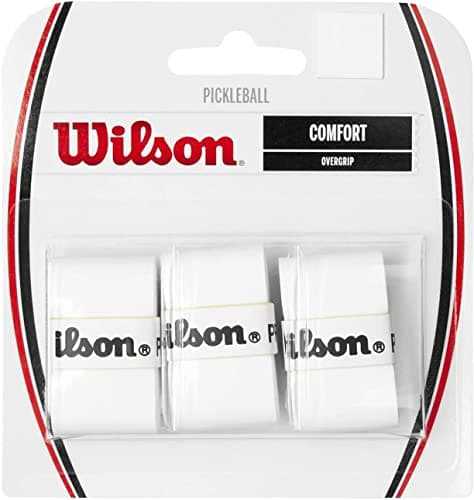
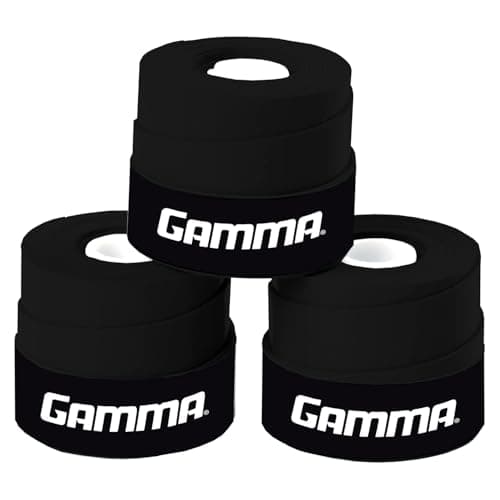
Thin, cheap, and designed to be replaced often. It changes the feel and tackiness of the handle and adds a very small amount of thickness. This is what most players want most of the time. You can stack two if you want a little more size. If you have landed here still unsure whether you need one at all, start with do you need an overgrip for pickleball — it works through the three situations where the answer is yes and the one where it is no.
A replacement grip goes UNDER everything
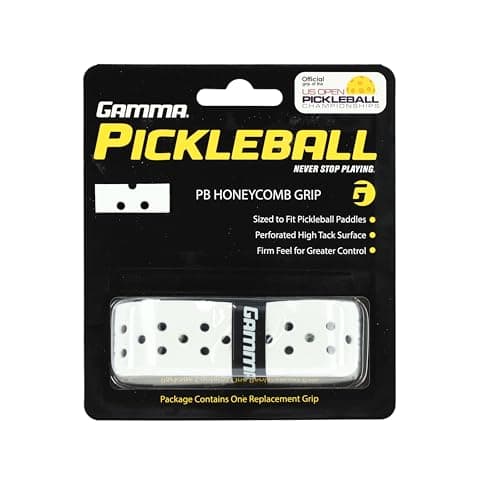
Thicker and cushioned. You strip the original grip off and fit this in its place. Use one when the factory grip has gone hard and slick with age, or when your handle is genuinely too small for your hand and you need real thickness rather than a millimeter.
Not sure which problem you have? Measure your grip size first — our grip size guide explains how, and getting this right matters more than which brand of grip you pick.
Tacky vs dry: the only other decision
Tacky grips
Sticky to the touch, right out of the packet. They feel secure immediately, which is why they're the default. The catch is moisture: once sweat gets between your hand and a tacky surface, the tack stops working and the grip becomes slick. Best for cool conditions, indoor play, and hands that stay dry.
Dry / absorbent grips
These feel slightly rough and chalky rather than sticky, and they work by absorbingmoisture rather than resisting it. Counter-intuitively they get more secure as your hand sweats. Tourna Grip is the famous example, and it's the answer for hot weather, humid climates and anyone whose grip goes slippery mid-game.
If you don't know which you are, buy one of each — the pair costs less than a sleeve of balls, and you'll know within a session.
How to wrap an overgrip
It takes about a minute and there's no skill to it.
- Start at the butt end. Peel the backing and stick the tapered end at the bottom of the handle, angled slightly so the wrap will spiral upward.
- Wrap upward with a slight overlap. Overlap each turn by roughly an eighth of an inch. More overlap makes a thicker, softer grip; less makes a thinner, firmer one.
- Keep light, even tension. Pull just firmly enough that there are no wrinkles. Pulling hard stretches the grip and it will loosen later.
- Finish below the paddle face and secure it with the supplied finishing tape.
Wrap direction is a genuine detail: right-handed players usually wrap counter-clockwise viewed from the butt, so the overlapping edge tightens rather than unpeels as you grip. Left-handers wrap the other way. If your grip keeps unraveling, this is almost always why.
How often to replace one
Replace an overgrip when it stops feeling secure — usually every four to eight weeks for weekly play, sooner in summer. The signals are obvious once you know them: the surface goes shiny, it feels slippery even with dry hands, or it's visibly discolored and hardened where your palm sits. At a few dollars a wrap this is the cheapest maintenance in the sport, and playing on a dead grip is how you end up with a sore elbow.
Does a grip actually improve your game?
Honestly? It won't add power or spin. What it does is remove a distraction and let you hold the paddle loosely, which matters more than it sounds — a relaxed grip produces better touch on dinks and drops, and it's the difference between a paddle that feels like an extension of your arm and one you're actively clinging to. If you're thinking about a new paddle because yours "feels wrong", spend $8 here first. Sometimes that genuinely is the problem — and if it isn't, our intermediate paddle picks will still be there.