Short version: a damp microfiber cloth, plain water, wiped across the face after every session. That is ninety per cent of paddle care. Everything below is the other ten per cent — what to do when that is not enough, what will damage the paddle, and where cleaning stops helping.
Why a paddle face gets slick
A textured face works by holding onto the ball for a few thousandths of a second so it rotates instead of sliding. Anything that fills the texture defeats that: court dust, the fine plastic residue outdoor balls shed, sunscreen, sweat, and the oil from your own hands on the face. None of that is wear. It sits on top of the texture and it comes off.
That is worth knowing, because a paddle that feels dead is often dirty rather than finished. Real wear — texture polished smooth, a core gone soft — is a different problem, and our when to replace your paddle guide separates the two.
What you need, and what you should never use
You need a microfiber cloth and water. Optionally a paddle eraser, which is a soft rubber block that lifts residue out of texture without abrasives.
Never use any of these on a paddle face:
- Abrasives. Scouring pads, magic-eraser melamine foam, sandpaper, grit. They work by removing material — on a paddle face that means removing the texture you are trying to restore, and on a competition paddle it makes it non-compliant, because surface roughness is a tested property.
- Solvents. Acetone, paint thinner, strong alcohol. They attack the resin that binds a carbon or fiberglass face and can lift printed graphics and edge tape.
- Soaking. Never submerge a paddle. Water that gets inside a honeycomb core through the edge or a handle vent has no way out, and a wet core is a dead core.
The grips below are the other half of paddle care — when a handle has gone slick or hard, cleaning it is not the fix. Prices are live and date-stamped.
01The short answer
#ad · Live prices from the Amazon Product API, as of Sep 17, 2026. Where we have no verified live price, we show none — we would rather leave a gap than print a number that has rotted.
02In detail
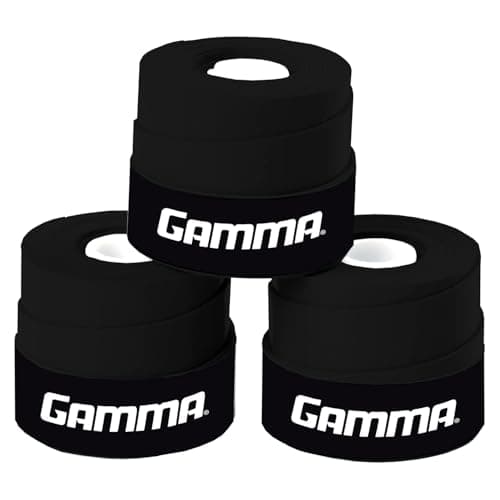
The safe default overgrip
Tacky finishThin profileMulti-sportSold in packs
The default overgrip: tacky, cheap, and the one most players end up buying again.
- Tack
- Durability
- Comfort
- Value
Pros
- +Genuinely tacky out of the packet, so your hand stops squeezing to hold on
- +Thin enough to add grip without noticeably changing handle size
- +Cheap enough to re-wrap whenever it goes slick
Cons
- −Tack fades faster in hot, humid conditions than a dry-feel grip
- −The thin profile adds very little size if your handle is genuinely too small
Don't buy this if…
…your hands sweat heavily. A dry, absorbent grip will out-perform a tacky one once moisture is involved.
Sweaty hands and hot courts
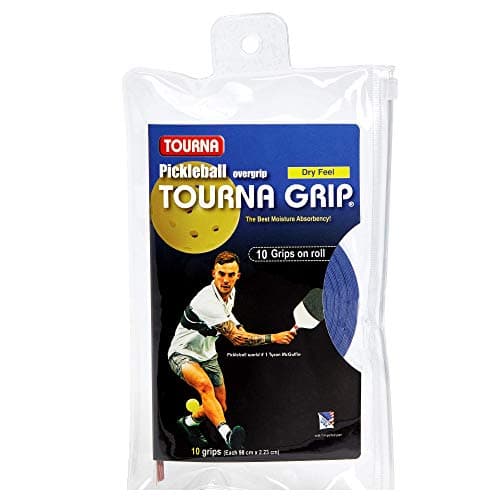
Dry/absorbent finish10-packThin profileRacquet-sport classic
The sweaty-hands answer — a dry, absorbent grip that gets grippier as you perspire, not slicker.
- Tack
- Durability
- Comfort
- Value
Pros
- +Absorbs moisture instead of sliding on it, which is the opposite of what tacky grips do
- +A 10-pack lasts most recreational players a very long time
- +A long-standing racquet-sport staple, not a pickleball fad product
Cons
- −Feels dry and slightly rough at first if you're used to tacky grips
- −Needs replacing more often than a tacky grip once it's saturated
Don't buy this if…
…you play indoors in cool conditions and your hands stay dry. A tacky grip will feel better and cost less.
Replacing a worn handle
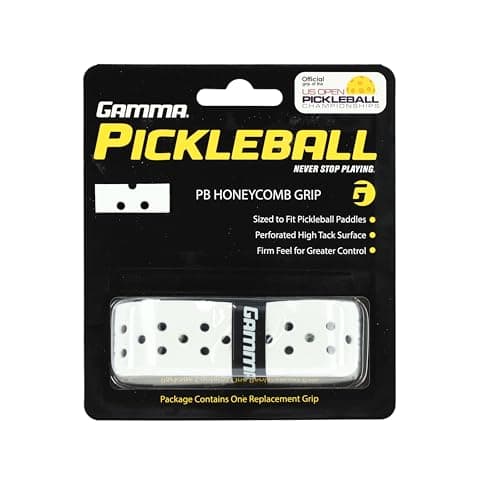
Replacement gripCushionedMoisture-wickingAdds handle size
A replacement grip, not an overgrip — what you want when the handle itself is too thin or the original has gone hard.
- Tack
- Durability
- Comfort
- Value
Pros
- +Replaces the original grip entirely, which is the fix when the factory wrap has died
- +Adds real thickness, so it genuinely helps if your handle measures too small
- +The cushioning is welcome for anyone with elbow or wrist sensitivity
Cons
- −Fiddlier to fit than an overgrip — you strip the old one off first
- −Adds size, which is the wrong direction if your grip is already too big
Don't buy this if…
…your handle already fits. An overgrip is cheaper, quicker, and doesn't change the size you measured.
03The buyer's guide
The face: a three-minute routine
- Knock the loose dust off. Tap the edge against your palm, or brush it with a dry cloth. Do this first so you are not grinding grit into the face in the next step.
- Wipe with a damp microfiber cloth — damp, not wet, and wrung out. Work in straight passes rather than circles. On a raw carbon face you will see grey residue on the cloth; that is normal and it is the residue, not the face.
- For stubborn spots, a drop of mild dish soap in water on the cloth. Then wipe again with a clean damp cloth to remove the soap, because soap film is exactly as slick as the residue you just removed.
- Dry immediately with the dry side of the cloth. Do not leave it to air dry face-up in sun.
Do this after every outdoor session and the texture on a good carbon face will last a great deal longer. Our carbon fiber guide explains why raw faces hold their grit longer than painted ones in the first place.
The grip and handle
An overgrip is a consumable. It is designed to go slick and be replaced, and trying to clean one is usually wasted effort — a fresh wrap costs a few dollars and takes two minutes. The GAMMA Supreme is the default tacky choice, and Tourna Grip is the dry, absorbent answer if your hands sweat — a tacky grip gets slicker as it gets wet, which is the opposite of what you want on a hot court.
The grip underneath is different. The factory grip is meant to last, but it hardens and compresses over a couple of years and eventually stops cushioning anything. That is when a replacement grip like the GAMMA Honeycomb earns its keep — you strip the old one off entirely. It also adds thickness, which is useful if your handle measured slightly small on the ruler test in our grip size guide. The full range is in our overgrip roundup.
Clean the butt cap and the edge of the handle with the same damp cloth. Sweat collects there and it is the part of a paddle that starts to smell.
The edge guard
Court grit packs into the seam between the edge guard and the face. A dry toothbrush along the seam lifts it out. If the edge guard is lifting or peeling at a corner, that is not a cleaning problem — it is a structural one, and on a thermoformed paddle it can be the first visible sign of a bond failing. Our thermoforming guide covers what that means.
Storage, which matters more than cleaning
- Not in a hot car. This is the single most common way people kill a paddle. A closed car in summer reaches temperatures that soften the adhesives holding the face to the core. A cheap paddle cover is not the answer; not leaving it in the car is.
- Not face-down on concrete. Resting a paddle face-down between games grinds grit into the texture.
- In a cover or a bag sleeve. Paddles scuff each other in a shared bag. Our bag roundup covers models with dedicated paddle compartments, and what to pack lists the cloth alongside the rest.
When cleaning is not the answer
If the face still feels slick after a proper clean, the texture is genuinely worn and no amount of wiping restores it — texture is removed material. If the paddle sounds duller and balls come off it shorter than they used to, the core has softened. If it suddenly sounds louder and hotter, check for delamination. All three mean shopping, not cleaning: start at when to replace your paddle and then the beginner roundup or our guide to how much to spend.
How we picked
Everyone in this category says they tested twenty paddles. We haven't tested these in a lab, and we say so. Instead we compile the published manufacturer specs, do the math, weight everything toward what a beginner actually needs — forgiveness, a large sweet spot, sane weight and a fair price — and score each product against a published rubric. The scores are judgments from that research, not measurements we took. Where a fact came from someone else, we name it in Sources.