PPost & Paddle
01Paddles

Thermoformed pickleball paddles, explained

It is the most-used word in premium paddle marketing and almost nobody explains it. Here is what thermoforming changes, what it costs, and the failure mode nobody advertises.

By Stephen V.Editor, Post & PaddleUpdated

Heads up: Post & Paddle is reader-funded. If you buy through our links we may earn a commission, at no extra cost to you. It never changes which product we recommend. How this works.

Thermoforming is a construction method, not a material. A conventional paddle is assembled: a honeycomb core, a face sheet glued to each side, and a separate plastic edge guard wrapped around the outside to hold it all together. A thermoformed paddle is built as one sealed unit — the faces are folded around the core and bonded under heat and pressure, so the perimeter is part of the paddle rather than a lid clipped onto it.

What that actually changes

  • A stiffer perimeter. On a glued paddle the edges are the softest part of the face. Seal the perimeter and the whole face flexes more evenly, which is what people mean when they say a thermoformed paddle has a "bigger sweet spot" — the edges behave more like the middle.
  • More power. A stiffer structure returns more of the ball's energy instead of absorbing it in the edges. This is why thermoformed paddles are consistently the poppier ones at a given core thickness.
  • More weight, usually. Wrapping the faces around the core adds material. Many thermoformed paddles are also foam-injected around the perimeter, which adds more.

What it does not change

The face material. Thermoforming and carbon fiber get mentioned in the same sentence so often that people assume they are the same thing. They are not: you can thermoform a fiberglass paddle and you can glue a raw-carbon one. Spin comes from the face texture, which is a separate question covered in our carbon fiber guide and our face material guide.

Below: the one thermoformed paddle we recommend, and two good conventional paddles at similar prices, so you can see what the construction is actually worth in dollars.

01The short answer

Quick picks

#ProductBest forScorePrice
01
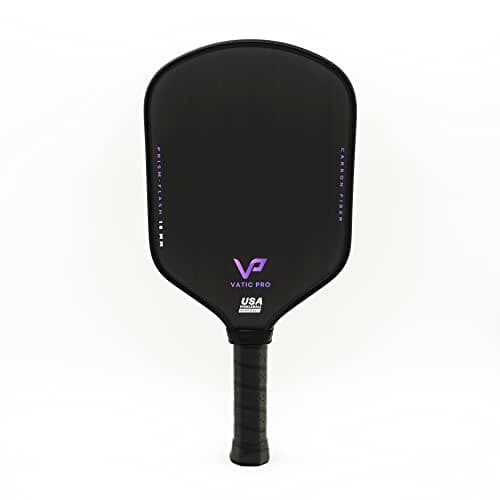
Vatic Pro Vatic Pro Prism Flash
Vatic Pro Prism Flash

The enthusiast's value darling: thermoformed carbon performance for roughly half what the big brands charge for it.

One paddle to grow into
8.2
$99.99Amazon
02
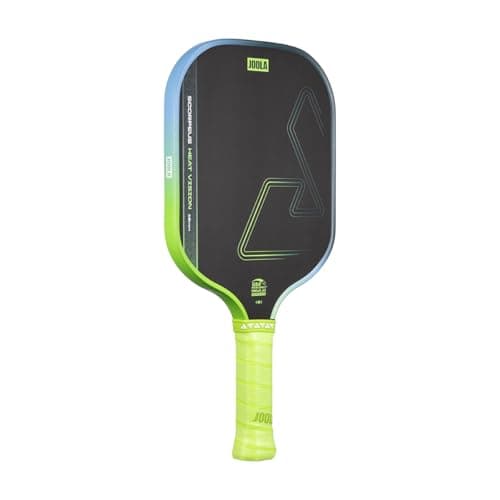
JOOLA JOOLA Scorpeus Heat Vision 16mm
JOOLA Scorpeus Heat Vision 16mm

A standard-shape 16mm carbon paddle that keeps a forgiving face while adding real spin — the safest big-brand upgrade.

Upgrading without losing forgiveness
8.0
$99.95Amazon
03
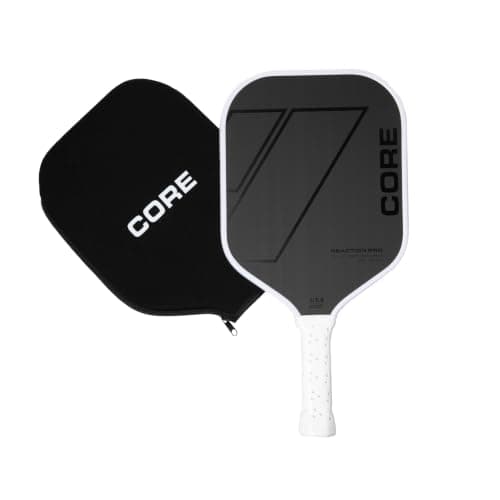
CORE Pickleball CORE Reaction Pro Carbon Fiber
CORE Reaction Pro Carbon Fiber

The cheapest genuinely carbon-faced paddle we are comfortable recommending — a real spin surface without a three-figure price.

Trying a carbon face without committing
7.8
$44.99Amazon

#ad · Live prices from the Amazon Product API, as of Sep 17, 2026. Where we have no verified live price, we show none — we would rather leave a gap than print a number that has rotted.

02In detail

The picks, in full

01
Vatic Pro Vatic Pro Prism Flash

One paddle to grow into

Vatic Pro Prism Flash

Raw carbon fiber face16mm foam-injected coreElongated shapeThermoformed unibody
8.2/10

The enthusiast's value darling: thermoformed carbon performance for roughly half what the big brands charge for it.

Forgiveness
7
Control
9
Power
8
Comfort
8
Value
9

Pros

  • Thermoformed foam-wall construction — the same tech the $200+ paddles use — at a mid-range price
  • The raw carbon face is one of the grippier surfaces you can buy for spin
  • The one paddle here a beginner can keep well into intermediate play

Cons

  • Elongated and a touch heavier — less forgiving than a widebody on day one
  • Frequently sells out; stock comes and goes

Don't buy this if…

this is your very first day and you've never held a paddle. It rewards a developing stroke; a rank beginner is better served by a lighter, wider, more forgiving face first.

$99.99View on Amazon

Price as of Sep 17, 2026. Prices change — Amazon's is the one that counts.

#ad · we may earn a commission from this link to Vatic Pro Prism Flash

02
JOOLA JOOLA Scorpeus Heat Vision 16mm

Upgrading without losing forgiveness

JOOLA Scorpeus Heat Vision 16mm

Textured carbon face16mm coreStandard shapeUSA Pickleball approved
8.0/10

A standard-shape 16mm carbon paddle that keeps a forgiving face while adding real spin — the safest big-brand upgrade.

Forgiveness
9
Control
8
Power
7
Comfort
8
Value
8

Pros

  • Standard shape keeps the wide, forgiving sweet spot a developing player still needs
  • Textured carbon surface grips the ball properly for topspin drives and rolls
  • 16mm core gives the muted, controllable feel that suits the soft game

Cons

  • Priced near the $100 mark, which is real money for a second paddle
  • Standard shape gives up the reach an elongated paddle offers

Don't buy this if…

you already know you want maximum reach and power. An elongated, thermoformed paddle is the tool for that game — this one trades reach for a bigger sweet spot.

$99.95View on Amazon

Price as of Sep 17, 2026. Prices change — Amazon's is the one that counts.

#ad · we may earn a commission from this link to JOOLA Scorpeus Heat Vision 16mm

03
CORE Pickleball CORE Reaction Pro Carbon Fiber

Trying a carbon face without committing

CORE Reaction Pro Carbon Fiber

Carbon fiber facePolymer honeycomb coreUSA Pickleball approvedCushion grip
7.8/10

The cheapest genuinely carbon-faced paddle we are comfortable recommending — a real spin surface without a three-figure price.

Forgiveness
7
Control
8
Power
7
Comfort
8
Value
9

Pros

  • A carbon hitting surface at a price most fiberglass paddles occupy
  • USA Pickleball approved, so it is legal in club and league play
  • Comfortable cushioned grip out of the box — no immediate overgrip purchase needed

Cons

  • Budget carbon loses its texture faster than a premium raw-carbon face
  • Not thermoformed, so the perimeter is softer than paddles twice the price

Don't buy this if…

you have never held a paddle. Carbon's advantage is spin, and spin needs a brushing stroke you have not built yet — a fiberglass beginner paddle teaches more for the same money.

$44.99View on Amazon

Price as of Sep 17, 2026. Prices change — Amazon's is the one that counts.

#ad · we may earn a commission from this link to CORE Reaction Pro Carbon Fiber

03The buyer's guide

Thermoformed vs a regular paddle: the honest comparison

 Thermoformed unibodyConventional glued build
PerimeterSealed, part of the structureSeparate edge guard over glued faces
Effective sweet spotLarger — edges behave more like the centreSofter toward the edges
Power at the same core thicknessHigherLower
Typical priceFrom about $100From about $25
Main failure modeDelamination — the bond separatingCore softening; edge guard peeling

Delamination: the part the marketing skips

Delamination is when the bond between the face and the core separates. The face is no longer rigidly attached, so it acts like a trampoline: the paddle gets noticeably louder, gets noticeably more powerful, and starts launching balls the player did not mean to hit that hard. It is a failure, not an upgrade, and it is the reason paddle certification bodies test for it.

Two things follow from that. First, a delaminated paddle is not legal for sanctioned play, even if the model is on the approved list, because the paddle no longer performs as the tested sample did — the UPA-A and USA Pickleball equipment standards are written around the tested specification. Second, if your paddle suddenly gets louder and hotter, that is the signal to check it, not to enjoy it. Our when to replace your paddle guide covers the other end-of-life signs.

What we are not going to tell you: a failure rate. We have not found published, brand-by-brand delamination data from a source we would stake a recommendation on, and we are not going to estimate one. What is well documented is that the failure mode exists, that it is specific to bonded constructions, and that it is why certification bodies retest paddles.

Does a beginner need a thermoformed paddle?

No — and for a first paddle we would actively steer you away. Thermoforming buys power and a more uniform face at the cost of weight and price. A new player's problem is not a shortage of power; it is putting the ball where they aimed. The Vatic Pro Prism Flash is our recommended thermoformed paddle and even its own entry says the same thing: it rewards a developing stroke, and a rank beginner is better served by a lighter, wider face first. There is a full review if you want the detail.

The two conventional paddles on this page are here as the honest alternative. The JOOLA Scorpeus Heat Vision gives you a textured carbon face and a 16mm core in a standard shape that keeps its forgiveness, at a similar price. The CORE Reaction Pro gives you a carbon face for half the money and its own listing is honest that it is not thermoformed, so the perimeter is softer.

When thermoforming is worth paying for

  • You already play several times a week and your drives are landing short — the extra power is usable rather than dangerous.
  • You mis-hit toward the edges and want the face to forgive it. This is thermoforming's most real benefit for an improving player.
  • You want one paddle to last two years and would rather spend once. That is the argument in paddles for beginners moving to intermediate.

How to tell if a paddle is thermoformed

The listing usually says so, because it is a selling point — look for "thermoformed", "unibody", or "foam-injected perimeter". Visually, a thermoformed paddle normally has a thin edge tape rather than a chunky moulded edge guard, and the face wraps continuously around the perimeter. If the listing does not mention it, assume it is a conventional build; no manufacturer hides it.

How we picked

We do not run a testing lab

Everyone in this category says they tested twenty paddles. We haven't tested these in a lab, and we say so. Instead we compile the published manufacturer specs, do the math, weight everything toward what a beginner actually needs — forgiveness, a large sweet spot, sane weight and a fair price — and score each product against a published rubric. The scores are judgments from that research, not measurements we took. Where a fact came from someone else, we name it in Sources.
04Questions

Frequently asked

What does thermoformed mean on a pickleball paddle?

It means the paddle is built as one sealed unit — the face material is folded around the core and bonded under heat and pressure — rather than assembled from a core, two glued face sheets and a separate edge guard. The result is a stiffer perimeter, more power at the same core thickness, and usually a little more weight.

Is a thermoformed paddle better than a regular one?

Better at specific things: power and edge-of-face forgiveness. Worse at others: price, weight and the risk of delamination. For an intermediate player with a developed drive it is usually worth it. For a first paddle it is not, and a more forgiving conventional paddle teaches more.

What is paddle delamination?

The bond between the face and the core separating, so the face behaves like a trampoline. The paddle gets louder and hotter than it should be, which is a defect rather than an improvement, and it makes the paddle non-compliant for sanctioned play because it no longer matches the tested specification.

Are thermoformed paddles legal in USA Pickleball play?

Yes, as a construction method — thermoformed paddles appear on the approved list like any other. What is not legal is a paddle that has been altered or has delaminated, because approval applies to the paddle as tested. See USA Pickleball approved paddles, explained.

Is thermoformed the same as carbon fiber?

No. Carbon fiber is the face material; thermoforming is how the paddle is assembled. You can have either without the other, though most thermoformed paddles use carbon faces because both sit at the premium end. Spin comes from the face texture, not the construction.

06Read next
05Sources

Where our facts come from