PPost & Paddle
01Paddles

The best pickleball paddles for intermediate players

You've outgrown the paddle that came in the set. Here's what actually changes when you upgrade, which paddle to buy at each budget, and how to tell you're not ready yet.

By Stephen V.Editor, Post & PaddleUpdated

Heads up: Post & Paddle is reader-funded. If you buy through our links we may earn a commission, at no extra cost to you. It never changes which product we recommend. How this works.

The short version: if you want one paddle that upgrades your game without punishing you for the shots you haven't learned yet, buy the JOOLA Scorpeus Heat Vision 16mm. It keeps the wide, forgiving face you're used to and adds the textured carbon and thicker core that make spin and touch possible. If your budget is half that, the JOOLA GRAF Edge gets you most of the way for about $50.

"Intermediate" is a slippery word in pickleball, so let's define it the way it actually matters for buying: you are intermediate when the paddle, not your technique, is the thing losing you points. Concretely, that usually means you can rally consistently, you understand the kitchen and the two-bounce rule, you're trying to hit third-shot drops on purpose, and you've started to notice that your paddle either pops the ball too far on soft shots or refuses to grip it when you brush up for spin. If none of that sounds like you yet, save your money — our beginner paddle picks will serve you better and cost less.

Everything on this list is a genuine step up in construction from an entry paddle, and every price here is live from Amazon and stamped with the date we checked it. Where we don't have a verified current price, the number disappears and the button says "Check price" instead — we'd rather show a gap than a figure that has rotted.

01The short answer

Quick picks

#ProductBest forScorePrice
01
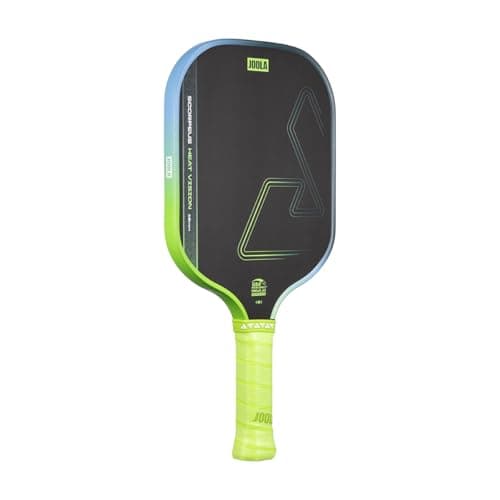
JOOLA JOOLA Scorpeus Heat Vision 16mm
JOOLA Scorpeus Heat Vision 16mm

A standard-shape 16mm carbon paddle that keeps a forgiving face while adding real spin — the safest big-brand upgrade.

Upgrading without losing forgiveness
8.0
$99.95Amazon
02
Selkirk Selkirk SLK Evo Control
Selkirk SLK Evo Control

Selkirk build quality in a control-tuned carbon paddle, at a price that doesn't require you to be good yet.

The soft game and dinking
8.0
$75.00Amazon
03
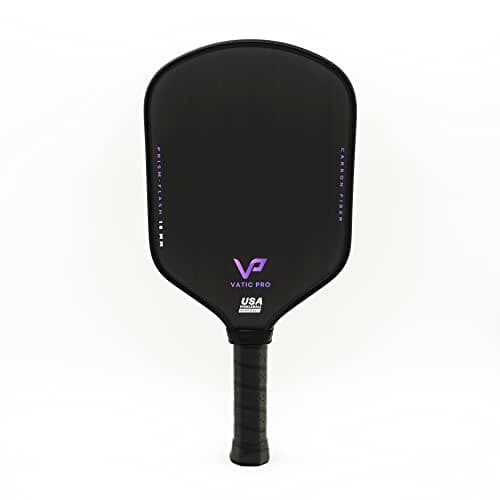
Vatic Pro Vatic Pro Prism Flash
Vatic Pro Prism Flash

The enthusiast's value darling: thermoformed carbon performance for roughly half what the big brands charge for it.

One paddle to grow into
8.2
$99.99Amazon
04
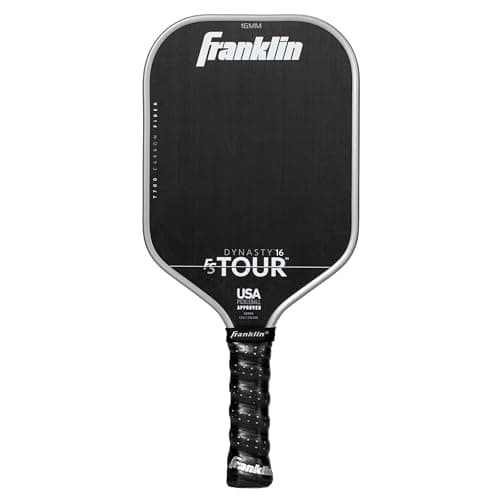
Franklin Sports Franklin FS Tour Dynasty Pro 16mm
Franklin FS Tour Dynasty Pro 16mm

Franklin's tour-series build at the top of the sensible range — the most paddle here before the prices get silly.

The last paddle before premium
8.0
$100.35Amazon
05
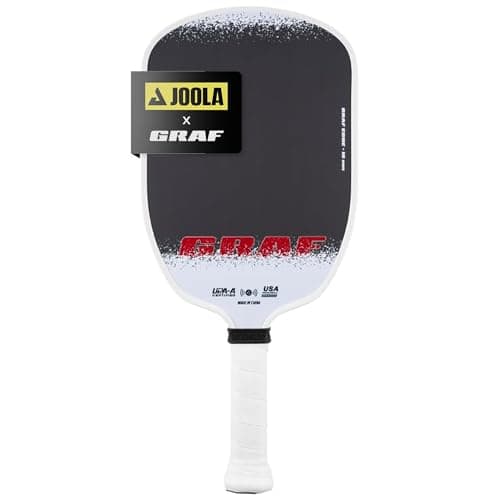
JOOLA JOOLA GRAF Edge 16mm
JOOLA GRAF Edge 16mm

The cheapest way into a real 16mm carbon paddle from a top-tier brand — the natural step up from a fiberglass beginner paddle.

The first proper upgrade
8.2
$49.95Amazon

#ad · Live prices from the Amazon Product API, as of Sep 8, 2026. Where we have no verified live price, we show none — we would rather leave a gap than print a number that has rotted.

02In detail

The picks, in full

01
JOOLA JOOLA Scorpeus Heat Vision 16mm

Upgrading without losing forgiveness

JOOLA Scorpeus Heat Vision 16mm

Textured carbon face16mm coreStandard shapeUSA Pickleball approved
8.0/10

A standard-shape 16mm carbon paddle that keeps a forgiving face while adding real spin — the safest big-brand upgrade.

Forgiveness
9
Control
8
Power
7
Comfort
8
Value
8

Pros

  • Standard shape keeps the wide, forgiving sweet spot a developing player still needs
  • Textured carbon surface grips the ball properly for topspin drives and rolls
  • 16mm core gives the muted, controllable feel that suits the soft game

Cons

  • Priced near the $100 mark, which is real money for a second paddle
  • Standard shape gives up the reach an elongated paddle offers

Don't buy this if…

you already know you want maximum reach and power. An elongated, thermoformed paddle is the tool for that game — this one trades reach for a bigger sweet spot.

$99.95View on Amazon

Price as of Sep 8, 2026. Prices change — Amazon's is the one that counts.

#ad · we may earn a commission from this link to JOOLA Scorpeus Heat Vision 16mm

02
Selkirk Selkirk SLK Evo Control

The soft game and dinking

Selkirk SLK Evo Control

Carbon fiber faceMax-thickness coreControl-tunedSelkirk build
8.0/10

Selkirk build quality in a control-tuned carbon paddle, at a price that doesn't require you to be good yet.

Forgiveness
8
Control
9
Power
6
Comfort
9
Value
8

Pros

  • Tuned for touch, which is the skill that actually wins games at this level
  • Selkirk build quality and a real warranty path behind it
  • Soft, muted feel makes the third-shot drop far easier to land

Cons

  • Deliberately low-powered — you supply the pace on drives
  • Costs more than a generic carbon paddle with similar specs on paper

Don't buy this if…

you want easy put-away power. This is a control paddle by design; a power-tuned face will feel much better if you like to drive.

$75.00View on Amazon

$79.996% off

Price as of Sep 8, 2026. Prices change — Amazon's is the one that counts.

#ad · we may earn a commission from this link to Selkirk SLK Evo Control

03
Vatic Pro Vatic Pro Prism Flash

One paddle to grow into

Vatic Pro Prism Flash

Raw carbon fiber face16mm foam-injected coreElongated shapeThermoformed unibody
8.2/10

The enthusiast's value darling: thermoformed carbon performance for roughly half what the big brands charge for it.

Forgiveness
7
Control
9
Power
8
Comfort
8
Value
9

Pros

  • Thermoformed foam-wall construction — the same tech the $200+ paddles use — at a mid-range price
  • The raw carbon face is one of the grippier surfaces you can buy for spin
  • The one paddle here a beginner can keep well into intermediate play

Cons

  • Elongated and a touch heavier — less forgiving than a widebody on day one
  • Frequently sells out; stock comes and goes

Don't buy this if…

this is your very first day and you've never held a paddle. It rewards a developing stroke; a rank beginner is better served by a lighter, wider, more forgiving face first.

$99.99View on Amazon

Price as of Sep 8, 2026. Prices change — Amazon's is the one that counts.

#ad · we may earn a commission from this link to Vatic Pro Prism Flash

04
Franklin Sports Franklin FS Tour Dynasty Pro 16mm

The last paddle before premium

Franklin FS Tour Dynasty Pro 16mm

Carbon fiber face16mm coreTour-series buildUSA Pickleball approved
8.0/10

Franklin's tour-series build at the top of the sensible range — the most paddle here before the prices get silly.

Forgiveness
8
Control
9
Power
8
Comfort
8
Value
7

Pros

  • Tour-series construction from the brand that makes the official USA Pickleball ball
  • 16mm core delivers the muted, controlled feel that serious intermediate play rewards
  • Balanced enough to drive and dink without switching paddles

Cons

  • The most expensive pick here, and the gains over the $50 tier are incremental
  • Franklin's paddle line is less talked-about than its balls, so resale is thinner

Don't buy this if…

you're still deciding whether pickleball sticks. This is a commitment-level paddle — spend $50 first and upgrade once you're sure.

$100.35View on Amazon

$149.9933% off

Price as of Sep 8, 2026. Prices change — Amazon's is the one that counts.

#ad · we may earn a commission from this link to Franklin FS Tour Dynasty Pro 16mm

05
JOOLA JOOLA GRAF Edge 16mm

The first proper upgrade

JOOLA GRAF Edge 16mm

Carbon fiber face16mm polymer coreStandard shapeJOOLA build
8.2/10

The cheapest way into a real 16mm carbon paddle from a top-tier brand — the natural step up from a fiberglass beginner paddle.

Forgiveness
8
Control
9
Power
7
Comfort
8
Value
9

Pros

  • A 16mm core is the control-first thickness most improving players settle on
  • Carbon face adds genuine bite for spin without the premium-paddle price
  • JOOLA is a major brand, so warranty, stock and resale all actually exist

Cons

  • Less raw power than the thermoformed paddles a tier above
  • Standard shape means no extra reach if you want an elongated feel

Don't buy this if…

you have never played. This rewards a stroke that already exists — start on a lighter, more forgiving fiberglass paddle and come back to it in a season.

$49.95View on Amazon

Price as of Sep 8, 2026. Prices change — Amazon's is the one that counts.

#ad · we may earn a commission from this link to JOOLA GRAF Edge 16mm

03The buyer's guide

What actually changes when you upgrade

Upgrading a paddle is not like upgrading a phone. You are not buying "more paddle" — you are buying a different set of trade-offs. Three things change, and only three.

1. Core thickness: 16mm is the intermediate default

Most beginner paddles use a thinner core (13mm or so) because thin cores are poppy — the ball springs off, which flatters a short, tentative swing. As soon as you start playing the soft game, that pop becomes your enemy: your dinks float up and your opponent puts them away. A 16mm core absorbs pace instead of returning it, which is why nearly every control-oriented paddle sold to improving players is 16mm. You give up some free power and you get back the ability to place a ball softly. We break the trade-off down properly in our core thickness guide.

2. Face material: textured carbon is finally worth paying for

On day one, a textured carbon face is a waste of money — you cannot yet brush the ball to create spin, so you are paying for grit you never use. Once you're rolling the ball and trying to dip a drive under your opponent's paddle, that same grit is the difference between a shot that lands and one that sails. Every paddle on this page has a carbon face for that reason. Note the honest downside: textured faces wear smooth. The grit fades with heavy play, and no manufacturer will tell you exactly how fast. See graphite vs fiberglass for how the materials compare.

3. Shape: reach versus forgiveness, and you can't have both

A standard (wide-body) paddle has the biggest sweet spot. An elongated paddle trades some of that sweet spot for extra reach and leverage on drives. Intermediate players are the first group for whom elongated genuinely makes sense — but only if your contact is consistent. If you still shank one in three balls off the edge, elongated will make that worse, not better.

How much should an intermediate player spend?

$50 to $100 is the honest range.Below $50 you can still get a real carbon paddle (the GRAF Edge proves it), but you're unlikely to get a thermoformed build or a premium grip. Above about $130 you're into pro-tier paddles where the gains are real but small, and mostly matter to players competing in tournaments. If you are choosing between spending $180 on a paddle and spending $60 on a paddle plus $120 on court time and coaching, take the coaching — it will improve your results far more. That pro-tier end of the market is outside what we cover in depth here; if you do want to browse it, Rally & Dink's pickleball paddle reviews rank the spin, control and power models in that range.

Three signs you're not ready to upgrade yet

We would rather lose the sale than sell you a paddle that makes you worse. Hold off if:

  • You still miss the sweet spot regularly. A control paddle punishes off-center contact more than a forgiving beginner paddle does. Fix contact first.
  • You've never tried to hit a third-shot drop.The main benefit of a 16mm control paddle is the soft game. If you aren't playing it, you're buying a downgrade in power for a benefit you don't use.
  • Your current paddle is fine and you're just bored.That's a legitimate reason to buy a paddle, but be honest that it's the reason — don't expect a new paddle to add two levels to your game.

Don't forget the rest of the kit

At this level the paddle is rarely the weakest link. If you're still playing in running shoes, a proper pair of court shoes will do more for your game — and your ankles — than any paddle. And if your handle is slick or a touch too small, a $8 overgrip fixes a problem you may have been blaming on the paddle.

How we picked

We do not run a testing lab

Everyone in this category says they tested twenty paddles. We haven't tested these in a lab, and we say so. Instead we compile the published manufacturer specs, do the math, weight everything toward what a beginner actually needs — forgiveness, a large sweet spot, sane weight and a fair price — and score each product against a published rubric. The scores are judgments from that research, not measurements we took. Where a fact came from someone else, we name it in Sources.
04Questions

Frequently asked

When should I upgrade from a beginner pickleball paddle?

Upgrade when the paddle is the thing costing you points, not your technique. In practice that means you rally consistently, you're attempting third-shot drops, and you notice your paddle popping soft shots too high or failing to grip the ball when you brush for spin. If you still mishit regularly, stay on a forgiving beginner paddle a while longer.

Is a 16mm paddle better than a 13mm paddle?

Not better — different. A 16mm core absorbs pace and gives you control for dinks and drops; a 13mm core is poppier and gives easier power. Improving players usually move to 16mm because the soft game matters more as you climb. See our core thickness guide.

Do I need a carbon fiber paddle as an intermediate player?

It's the first point at which carbon is genuinely worth the money. A textured carbon face lets you add spin, which requires a brushing stroke that most beginners haven't built yet. Be aware that textured faces do wear smoother over time.

How much should I spend on an intermediate pickleball paddle?

$50 to $100 covers it. You can get a real 16mm carbon paddle from a major brand at the bottom of that range and a tour-series build at the top. Above roughly $130 the gains get small and mostly matter for tournament play.

Should an intermediate player use an elongated paddle?

Only if your contact is consistent. Elongated paddles add reach and leverage on drives but shrink the sweet spot. If you still catch the edge often, a standard shape will serve you better while you tighten up contact.

06Read next
05Sources

Where our facts come from