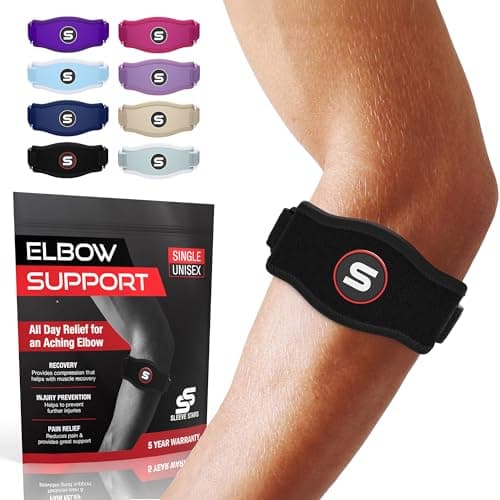
First, the important part: nothing on this page is medical advice, and we are not clinicians. These are consumer sporting-goods products. If your elbow pain is persistent, worsening, or stops you doing ordinary things, that is a question for a healthcare professional and not a shopping decision. What follows is a straightforward comparison of what these products are and how they differ.
Our pick is the Sleeve Stars strap, mostly because of fit: it adjusts across a genuinely wide forearm range and stays where you put it, which is the single most common failure of cheap straps.
The more useful thing this page can tell you, though, is that the brace is rarely the biggest lever. Paddle weight, grip size and grip pressure change how much load reaches your elbow on every one of several hundred swings a session. Those changes are covered below, and they are worth trying first — and if you are ready to act on them, our paddles for tennis elbow roundup ranks the shortlist on exactly those specs. The whole picture — what the condition is, why new players get it, and the four changes in the order they matter — is in pickleball elbow: what actually helps.
03The buyer's guide
The three types, and what separates them
Forearm straps
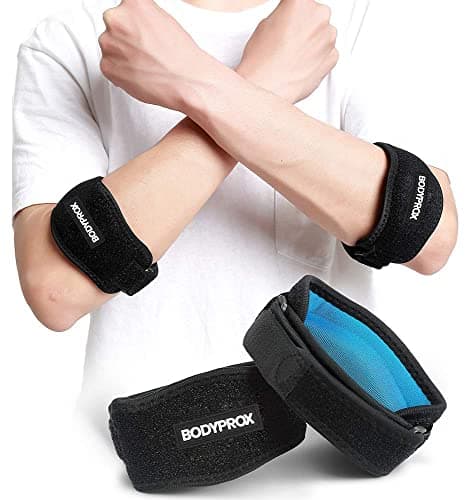
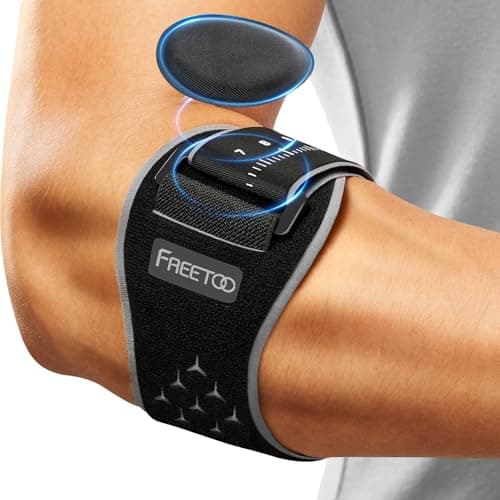
A narrow band worn a couple of inches below the elbow with a pressure pad over the muscle belly. It is the most common design and the cheapest. The pad is meant to sit over the sore area, so adjustability matters more than material — a strap that will not tighten enough, or that creeps down your arm mid-game, does nothing at all. This is the category the Sleeve Stars, Bodyprox and FREETOO picks belong to.
Compression sleeves
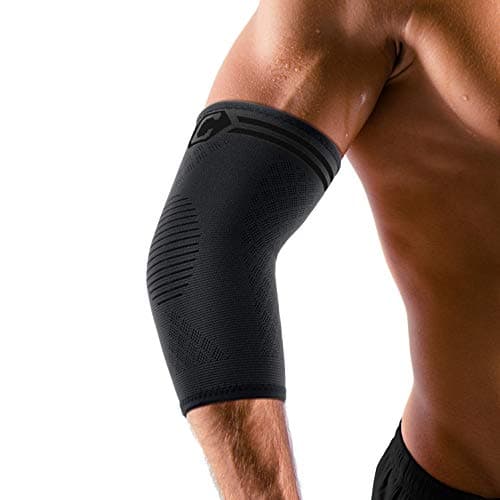
A knitted tube pulled over the whole joint. No targeted pressure point, even compression throughout, and — the reason many players prefer them — it keeps the joint warm. There is nothing to adjust and nothing to slip. Players who find a strap's pressure pad irritating usually get on better with a sleeve.
Shaped bands
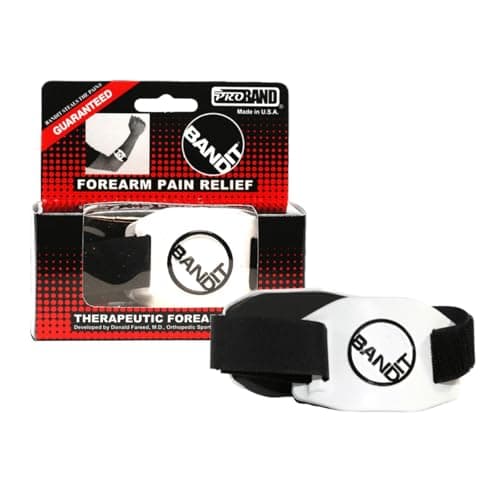
A rigid or semi-rigid arch that spreads pressure across a wider area of the forearm rather than concentrating it in one line. More expensive, holds its shape for years, and the category people move to when the cheap straps have not worked. The BandIT is the example here.
How to fit a forearm strap
Most people wear these wrong. Three things:
- Position it below the joint, not on it. Roughly two finger-widths below the bony point of the elbow, over the muscle.
- Rotate the pad onto the sore side. Pain on the outside of the elbow (the more common pattern in racquet sports) and pain on the inside want the pad in different places.
- Snug, not tight. You should be able to slide a finger under it. Cutting off circulation is not the mechanism, and a strap that leaves a mark is too tight.
The equipment changes worth trying first
1. A lighter paddle
The most direct lever. You swing a paddle several hundred times a session, mostly with the forearm. A paddle an ounce lighter is meaningfully less load, every single swing. Our weight guide explains the bands, and the comfort-first paddle list is built around exactly this priority.
2. A thicker core
A 16mm core flexes more on impact and passes less shock into the hand than a 14mm one. See our core thickness guide.
3. The right grip size, and a cushioned grip
This one surprises people. A grip that is too small makes you squeeze to keep control, and sustained squeezing is a much bigger load on the forearm than the swing itself. A grip that is too large forces an awkward, tense hold. Measure properly with our grip size guide, and a cushioned overgrip is a few dollars — see the overgrip roundup.
4. A softer ball
Hard outdoor balls transmit noticeably more shock than softer ones. If you play outdoors and your elbow is unhappy, the softer approved balls on our outdoor ball roundup are a genuinely cheap experiment.
5. Stop hitting so hard
Free, and the most effective of the lot. The soft game — dinks, drops, resets — loads the arm far less than driving every ball, and it wins more points. Our drills guide covers building it.
What a brace does and does not do
A strap or sleeve is a symptom-management tool: it changes how load is distributed and many players report it makes playing more comfortable. It does not repair anything, and it does not address the technique or equipment causing the load. Wearing one while continuing to do exactly what caused the problem is the most common way people end up wearing one for years.