Start here, because it saves money: pickleball does not have a real junior paddle category. Tennis has graduated racquet lengths by age, and the rules require them in junior play. Pickleball does not. A paddle is a paddle, the maximum size is set by combined length and width, and a nine-year-old plays with the same equipment an adult does.
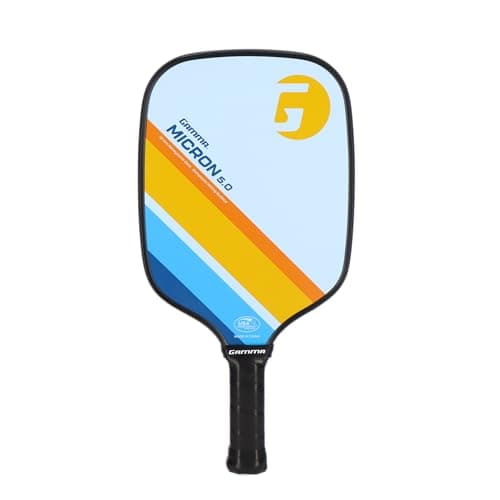
So "best paddle for kids" is really three specs: light enough to swing repeatedly, a handle small enough to hold, and cheap enough that you are not upset when it gets left at the court. Our pick is the Gamma Micron 5.0, which is the lightest sensible paddle we cover and costs less than a takeout dinner.
The three things that actually matter
- Weight. A child's forearm tires long before their enthusiasm does. Light paddles ask less per swing, and a kid who can still swing properly in the second hour keeps playing. This is the one spec worth paying attention to above all others.
- Grip circumference. A smaller hand on an adult-sized handle grips harder and controls the face less. Most budget paddles run a 4 to 4-1/8 in grip, which is the small end — useful here for once. Our grip size guide has the ruler test, and it works on a child's hand exactly the same way.
- Price. Children grow, lose things and change sports. A paddle they will outgrow in two seasons should not cost what an adult's does.
What does not matter yet: carbon faces, spin texture, core thickness and shape. Those are levers for a stroke that already exists. Prices below are live and date-stamped.
03The buyer's guide
Why the set is on this list
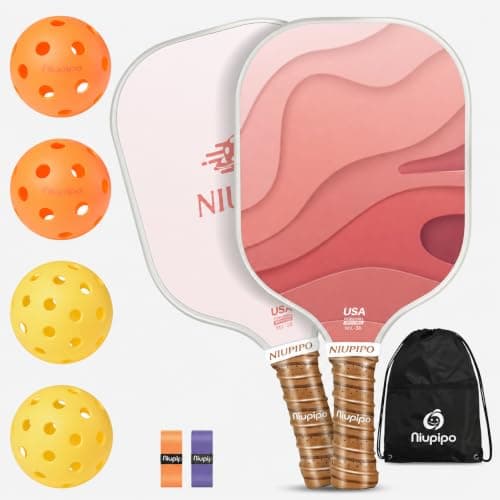
The niupipo two-paddle set sits at number four and it is the one we would actually buy for most families. A single paddle gives a child something to hold. Two paddles and a few balls give them a game — with a parent, a sibling or a friend — and the game is what keeps them playing. It also solves the second-paddle problem before it appears. We compare the maths properly in starter set or buy separately, and there is a full review of that set if you want the detail.
Is a shorter paddle better for a small child?
A shorter, wider paddle is easier to control and easier to hit with, because the sweet spot is closer to the hand and the face is broader. That is the widebody argument, and it applies at every age — our shape guide explains the trade-off. What you should be sceptical of is a paddle marketed as "junior" purely because it is small and cheap: small and cheap describes the Gamma Micron too, and that one is at least made by an established racquet-sports company.
Age by age, roughly
Under 7
Honestly, equipment is not the limiting factor. A very light paddle and a soft indoor ball on a short court does more than any purchase. The ball types guide covers foam and training balls, which are the genuinely age-appropriate piece of kit here.
7 to 12
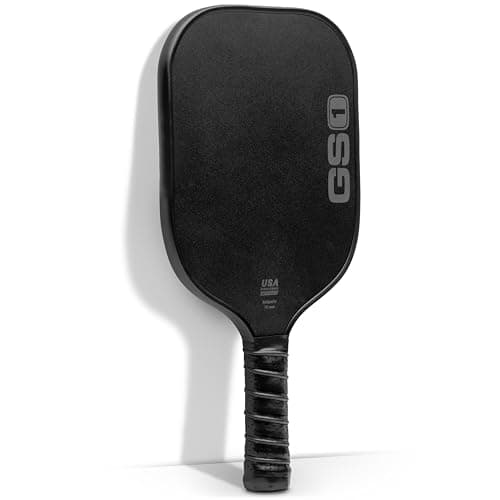
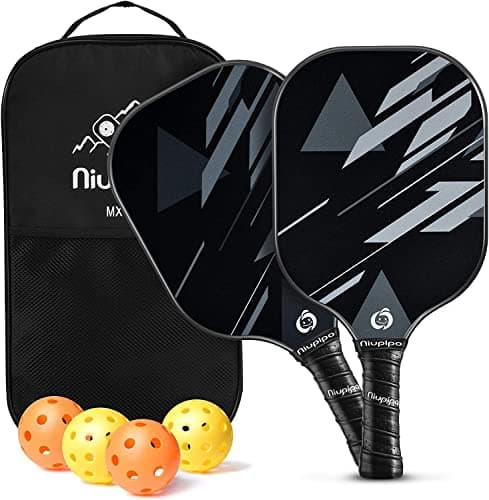
This is where the picks above land. Lightest paddle, smallest grip, cheapest sensible price. A USA Pickleball approved paddle matters if there is any chance of a junior clinic or a school league — both the niupipo Lightweight and the GoSports GS1 are approved, which is why they are here rather than a cheaper no-name paddle.
13 and up
Buy an adult paddle. A teenager growing into adult hands and adult strength is better served by our beginner paddle roundup than by anything on this page, and a paddle bought at 13 can last into adulthood.
The rest of the kit
Eye protection is the one accessory we would insist on for children, because kitchen-line exchanges are fast and a child's head is closer to paddle height than an adult's. Our eye protection picks include adjustable-strap models that fit smaller heads. Court shoes matter less at this age than they do for adults — a child weighs less, lands lighter, and grows out of shoes before the outsole wears. Read do you need pickleball shoes before spending there.
What we could not tell you
We have not found published junior-specific sizing standards from USA Pickleball the way tennis publishes graduated racquet lengths, and we are not going to invent a chart. Everything above is reasoned from published paddle specs — weight class and grip circumference — plus the plain fact that the equipment rules do not change by age. If USA Pickleball publishes junior equipment guidance, this page will change.
How we picked
Everyone in this category says they tested twenty paddles. We haven't tested these in a lab, and we say so. Instead we compile the published manufacturer specs, do the math, weight everything toward what a beginner actually needs — forgiveness, a large sweet spot, sane weight and a fair price — and score each product against a published rubric. The scores are judgments from that research, not measurements we took. Where a fact came from someone else, we name it in Sources.