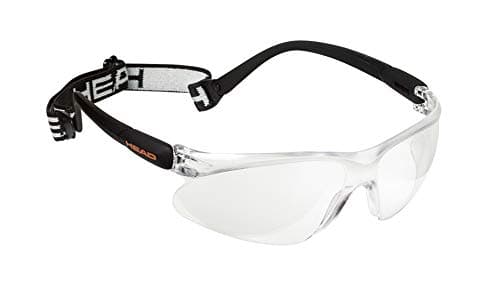
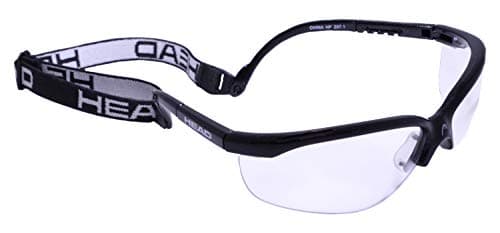
Eye protection is the cheapest genuinely consequential purchase in pickleball. The equipment costs less than a sleeve of balls, and the thing it protects cannot be replaced. Our pick is the HEAD Pro Elite — purpose-built racquet-sport eyewear from a brand that has sold it for decades, and the strongest thing in a range we rank in full on HEAD pickleball gear.
The risk is not theoretical and it is not about being hit by a serve. It is about the kitchen line, where two opposing players stand roughly fourteen feet apart in a fast hands exchange, and about doubles, where your partner's paddle and your partner's mishit are both behind you. Racquet sports as a category have a long-recognized eye-injury profile — it is why squash and racquetball venues have required protective eyewear for decades — and pickleball's geometry is closer to those than to tennis.
None of this is a reason to panic; it is a reason to spend twelve dollars. Everything below is cheap, and the differences between them are mostly about fit and whether you wear prescription glasses. If you have not decided whether to bother at all, we make the honest case both ways in do you need pickleball glasses?
03The buyer's guide
What the ratings actually mean
ANSI Z87.1
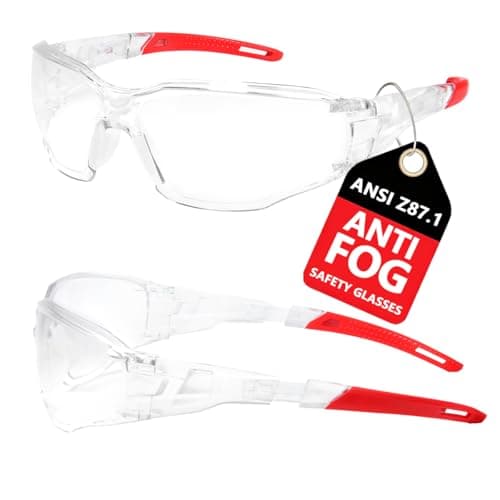
This is the American National Standards Institute's occupational eye-protection standard, and it is the only marking on most of this category that means anything testable. A Z87.1-rated lens has passed defined impact tests; an unrated lens has passed nothing at all. When a listing says "impact resistant" without naming a standard, treat that as marketing.
The caveat: Z87.1 is a workplace standard, developed for flying debris, not a racquet-sport standard. It is a real floor, and it is the floor we would insist on, but it is not sport-specific certification.
Sport-specific eyewear
Racquetball and squash goggles — like the two HEAD pairs here — are designed around a ball arriving at the face rather than debris. In practice this means a wraparound frame that keeps a deflected ball from getting behind the lens, and a retention strap rather than temple arms. That geometry is the reason we rank them first, even though the industrial rating on a Z87.1 pair is more formally specified.
The lensless trend, honestly
A visible chunk of the "pickleball glasses" sold today are lens-free frames — open eyewear with no lens at all, marketed on the basis that there is nothing to fog or distort. They are a genuine comfort product and some players love them. They are not eye protection, and we have not included any on this list, because a frame with no lens does not stop a ball. If a listing emphasizes "no lens" and "no fog", read it as a styling and glare product, not a safety one.
How to choose in practice
If you wear prescription glasses
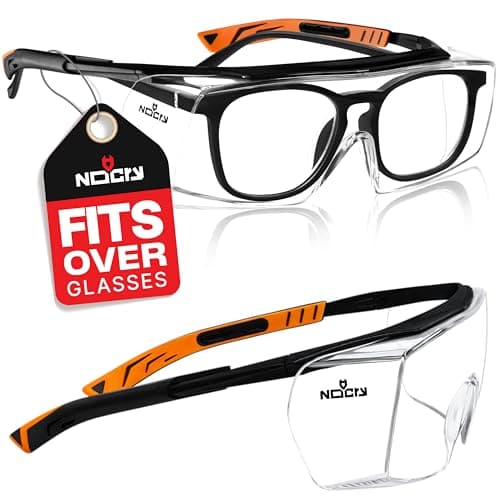
Buy an over-the-glasses (OTG) model like the NoCry — designed to fit over your own frames. Your everyday glasses are not eye protection: standard optical lenses are not impact-rated, and a frame shattering into your eye is worse than nothing. Do not squeeze sport goggles over regular glasses; it does not work and you will stop wearing them.
If you play indoors
Clear lenses, and anti-fog matters more than you expect. Indoor courts are warm, and any lens that fogs at the wrong moment gets left in the bag permanently.
If you play outdoors in bright sun
You want a tint, and ideally polarization to cut glare off the court surface — but check that whatever you buy still carries a real impact rating. Most sports sunglasses do not. A common approach is a rated clear pair for indoor play and a tinted pair outdoors.
Fit is the deciding factor
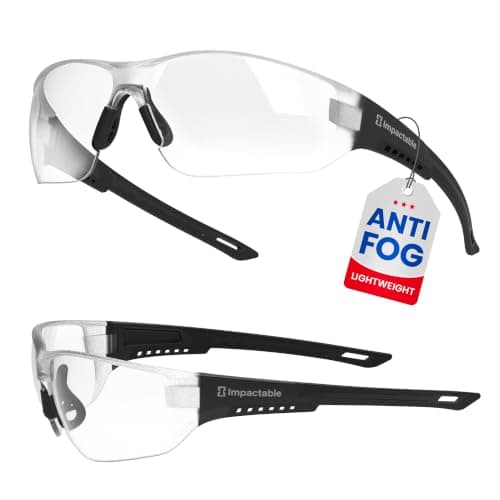
The best eyewear is the pair you wear every session, and the reason people stop wearing eyewear is almost always fit: temples that pinch, a frame that slides down a sweaty nose, or a strap that pulls hair. If you have a narrow face, the small-frame PAERDE is the pick; if you hate the feel of eyewear altogether, the lightweight IMPACTABLE is the one you will tolerate.
Anti-fog: what works and what does not
Every pair here claims an anti-fog coating and every anti-fog coating degrades. Three things genuinely help: do not wipe the inside of the lens with a dry cloth (it strips the coating), let the pair sit at court temperature before you start, and rinse with plain water and air dry rather than scrubbing. When a coating eventually gives up, anti-fog spray is a few dollars and works better than replacing the glasses.
What else belongs in the bag
Eyewear lives in a bag, gets scratched and gets forgotten. A dedicated pocket is worth having — our bag roundup covers the options — and it is on the list in what to pack in your pickleball bag. If you are outfitting from scratch, what you need to start playing is the complete checklist.