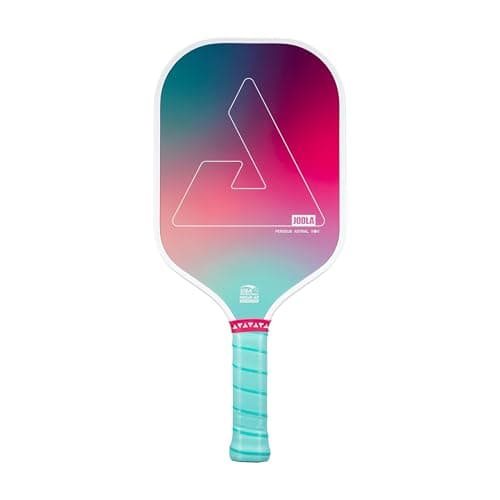
The JOOLA Astral Perseus is the paddle we hand to someone who has never played and wants one recommendation without a lecture. It's light, it's forgiving, it's made by a brand with a genuine reputation in racquet sports, and it costs about what a first paddle should cost. It is also, deliberately, not a paddle you will keep forever.
Before the detail, the disclosure that matters: we have not tested this paddle in a lab.We don't run one. What follows is built from JOOLA's published specifications, the USA Pickleball equipment listings, and the category norms we use to score every product on this site against a published rubric. Where we're making a judgment rather than reporting a fact, we say so.
Who this paddle is for
The Astral Perseus is built for one specific person: someone buying their first paddle who doesn't yet know what they like.That person needs a large sweet spot, a weight that won't wreck their arm in the second hour, and a price that doesn't sting if pickleball turns out not to be their thing. This paddle is tuned for exactly that, and it doesn't pretend to be tuned for anything else.
The specs, translated
JOOLA lists a sandblasted carbon fiber face, a polymer honeycomb core, a lightweight build and a cushioned grip. Here's what each of those means when you're actually standing on a court.
Sandblasted carbon fiber face
Carbon is stiffer than fiberglass, so it returns less of the ball's energy and gives a more controlled, less springy face — which is the trade most beginners want once they stop fighting the paddle. Sandblasting is simply how the texture gets onto that surface: the face is roughened so it grips the ball and a brushing stroke produces spin. It is a gentler texture than the raw, heavily textured carbon on premium spin paddles, so expect useful spin rather than a lot of it — which is the right amount at this stage, because brushing for spin is a skill you don't have yet. We compare the materials in graphite vs fiberglass.
Polymer honeycomb core
This is the standard core across nearly all modern paddles, and it's the quiet, forgiving option compared with older aluminum or nomex cores. Polymer deadens vibration, which is part of why this paddle is comfortable to hit with for a long session.
Lightweight build
A lighter paddle is quicker at the net and transmits less strain to the elbow and wrist. It also means you supply more of the power on drives. For most beginners — and for anyone with any history of tennis elbow — that's the correct compromise. Our weight guide explains where the lines are.
What it does well
Forgiveness is the headline. The face is wide and the sweet spot is generous, which matters enormously when most of your contact is off-center. A forgiving paddle turns a bad hit into a playable ball instead of a shanked one, and that keeps rallies alive — which is how you actually learn.
Comfort is the underrated part.Light weight plus a polymer core plus a cushioned grip adds up to a paddle that doesn't beat up your arm. The most common reason new players quit isn't boredom, it's a sore elbow.
The brand is real. This matters more than it sounds. JOOLA has been making racquet-sport equipment for decades, which means stock exists, warranty claims go somewhere, and the paddle holds some resale value when you upgrade. A no-name paddle at the same price has none of that.
What it does badly
You will outgrow it.If you play regularly and improve, the entry-level power ceiling will start to feel limiting inside a season. That's not a flaw so much as a design decision, but it's worth budgeting for.
Spin is modest.The sandblasted surface has real texture, but it is a lighter finish than the raw, heavily textured carbon on premium spin paddles, so it won't reward a hard brushing stroke the same way. If you already have racquet-sport experience and expect to add spin quickly, you may want to skip this tier entirely.
It's not a dedicated control paddle. The light build keeps the paddle quick and easy to swing rather than heavy and stable, and stability is what makes a reset repeatable. If your priority is dinking and resetting from the very start, a 16mm control paddle will suit you better — see our core thickness guide.
Who should buy something else
- Committed players who know they'll stick with it. Buy a 16mm carbon paddle now and skip a purchase — our intermediate picks start around $50.
- Anyone on a tight budget. There are legal, forgiving paddles for half this price on our under-$50 list.
- Two people starting together. A starter set gets you both playing for less than two paddles.
The verdict
The Astral Perseus is the right answer to a narrow question: "I've never played, what one paddle should I buy?" It removes the two things that make beginners quit — a sore arm and constant mishits — and it does so at a price that doesn't punish you if the sport doesn't stick. Buy it as your first paddle, expect to upgrade if you fall in love with the game, and don't let anyone talk you into a $200 paddle before you can use one.