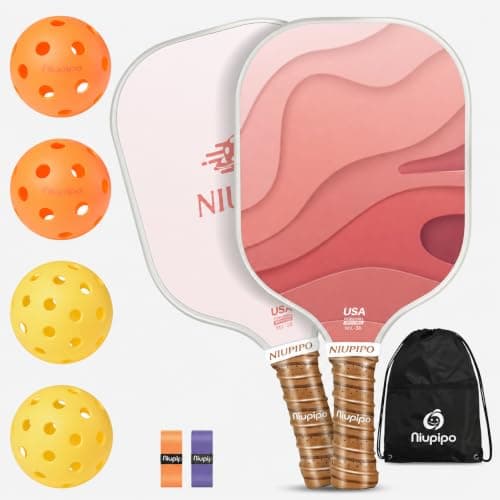
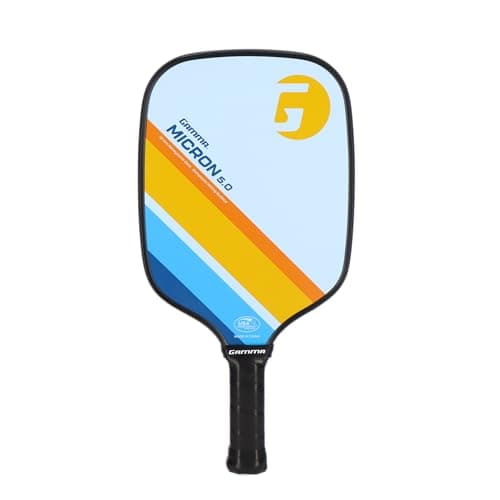
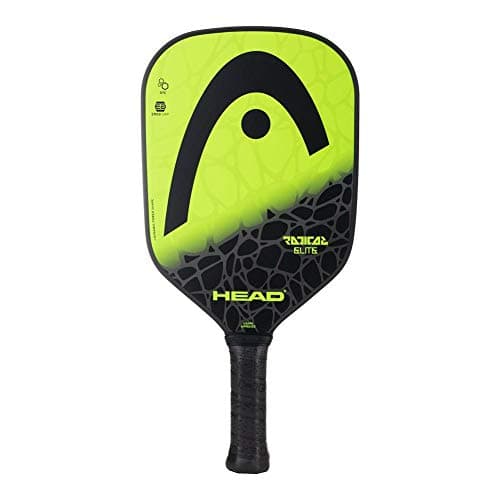
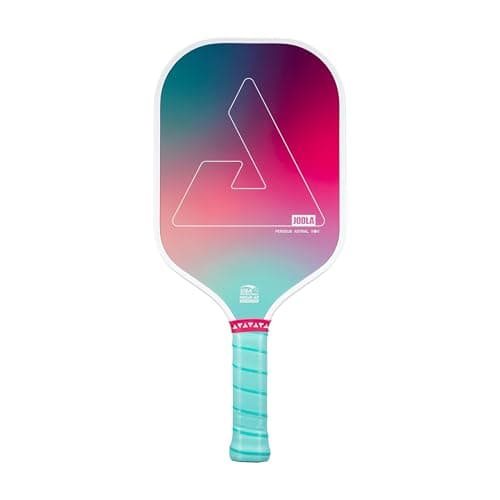
Let's be honest about the search you just made: there is no separate category of women's pickleball paddles. USA Pickleball's equipment standards have no women's division, manufacturers do not build to a women's spec, and a paddle sold in teal performs exactly like the same paddle sold in black. What genuinely varies between paddles — and what most people typing this search are trying to solve — is grip circumference, weight and handle length.
So that is what this list ranks on. If you have smaller hands, a 4-inch grip will feel dramatically better than a 4-1/2-inch one. If your forearm tires in the second hour, a lighter paddle fixes that. If you hit a two-handed backhand, you need a handle long enough for two hands. Start with the JOOLA Astral Perseus if you want one safe answer; jump to the niupipo Lightweight if arm fatigue is your actual problem. Every paddle below is one we would recommend to anyone — these simply happen to be the ones that fit smaller hands and lighter swings best.
03The buyer's guide
What actually differs, and what doesn't
Three specs move the needle. Everything else on a paddle listing — the colorway, the "designed for women" badge, the model name — does not.
| Spec | Why it matters | What to look for |
|---|
| Grip circumference | A grip that is too fat forces a tighter squeeze and strains the forearm | Around 4 to 4-1/8 in for smaller hands; size down and add an overgrip |
| Weight | Decides whether hour two feels fine or feels like work | Lighter builds for less fatigue; mid-weight if you want free power |
| Handle length | A two-handed backhand needs room for two hands | Longer handles, usually on elongated shapes |
| Color or "women's" badge | Changes nothing about how the paddle plays | Buy it if you like it, but never pay extra for it |
Grip size is the one to get right
Grip circumference on pickleball paddles runs roughly 4 to 4-1/2 inches, and the difference between the ends of that range is enormous in the hand. Smaller hands on a fat grip end up squeezing to keep control, and a squeezed grip is how new players find their way to elbow pain in a month. The measurement takes ten seconds: open your dominant hand, line a ruler up with the bottom crease of your palm, and measure to the tip of your ring finger. That number in inches is roughly your grip size. Our pickleball paddle grip size guide walks through both the ruler test and the finger test.
The practical rule: when you are between sizes, buy the smaller grip. You can add thickness with an overgrip for a few dollars, and another one after that. You cannot make a too-large grip smaller. Our overgrip picks cover the cheap, reversible way to fine-tune a handle you already own.
Weight: the difference between fun and a sore arm
Paddle weight is the spec people most often get wrong in both directions. A very light paddle is easy to swing but gets pushed around when someone drives the ball hard at you, so you end up supplying all the power yourself. A heavy paddle drives the ball with almost no effort but punishes a slow reaction at the net and tires the forearm. For most players who came here worried about fatigue, lighter is the right trade — you will play more sets, and playing more sets is what actually makes you better. The full breakdown is in our pickleball paddle weight guide.
Handle length if you hit two-handed
Plenty of players arriving from tennis keep a two-handed backhand, and that shot needs a handle long enough for two hands without the top one hanging off the end. Elongated paddles typically pair a longer handle with a narrower face; widebody paddles give you a bigger sweet spot but a shorter handle. That trade-off is worth understanding before you buy — see elongated vs widebody paddles.
Where the "women's paddle" label comes from
Some brands do market a paddle as a women's model. Read the specs before you assume it means anything: in most cases it is the standard paddle in a different colorway, occasionally with a slightly thinner grip. When the thinner grip is genuine, that is a real feature and worth having. When it is only paint, you are being sold a color. Since paddle listings rarely publish grip circumference clearly, the safest path is to buy the paddle whose published specs suit you and adjust the grip yourself.
Is any of this required for league play?
No. USA Pickleball approves paddles against dimensional and surface standards, not against who holds them, and there is no separate approval list by gender. If a paddle is on the approved list it is legal for organized play for anyone. See our note on USA Pickleball approved paddles for what approval actually covers.
Still deciding?
If you want the shortest path: buy the JOOLA Astral Perseus, add an overgrip if the handle feels thin, and spend the difference on proper court shoes — which, unlike paddles, genuinely are cut on different lasts. If you want the wider field, our best pickleball paddles for beginners list is the flagship. And if you are buying this for someone else rather than yourself, our pickleball gifts for women guide makes the same grip-size argument from a buyer's side and says what to check before you order.