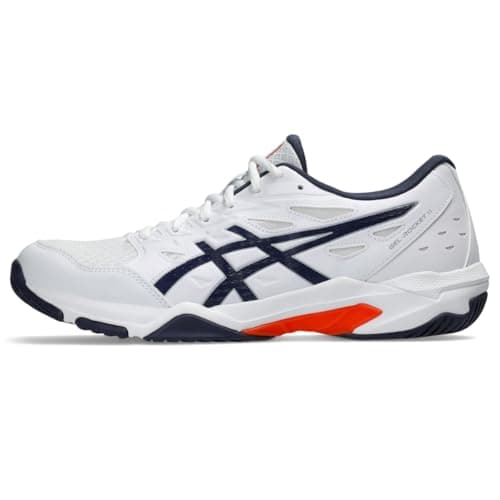
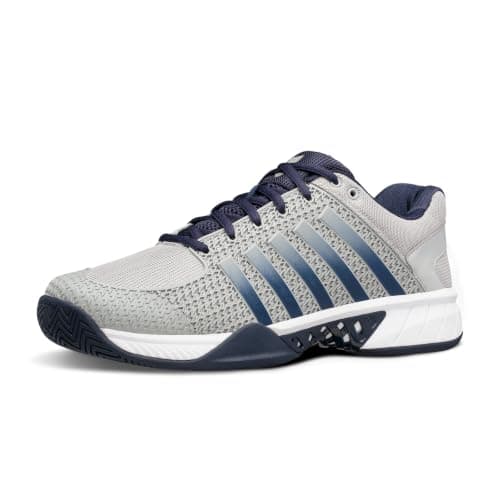
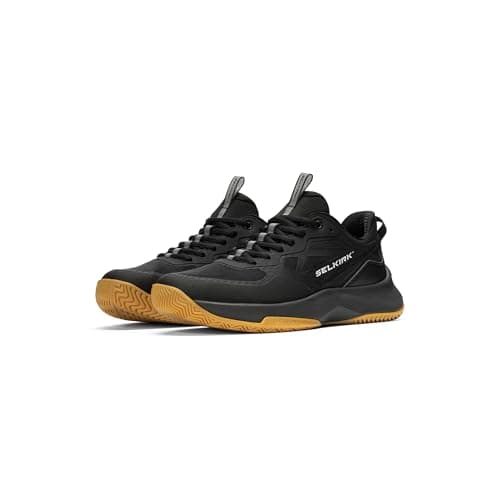
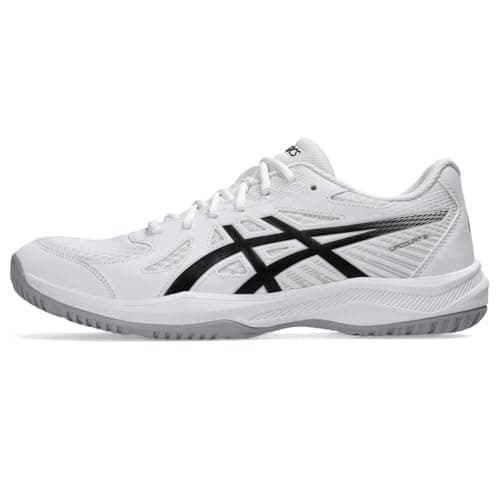
The difference is the outsole compound, and it is a real one. Indoor court shoes use soft gum rubber, which grips a varnished or sprung wooden floor by deforming into it. Outdoor shoes use a harder rubber compound, which survives the abrasive texture of asphalt and acrylic-coated concrete. Put the soft one on concrete and it wears through fast. Put the hard one on wood and it feels like you are skating.
The four differences, in order of how much they matter
- Outsole compound. Soft gum grips wood and shreds on concrete. Harder rubber survives concrete and slides on wood. This is 80% of the decision.
- Tread pattern. Indoor shoes run near-smooth or lightly patterned, because a clean floor needs contact area rather than bite. Outdoor shoes use a herringbone or modified herringbone that clears dust and grit.
- Upper durability. Outdoor courts chew up toes on a drag. Outdoor-oriented shoes carry a reinforced toe drag guard; indoor shoes often skip it to save weight.
- Non-marking. Most indoor venues require it, and most gum outsoles are non-marking — but not all outsoles that say "court" are. Check the listing, because a venue can and will turn you away.
How to tell which one you already own
Look at the sole. Translucent, amber or honey-coloured rubber that feels tacky under a thumbnail is gum, and gum means indoor. An opaque, harder rubber — black, grey or white — with a defined herringbone pattern is built for outdoor hard courts. If the listing says "volleyball" or "indoor court", that settles it too.
Below: two genuinely indoor shoes, one that honestly does both, and the outdoor-durability pick — at live, date-stamped prices.
03The buyer's guide
Can one pair do both?
Yes, with a caveat. A non-marking hard-rubber court outsole is the compromise: it is legal indoors, it survives outdoors, and it grips well enough on both without being the best at either. The K-Swiss Express Light is that shoe on this site, and its full review covers what the compromise costs. The K-Swiss Ultrashot Light does the same job at a lower price — see its review.
What does not work as a one-pair answer is a gum-soled indoor shoe. The ASICS Upcourt 6 and Gel-Rocket 11 are both excellent value on a gym floor and both say plainly in their own specs that the gum sole wears quickly outdoors. Buy either for indoor play and accept that it is an indoor shoe. There is an Upcourt 6 review if you want the detail.
If you play mostly outdoors
Outdoor play is the harder wear case in every direction: the surface is abrasive, the toe drags, and the sun degrades foam. The question stops being grip and becomes how long the shoe lasts. The Selkirk CourtStrike Pro 3.0 is the only shoe we cover that puts a number on it with a published 6-month outsole warranty, which is a claim the brand has to honour rather than an adjective. Our outdoor court shoe roundup has the rest of the field, and how long pickleball shoes last sets the expectation.
If you play mostly indoors
Gum, and enjoy how cheap it is. Indoor court shoes borrow from volleyball, which is a far older and larger market, so the value is exceptional — both ASICS picks above cost less than most pickleball-branded shoes. Two things to check: that the venue requires non-marking (most do), and that you are not walking to the court across a parking lot in them, because that is how an indoor outsole dies. Our indoor shoe roundup is the full list.
The mistake that costs the most
Wearing an indoor shoe outdoors "just this once", repeatedly. Gum rubber abrades rather than polishes, so a handful of outdoor sessions can take more off the outsole than a season indoors. If you split your play, either own two pairs or buy the hard-compound compromise and keep it for both.
What about outdoor courts that are not concrete?
Most outdoor pickleball in the US is played on acrylic-coated asphalt or concrete, which is what the hard compounds are built for. A dedicated, freshly surfaced court is smoother than a repurposed school playground, and a rougher surface wears any shoe faster. If your regular court is visibly coarse, weight the decision toward durability rather than grip — you will have plenty of grip either way.
The rest of the indoor/outdoor split
Shoes are one of exactly two pieces of equipment that genuinely change with the surface. The other is the ball, and that one changes more — see indoor vs outdoor pickleball balls. The paddle does not change at all, which surprises people; we explain why in indoor vs outdoor pickleball paddles.
How we picked
Everyone in this category says they tested twenty paddles. We haven't tested these in a lab, and we say so. Instead we compile the published manufacturer specs, do the math, weight everything toward what a beginner actually needs — forgiveness, a large sweet spot, sane weight and a fair price — and score each product against a published rubric. The scores are judgments from that research, not measurements we took. Where a fact came from someone else, we name it in Sources.