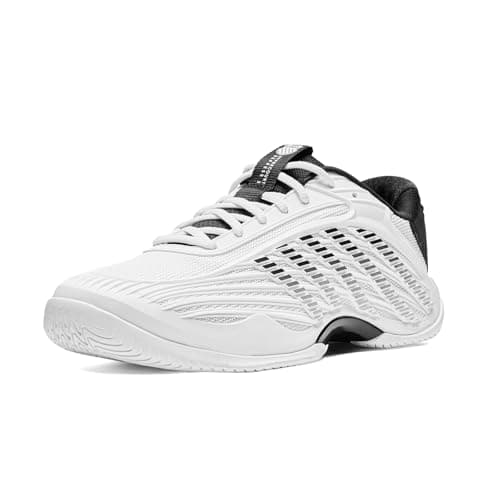
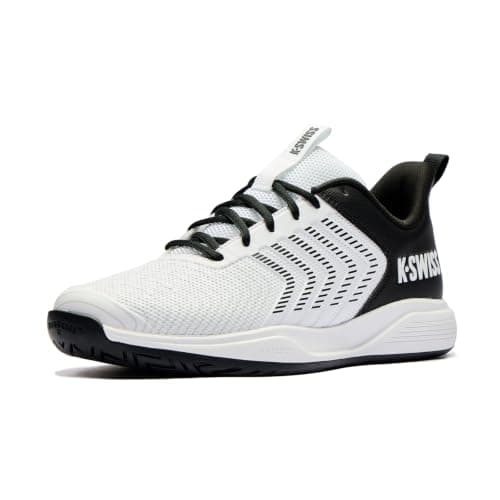
The K-Swiss Ultrashot Light is the shoe that sits at number one on our under-$100 list, and the short version of why is that it is a real tennis court shoe sold at a price most pickleball-branded shoes clear easily. You are buying decades of hard-court engineering rather than a running shoe with a pickleball logo on it.
The short version of the catch is equally simple: it is narrow. K-Swiss builds it on a court last, court lasts lock the foot down, and lockdown and width are opposites. If you have wide feet this is the wrong shoe, and the right one is further down this page.
First, the name problem
K-Swiss sells several shoes with "Light" in the name and two of them appear on this site, which causes genuine confusion:
- Ultrashot Light — the tennis-platform court shoe reviewed here. Our value pick.
- Express Light — K-Swiss's pickleball-specific model, and our overall all-round pick. Reviewed separately in the Express Light review.
- Hypercourt Express 3 — the premium hard-court tennis shoe, with a roomier forefoot and no break-in. The one to buy if the Ultrashot is too narrow.
They are three different shoes. Both of the ones on this page are priced live and date-stamped below.
03The buyer's guide
What you actually get for under $100
A genuine court platform
The thing that separates this from most sub-$100 shoes marketed at pickleball is that the lateral support is structural rather than cosmetic. K-Swiss has built tennis shoes for decades and the Ultrashot sits on that platform: a supportive upper that resists the foot sliding on a hard sideways push, which is the movement pickleball is made of and the one running shoes handle worst. Our court shoes vs running shoes guide covers why that matters for ankles.
Light, for a support shoe
"Light" in the name is doing honest work. Support-focused court shoes tend to feel like a brace; this one does not, which matters for the constant small adjustments the kitchen line demands. The trade is less forefoot cushioning than the heavier flagship court shoes — you feel more of the surface through the front of the foot.
A non-marking outsole
Not a footnote. A non-marking sole means the shoe is legal at indoor venues that enforce it, and the harder compound survives outdoor concrete — so this is one of the few shoes at this price that genuinely covers both surfaces. We go through that trade-off in indoor vs outdoor pickleball shoes.
The fit, honestly
K-Swiss's own positioning and our own spec notes agree: court shoes run narrow, and wide-footed players routinely need the next half size in this one. Half a size adds length more than width, so it is a partial fix at best. Our verdict on this shoe explicitly says to skip it if your feet are wide or you want maximum cushioning — and we would rather lose the sale than have you buy a shoe that hurts.
If that is you, the Hypercourt Express 3 is the answer inside the same brand: K-Swiss states a roomier forefoot and no break-in period, which is the combination that suits a wider foot and a long day. It costs meaningfully more. Our wide-feet roundup puts it in context against the other options.
Who should buy the Ultrashot Light
- Narrow to average feet, playing two or three times a week.
- Anyone who wants a real court shoe without crossing $100.
- Players who split time between an indoor venue and an outdoor court.
- Anyone stepping off running shoes for the first time — this is the cheapest honest way to do that properly.
Who should not
- Wide feet. Buy the Hypercourt Express 3, or start at our wide-feet list.
- Players whose main complaint is a hard floor under the forefoot. The comfort list is the right page — the ASICS Gel-Rocket and Skechers Viper Court both cushion more.
- Indoor-only players on a budget. A gum-soled volleyball-derived shoe grips a wooden floor better and costs less — see our indoor court picks.
Ultrashot Light vs Hypercourt Express 3
| | Ultrashot Light | Hypercourt Express 3 |
|---|
| Fit | Narrow court last | Roomier forefoot |
| Break-in | Some | K-Swiss states none required |
| Cushioning | Lighter, firmer forefoot | Surgelite+ midsole, more of it |
| Built for | Value and lockdown | Long days and feet that swell |
| Outsole warranty | None stated | None stated |
If outsole durability is your actual problem — you wear through soles rather than out-growing them — neither of these publishes a guarantee, and the club and tournament list is where the shoes that do live.
What we did not test
We do not run a lab and we have not put a wear-tester in these. Everything above is compiled from K-Swiss's published specification and positioning, the category norms for a tennis court platform, and how the shoe compares against the other twelve we cover. Our methodology page says exactly what our scores are and are not.
How we picked
Everyone in this category says they tested twenty paddles. We haven't tested these in a lab, and we say so. Instead we compile the published manufacturer specs, do the math, weight everything toward what a beginner actually needs — forgiveness, a large sweet spot, sane weight and a fair price — and score each product against a published rubric. The scores are judgments from that research, not measurements we took. Where a fact came from someone else, we name it in Sources.