PPost & Paddle
02Shoes

The best pickleball shoes for wide feet

Court shoes are built narrow on purpose, which is why so many of them hurt. Three exceptions, ranked on published fit — plus the four popular models that will not work for you.

By Stephen V.Editor, Post & PaddleUpdated

Heads up: Post & Paddle is reader-funded. If you buy through our links we may earn a commission, at no extra cost to you. It never changes which product we recommend. How this works.

The reason so few court shoes fit a wide foot is not an oversight. Court shoes are built narrow deliberately — a hard lateral push loads the side of the shoe, and a foot that can slide inside it is a foot that rolls. Lockdown is the whole design brief, and a narrow last is how manufacturers achieve it.

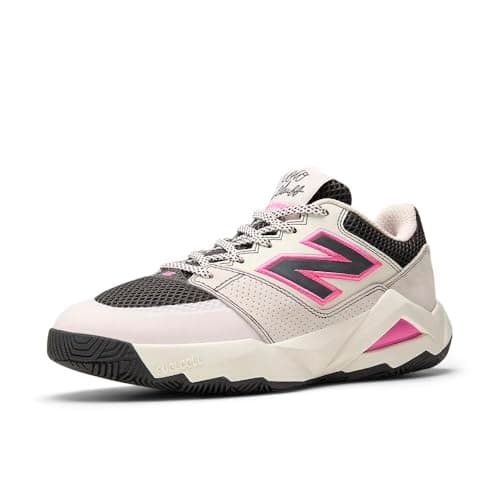
Which leaves wide-footed players choosing between a shoe that grips the court and a shoe they can wear. Our top pick is the New Balance Coco Delray, and it wins on the plainest possible evidence: it is the only shoe we cover that is offered in multiple widths. Everything else here is a roomier last, which is not the same thing.

The three levels of "wide", and what to look for

  1. Published width options (2E, 4E, D for women). This is the real answer, and it is rare in court shoes. New Balance is the brand that does it most consistently across its tennis line.
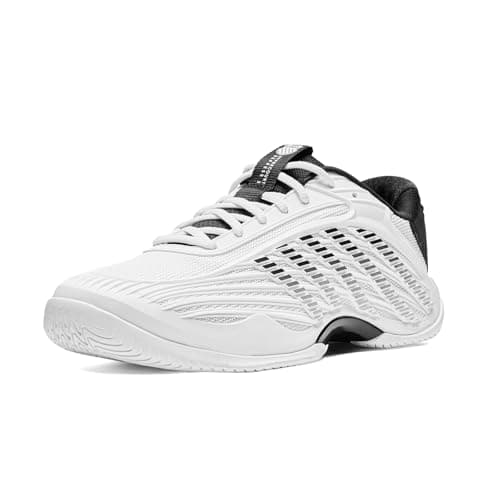
  2. A roomier forefoot on a standard width. A last cut with more volume across the toes. K-Swiss states this for the Hypercourt Express 3 and it is a genuine difference — just a smaller one than a true wide fitting.
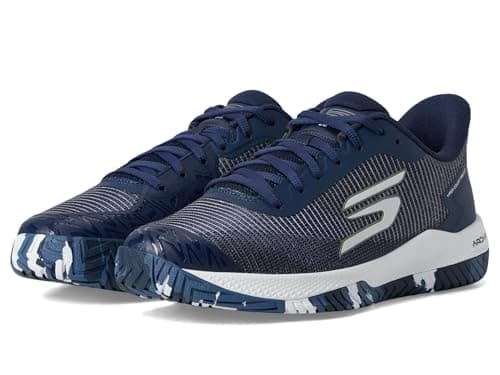
  3. A shoe that simply runs large. The Skechers Viper Court is the example. Useful, but it is sizing feedback rather than a spec, so it is the least reliable of the three.

Below: three shoes that clear at least one of those bars, at live, date-stamped prices. Then, more usefully, the list of what to rule out.

01The short answer

Quick picks

#ProductBest forScorePrice
01
New Balance New Balance Coco Delray (Women's)
New Balance Coco Delray (Women's)

A cushioned women's court shoe from New Balance's tennis line — comfort with genuine court credibility.

Cushioned court comfort (women's)
7.6
$98.94Amazon
02
K-Swiss K-Swiss Hypercourt Express 3
K-Swiss Hypercourt Express 3

A hard-court tennis platform with no break-in and a roomier forefoot — the tournament-day shoe for feet that swell.

Long tournament days and wider feet
7.8
$130.00Amazon
03
Skechers Skechers Viper Court Pro 2.0
Skechers Viper Court Pro 2.0

The comfort pick: a proper court shoe with Skechers' famously cushioned, out-of-the-box-comfortable feel.

Comfort and all-day wear
7.8
$97.94Amazon

#ad · Live prices from the Amazon Product API, as of Sep 17, 2026. Where we have no verified live price, we show none — we would rather leave a gap than print a number that has rotted.

02In detail

The picks, in full

01
New Balance New Balance Coco Delray (Women's)

Cushioned court comfort (women's)

New Balance Coco Delray (Women's)

Ndurance rubber outsoleFuelCell foam midsoleNon-marking soleNylon shank for stability
7.6/10

A cushioned women's court shoe from New Balance's tennis line — comfort with genuine court credibility.

Grip
8
Stability
8
Cushioning
8
Durability
8
Value
6

Pros

  • New Balance cushioning that's easy on knees and ankles over a long session
  • A real court outsole, not a running sole pretending to be one
  • Widths available, which court shoes rarely offer

Cons

  • Priced at the higher end for a beginner
  • Heavier than a minimal race-fit court shoe

Don't buy this if…

you want the lightest, quickest shoe for aggressive singles. The cushioned platform trades a little court feel for comfort.

$98.94View on Amazon

$109.9910% off

Price as of Sep 17, 2026. Prices change — Amazon's is the one that counts.

#ad · we may earn a commission from this link to New Balance Coco Delray (Women's)

02
K-Swiss K-Swiss Hypercourt Express 3

Long tournament days and wider feet

K-Swiss Hypercourt Express 3

Surgelite+ midsoleNo break-in periodRoomier forefootDurable rubber outsole
7.8/10

A hard-court tennis platform with no break-in and a roomier forefoot — the tournament-day shoe for feet that swell.

Grip
8
Stability
8
Cushioning
8
Durability
8
Value
7

Pros

  • K-Swiss states it is comfortable out of the box, which matters when day one is a tournament
  • A more generous forefoot is genuinely useful late in a long day when feet have swollen
  • Built as a hard-court tennis shoe, so the outsole is tuned for repeated stop-start abuse

Cons

  • A roomier forefoot is less locked-down than a narrow performance last
  • K-Swiss does not state an outsole durability guarantee on this listing

Don't buy this if…

you have a narrow foot and want maximum lockdown. Room in the forefoot becomes movement inside the shoe, which is the opposite of what a hard cut needs.

$130.00View on Amazon

Price as of Sep 17, 2026. Prices change — Amazon's is the one that counts.

#ad · we may earn a commission from this link to K-Swiss Hypercourt Express 3

03
Skechers Skechers Viper Court Pro 2.0

Comfort and all-day wear

Skechers Viper Court Pro 2.0

Court outsoleCushioned midsoleNon-marking soleRoomy fit
7.8/10

The comfort pick: a proper court shoe with Skechers' famously cushioned, out-of-the-box-comfortable feel.

Grip
8
Stability
7
Cushioning
9
Durability
7
Value
8

Pros

  • Genuinely comfortable from the first wear — little to no break-in
  • Cushioning is kind to older knees and longer sessions
  • Popular with the pickleball crowd specifically, so sizing feedback is plentiful

Cons

  • The softer, higher-stack feel is a touch less stable in a hard cut than a low, firm court shoe
  • Runs roomy — size feedback matters before you buy

Don't buy this if…

you're a fast, aggressive player who wants the lowest, most locked-down platform for hard direction changes. A firmer, lower shoe will feel more precise.

$97.94View on Amazon

$120.0018% off

Price as of Sep 17, 2026. Prices change — Amazon's is the one that counts.

#ad · we may earn a commission from this link to Skechers Viper Court Pro 2.0

03The buyer's guide

The court shoes to rule out if your feet are wide

This is the more valuable half of the page, because the popular recommendations are mostly the wrong ones for you. Each of these is a shoe we rate highly elsewhere on the site, and each states a narrow fit in its own listing or ours:

  • Babolat Jet Mach 4. A race-fit performance shoe — the snuggest lockdown we cover. Excellent for a fast, narrow-footed player, wrong here.
  • ASICS Gel-Rocket 11. A volleyball-derived last that is narrow through the midfoot. It is our indoor value pick and it will pinch a wide foot.
  • K-Swiss Ultrashot Light. Our top pick on shoes under $100, and its own spec notes court shoes run narrow and wide-footed players often need the next half size. There is a full review that covers this — and points at the Hypercourt above as the wider sibling.
  • Fila Volley Zone. Rank one on the women's list and explicitly not for a very wide foot; the court last runs narrow for lock-down. See the Volley Zone review.

Sizing up half a size is the workaround most people try, and it half works: it adds length and only a little width, so the shoe is longer than it should be and your foot still sits on the edge of the platform. On a court shoe that costs you the lockdown you bought it for.

Wide feet, or a wide toe box?

Worth separating, because the fixes differ. A wide foot is wide across the ball and the midfoot, and needs an actual width fitting. A wide toe box need is volume and splay at the front only — often from bunions or simply from wearing wider shoes everywhere else. The Skechers Viper Court's roomy fit handles the second case well and the first case less well. If you are not sure which you have, the standing test below settles it.

How to measure, standing up

  1. Do it at the end of the day. Feet swell, and you play in swollen feet.
  2. Stand on a sheet of paper in the socks you play in, with your weight on the foot, and trace around it. Weight-bearing matters — a foot spreads under load, which is exactly what it does in a rally.
  3. Measure the widest point of the tracing, and compare it against the manufacturer's size chart rather than a generic one. Widths are not standardised between brands.
  4. Measure both feet. Most people have one larger; fit the larger one and use the insole or lacing to take up slack on the other.

Our how to choose pickleball shoes guide covers the rest of the fit questions — heel lock, drop and outsole type.

Two things that buy you width without changing the shoe

  • Take the insole out and stand on it. If your foot overhangs the insole, no lacing trick will save that shoe. It is the fastest test there is, and it works in a shop.
  • Skip a lacing eyelet. Lacing straight across the widest part of the foot, or skipping the eyelet that sits over the sore spot, relieves pressure without loosening the heel. This genuinely works and costs nothing.

Why the comfort list is not the same as this one

We also publish the most comfortable pickleball shoes, and the two overlap because width is one input into comfort. They are ranked differently. The comfort page weighs cushioning, width and break-in together, so the softest-feeling shoe wins. This page weighs one thing — will it fit — so the shoe with published width options wins even though it is not the plushest here. If your problem is a sore forefoot rather than a hard floor, this is the right page.

Men's, women's and the width problem

The Coco Delray is a women's shoe and the Hypercourt Express 3 listing we price is the men's. That is not us being unhelpful — it reflects what the brands publish. A women's last is cut narrower through the heel and midfoot than a men's at the same length, so a woman with wide feet sometimes fits a men's shoe better, going down roughly a size and a half. Our women's and men's lists cover each side properly, and the Skechers Viper Court review goes deeper on the roomiest shoe here.

How we picked

We do not run a testing lab

Everyone in this category says they tested twenty paddles. We haven't tested these in a lab, and we say so. Instead we compile the published manufacturer specs, do the math, weight everything toward what a beginner actually needs — forgiveness, a large sweet spot, sane weight and a fair price — and score each product against a published rubric. The scores are judgments from that research, not measurements we took. Where a fact came from someone else, we name it in Sources.
04Questions

Frequently asked

What are the best pickleball shoes for wide feet?

The New Balance Coco Delray, because it is the only court shoe we cover that is offered in multiple widths rather than just a roomier standard fit. The K-Swiss Hypercourt Express 3 is the pick with a stated roomier forefoot, and the Skechers Viper Court Pro 2.0 is the one that simply runs large.

Why are pickleball shoes so narrow?

By design. Court shoes exist to stop your foot sliding inside the shoe during a hard sideways push, and a narrow last is how manufacturers achieve that lockdown. It is the same reason they feel stiffer and lower than running shoes.

Should I size up in pickleball shoes if I have wide feet?

It is a partial fix at best. Going up half a size adds mostly length and only a little width, so you end up with a shoe that is too long — and a foot that slides forward on a stop is a foot that bruises toenails. Find a width fitting or a genuinely roomier last instead.

Can I wear running shoes if no court shoe fits?

We would rather you did not. Running shoes have a taller, softer midsole built for forward motion and they roll under a lateral push, which is the ankle risk pickleball actually presents. Our do you need pickleball shoes guide explains the difference. If nothing fits, a wider tennis or all-court shoe is a far better compromise than a running shoe.

How do I know if I need a wide shoe or just a bigger toe box?

Take the insole out and stand on it in your socks. If your foot overhangs on both sides through the middle, you need a width fitting. If it only overhangs at the front, a roomier toe box is enough — and more shoes will work for you.

06Read next
05Sources

Where our facts come from