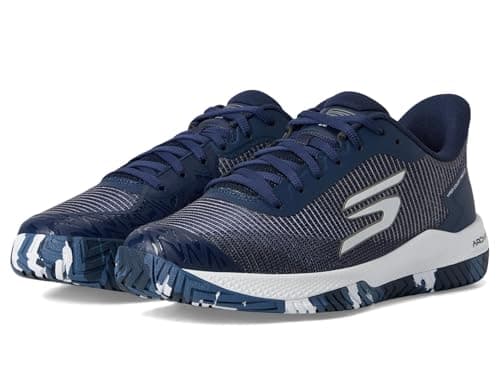
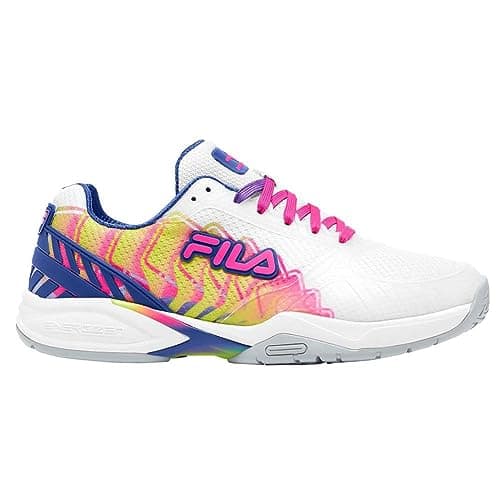
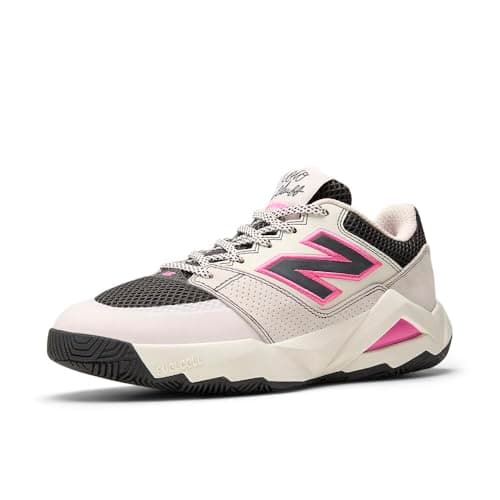
Buy the New Balance Coco Delray if you are a woman who plays longer sessions and wants cushioning without giving up a real court sole — or if you have a wider foot and have been squeezed out of every court shoe you have tried. It is one of the very few court shoes we rank that offers width options at all, and on this site that is the single most requested spec nobody publishes. If comfort is your only concern and budget matters, the Skechers Viper Court Pro 2.0 gets you most of the way for less; if you want a dedicated pickleball shoe on a women's last, the Fila Volley Zone is the value pick.
The one honest reservation up front: this is the most expensive shoe on this page and the heaviest. Cushioning has a weight, and a cushioned platform trades a little court feel for comfort. If you play aggressive singles and want the lowest, quickest, most locked-down shoe, this is not it.
Our standing disclosure: we have not tested this shoe. We do not run a lab and nobody here has worn a pair. Every outsole, midsole and shank material below is a published claim read off the live listing our buy button points at, with sources named in Sources. Scores are judgments from that research against our published rubric.
03The buyer's guide
The three published components, and what each one does
New Balance publishes more about this shoe than most court-shoe listings bother with, and all three named components do a specific job:
- Ndurance rubber outsole.New Balance's harder, abrasion-resistant compound, placed where a court shoe wears. This is what makes it a genuine court shoe rather than a running sole with a tennis badge, and it is why it survives outdoor hard courts better than a gum indoor sole does.
- FuelCell foam midsole. The cushioning, and the reason to consider this shoe at all. More foam under the heel and forefoot means less of each landing arriving at your knees over a two-hour session.
- Nylon shank. The stiffener in the waist of the shoe that resists twisting when you load the outside edge of your foot on a lateral push. It is the same job a TPU shank does in other court shoes, and it is the component that keeps a cushioned shoe from feeling vague.
Plus a non-marking sole, which matters if your indoor venue enforces it, and the width options we come back to below. That combination — soft foam plus a hard outsole plus a torsional stiffener — is the recipe for a comfortable shoe that still behaves on a court, and it is why this shoe scores evenly across our metrics instead of spiking on one.
The comparison that actually matters
These three are the cushioned end of our shoe rankings. Every row is published by that shoe's own listing:
| Spec | NB Coco Delray | Skechers Viper Court Pro 2.0 | Fila Volley Zone (W) |
|---|
| Outsole | Ndurance rubber | Court outsole | Court rubber |
| Midsole | FuelCell foam | Cushioned midsole | Not published |
| Torsion control | Nylon shank | Not published | Not published |
| Non-marking | Stated | Stated | Stated |
| Width options | Yes | Runs roomy | No — runs narrow |
| Built for | Tennis / all-court | Pickleball | Pickleball |
Read the width row carefully, because it is the only row where one of these shoes is doing something the others cannot. The Coco Delray offers genuine width options; the Viper Court simply runs roomy; the Volley Zone runs narrow like most court lasts. Those are three different things. A roomy shoe in a standard width still has a standard heel and a standard forefoot volume — it is a generous fit, not a wide fitting. For a foot that measures wide, only the first row answer actually works, and that is the strongest argument on this page. Our best pickleball shoes for wide feet page ranks every option we can confirm.
Why a tennis shoe is a legitimate pickleball shoe
The Coco Delray comes out of New Balance's tennis line, not a pickleball line, and that is not a compromise. The movement pattern the two sports ask of a shoe is close to identical: split-step, push off sideways, stop hard, change direction. What a shoe needs for that is a low, flat, wide platform, a hard-wearing outsole and torsional stiffness through the midfoot — and tennis shoe engineering has had decades longer to solve it.
The differences that do exist are real but narrow: pickleball is played on a smaller court with shorter sprints, so you need slightly less forward propulsion and slightly more side-to-side stability, and a lot of pickleball happens indoors where tennis rarely does. That is the whole argument, which we work through in pickleball vs tennis shoes. The practical takeaway: if you already own decent tennis shoes, you may not need to buy anything, and a tennis shoe with a non-marking sole covers indoor venues too.
Where this shoe costs you
Three things, stated plainly.
Price. This sits at the top of the band we normally recommend for a beginner, and a first court shoe does not need to cost this much. If you are not yet sure the sport will stick, best shoes under $100 is the sensible place to start, and what pickleball equipment really costs sets the whole budget in context.
Weight. A cushioned platform is heavier than a minimal one. For most recreational doubles that is irrelevant; for a quick singles player who wants to feel the court through the shoe, it is a real trade and a lower, firmer shoe will feel more precise.
Court feel. Foam between you and the floor is comfort in one direction and vagueness in the other. If you have come from a very low court shoe you will notice it. Our most comfortable pickleball shoes page is for people who consider that trade a win, and how to choose a pickleball shoe walks the four questions that settle it.
Who should buy it, and who should not
- Buy it if you have a wider foot and have been let down by court lasts, or you play long sessions and want cushioning that is not a running shoe in disguise.
- Buy the Skechers instead if comfort is the whole brief and the budget is tighter — read our Viper Court Pro review.
- Buy the Fila instead ifyou want a dedicated pickleball shoe on a women's-specific last at the lowest sensible price — Fila Volley Zone review.
- Buy the Selkirk instead if you wear outsoles out and want the only published durability commitment we have found — CourtStrike Pro 3.0 review.
- Buy nothing yet if you own decent tennis or volleyball shoes. Check do you need pickleball shoes first, and how long pickleball shoes last for when to replace what you have.
In one line: the Coco Delray is the cushioned, wide-friendly women's court shoe that the rest of this category keeps failing to provide, and you pay for it in money and in grams. If either of those two problems is yours, it is the best answer we can point at. If neither is, there are cheaper shoes on best women's pickleball shoes that will serve you just as well.