There is no such thing as an indoor or an outdoor pickleball paddle. Unlike balls and shoes, paddles are not made or certified by surface, and no manufacturer we cover sells one. If you play in a gym on Tuesday and on a park court on Saturday, you take the same paddle to both.
The reason people search for this is real, though. Indoor and outdoor pickleball genuinely feel different, and it is easy to assume the paddle is the variable. It is not. Here is what actually changes.
The three things that do change
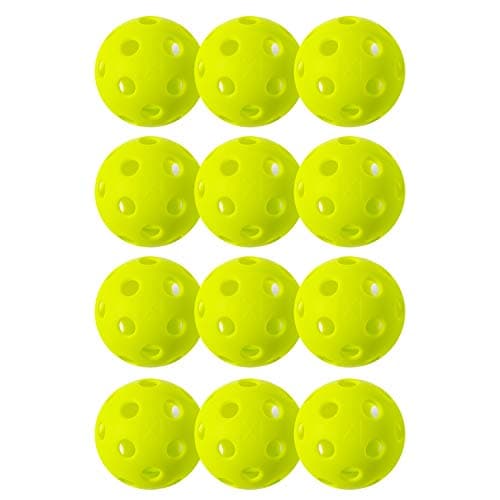
- The ball — and this is the big one. Outdoor balls have 40 small holes and a harder, heavier plastic so they cut through wind. Indoor balls have around 26 larger holes and a softer shell that flies slower. They are not interchangeable, and playing with the wrong one genuinely makes the game worse. Our indoor vs outdoor ball guide has the full comparison.
- The shoes. Gum outsoles grip a varnished gym floor and wear through in weeks on outdoor concrete. Harder outdoor compounds survive concrete and feel slippery on wood. This is a real split and we cover it in indoor vs outdoor pickleball shoes.
- How fast your paddle wears out. Not which paddle to buy — how long it lasts. Outdoor courts are abrasive and outdoor balls shed a plastic residue onto the face. A textured face used mostly outdoors loses its grit sooner than the same face used indoors.
So: one paddle, two ball types. Those are the picks below, at live prices.
03The buyer's guide
"But my paddle feels different outdoors"
It does, and the ball is why. A harder outdoor ball comes off the face faster and with a louder, higher-pitched sound; a softer indoor ball sits on the face marginally longer and feels muted. Same paddle, different collision. Wind adds the rest — outdoors you are steering a ball that is being pushed, so a paddle that felt controllable indoors feels vaguer.
If you want the difference to be less jarring, the lever is not the paddle. It is a thicker core, which dampens the harder outdoor collision. Our core thickness guide covers what 16mm does that 13mm does not.
If you mostly play outdoors
Buy the paddle you would buy anyway, then adjust two things:
- Expect faster face wear and clean it. Outdoor balls leave residue in the texture, and a wipe after every session genuinely extends the life of a carbon face — the routine is in how to clean a paddle.
- Think twice about a premium textured face for outdoor-only play. Budget textured paddles lose their grit fastest, but every textured face wears. If almost all your play is on abrasive outdoor surfaces, a mid-priced paddle you replace more often can be the better economics than a premium one. We work the tiers through in how much to spend on a paddle.
If you mostly play indoors
Indoor play is slower, the ball is softer, and the game is more about touch than power. That pushes toward control: a thicker core and a forgiving face rather than a power-tuned elongated paddle. Our control vs power guide explains the trade-off, and the beginner roundup is already weighted that way.
The other indoor consideration is noise, and it is a court-access issue rather than a performance one. Some indoor venues and some communities have noise restrictions. Those rules are set locally, we cannot tell you what yours are, and we are not going to guess — ask the venue.
Why the widebody is our one-paddle pick
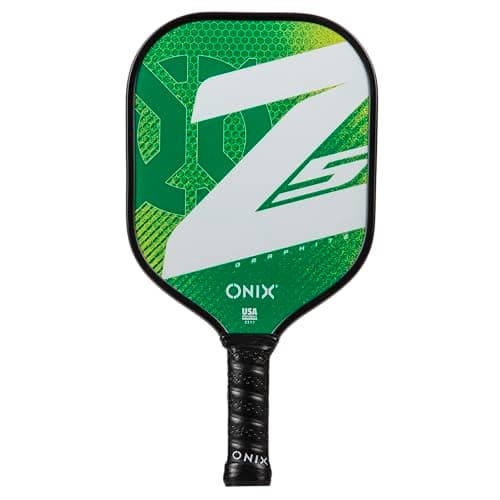
The Onix Graphite MOD Z5 is the paddle we would hand someone who plays on both surfaces, for one reason: the widebody face has the biggest, most forgiving sweet spot we cover, and forgiveness is what absorbs the difference between a windy outdoor rally and a still indoor one. Our full review covers what that shape costs you in reach, and elongated vs widebody has the general case.
The two balls, and why you need both
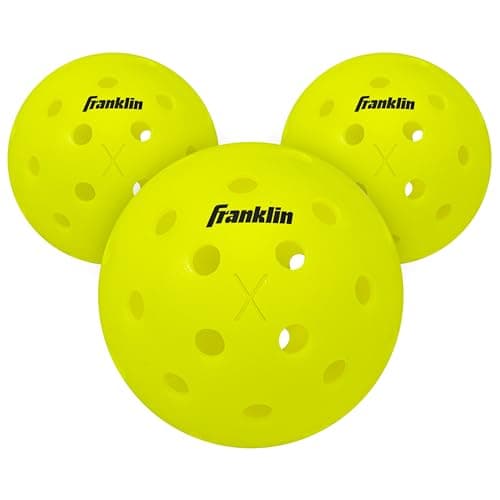
The Franklin X-40 is the USA Pickleball national championship ball and the default at most outdoor games in the US — buy this one if you only buy one, and there is a full review. The X-26 is its indoor sibling: fewer, larger holes, softer plastic, slower flight. Between them they cost less than a single overgrip and a sleeve of balls, and they are the actual answer to "indoor or outdoor". For the wider field, see best outdoor balls, best indoor balls and the Dura Fast 40 review, which is the tournament alternative to the X-40.
What about paddles marketed as "all-court"?
That phrase is borrowed from tennis shoes, where it means an outsole compound suited to several court surfaces. On a paddle it means nothing at all — every paddle is an all-court paddle, because a paddle never touches the court. Treat it as marketing filler and read the spec sheet instead: weight, grip circumference, core thickness, shape. Those four are what our how to choose a paddle guide is built around.