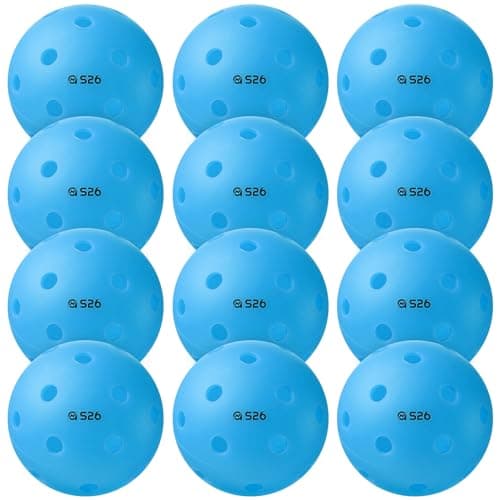
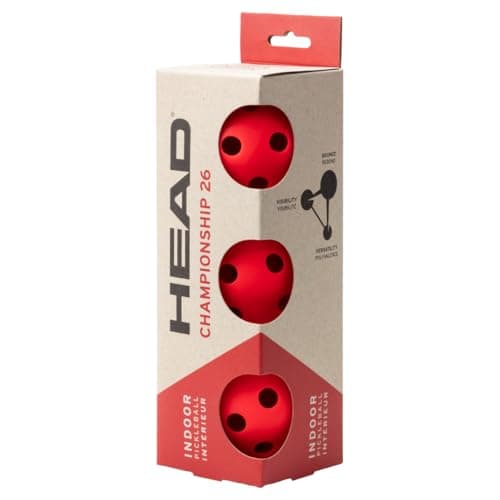
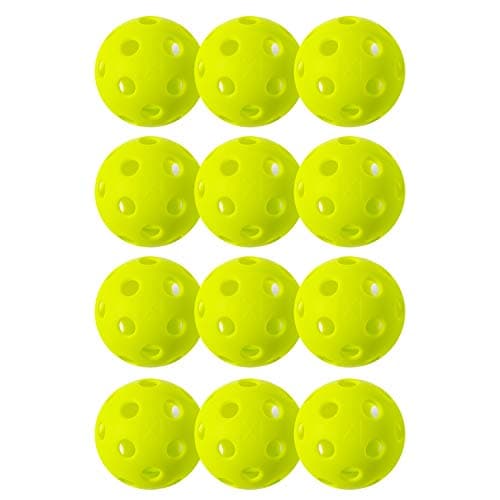
If you play on a gym floor, buy the Franklin X-26and stop reading — it's the default indoor ball for good reason. If you play indoors regularly with a group, skip straight to a bulk pack; the per-ball price is dramatically better and indoor balls are consumables.
Indoor and outdoor pickleballs are genuinely different products, not marketing variants. An indoor ball has 26 larger holes and a softer plastic shell; an outdoor ball has 40 smaller holes and a harder shell. That difference exists because the two environments ask opposite things of a ball: indoors you want control on a smooth, wind-free surface; outdoors you want a ball heavy and hard enough not to be pushed around by a breeze. We cover the full comparison in indoor vs outdoor pickleballs.
Every price here is pulled live from Amazon and stamped with the date we checked it. Balls move in and out of stock constantly and pack sizes vary wildly, so where we don't have a verified current price we show none rather than a stale number.
03The buyer's guide
What makes a ball an indoor ball
26 holes, and bigger ones
The hole count is the headline spec, and it's a real engineering choice rather than a label. Fewer, larger holes mean less air resistance in the way that matters and a slower, more controllable flight on a surface with no wind to fight. The ball travels a shorter distance for the same swing, which is what makes long indoor rallies possible.
Softer plastic
Indoor shells are noticeably softer. Three consequences follow. The ball is quieter — a genuine issue in shared gyms, where pickleball noise complaints are common. It has more dwell timeon the paddle face, which improves touch and control. And it's less durable under stress: soft shells develop soft spots and go out of round faster than hard outdoor balls.
Seam construction
Most indoor balls are two-piece with a visible seam. A cleanly-molded seam flies true; a rough one produces a ball that curves oddly. This is the main quality difference between a branded ball and a no-name bulk pack, and it's why we lean toward established brands even at a small premium. Our top pick here is no exception — Franklin publishes the X-26 as a two-piece design, and our Franklin X-26 review goes through what that seam costs it against the one-piece X-40.
How to choose between them
Buy for pack size first
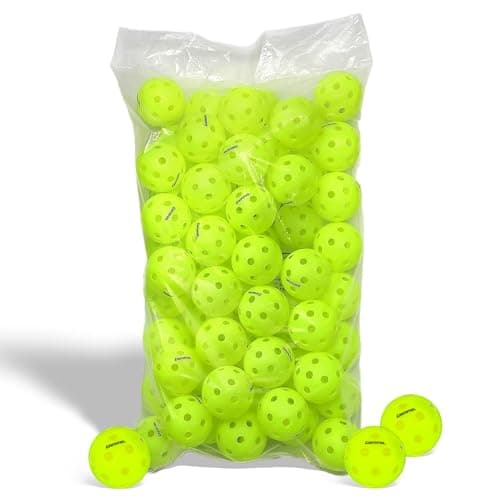
This is the practical advice that saves the most money. Indoor balls are consumables — they crack, they go soft, they get stepped on. If you play weekly with a group, a bulk packcosts a fraction per ball compared with a 3-pack. If you're testing whether you even like indoor play, a 3-pack costs less than a coffee and answers the question.
Color matters more indoors than you'd think
Gym walls, floors and lighting vary enormously. A yellow or optic-green ball that's brilliantly visible in one hall can vanish against a pale wood floor in another. Bright orange is often the safest choice indoors. If your group struggles to see the ball, change color before you change anything else.
USA Pickleball approval
Required for sanctioned tournament play, and a useful quality filter otherwise — approval means the ball has been checked for size, weight, bounce and hardness consistency. For casual gym sessions it isn't mandatory, but it costs little to stick with approved balls.
How long indoor balls last
Less time than you'd like. Indoor balls generally fail by going soft or out of round rather than by cracking the way outdoor balls do. A ball that has gone soft feels dead off the paddle and flies unpredictably — most players notice the symptom well before they realize the ball is the cause.
For a group playing weekly, expect to retire balls regularly rather than annually. We go through the full picture, including how to spot a dying ball, in how long do pickleballs last?
Can you use an outdoor ball indoors?
You can, and people do, but it's the wrong tool. An outdoor ball is harder, faster and much louder. On a gym floor it bounces higher and travels further than the court really allows, which shortens rallies, and the noise is the single most common reason venues restrict pickleball hours. If you only own outdoor balls, they'll work — but buying a 3-pack of indoor balls is cheap enough that there's no reason to persist.