PPost & Paddle
02Shoes

The best pickleball shoes for beginners

A beginner does not need a $150 shoe. They need a real court shoe, a sole their venue will let in, and a fit that locks the foot down. Here are five that qualify, cheapest first.

By Stephen V.Editor, Post & PaddleUpdated

Heads up: Post & Paddle is reader-funded. If you buy through our links we may earn a commission, at no extra cost to you. It never changes which product we recommend. How this works.

Our top pick

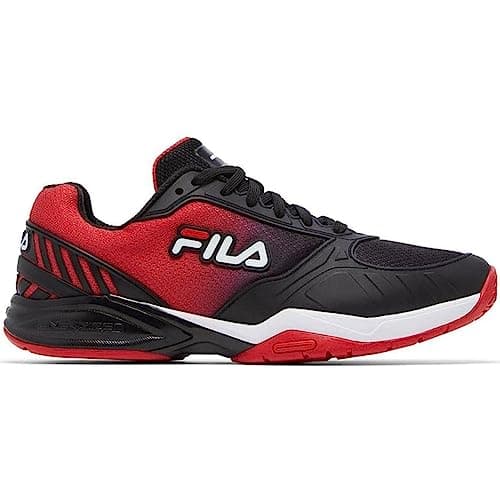
Fila Volley Zone (Men's)

$39.95View on Amazon

$49.9520% off

Price as of October 23, 2026. Prices change — Amazon's is the one that counts.

#ad · we may earn a commission from this link to Fila Volley Zone (Men's)

Buy the Fila Volley Zone — men's or women's — because it is the cheapest shoe here that publishes the one component a beginner actually needs: a TPU midfoot shank. It is a purpose-built pickleball shoe at a price most court shoes never reach. Live prices for the whole field are in the table below.

This page exists because the beginner shoe question is almost always answered backwards. New players get told to buy a good shoe, when what they need to be told is that their running shoes are the problem and nearly any real court shoe is the fix. The upgrade from running shoes to a $50 court shoe is enormous. The upgrade from a $50 court shoe to a $150 one is small, and it will not make you better.

So the budget here is deliberately low, and the ranking is by published support components, cheapest first — not by brand and not by price. If you want the all-round best shoe regardless of what it costs, that is best pickleball shoes. If you are not yet convinced you need court shoes at all, start with do you need pickleball shoes?

Our standing disclosure: we have not worn any of these shoes. We do not run a lab. Every component, compound and claim below is read off the live Amazon listing for the exact ASIN our buy button points at, with the trade-offs reasoned from how these constructions behave as a category — and where a maker publishes nothing, we say so. The scores are judgments against our published rubric, weighted for a beginner.

01The short answer

Quick picks

#ProductBest forScorePrice
01
Fila Fila Volley Zone (Men's)
Fila Volley Zone (Men's)

The same dedicated pickleball shoe as the women's Volley Zone, in a men's cut and at a noticeably lower price.

The cheapest dedicated men's pickleball shoe
7.8
$39.95Amazon
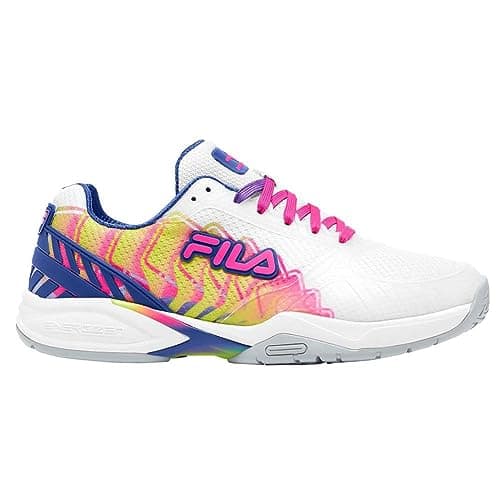
02
Fila Fila Volley Zone (Women's)
Fila Volley Zone (Women's)

A women's-specific pickleball shoe from an established court brand, usually at a friendly price.

Best women's pickleball shoe
7.6
$57.95Amazon
03
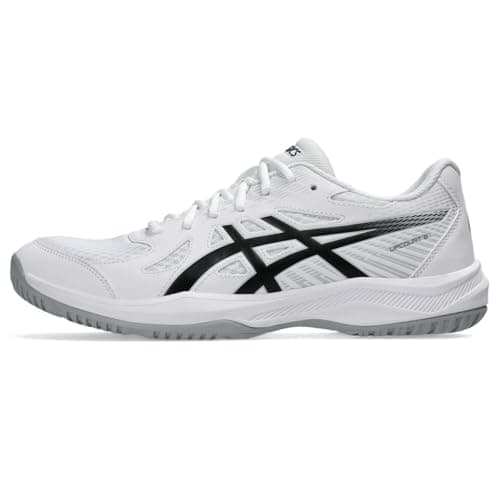
ASICS ASICS Upcourt 6 (Men's)
ASICS Upcourt 6 (Men's)

A gum-soled indoor court shoe that grips a gym floor properly, at a price that does not assume you play five days a week.

Indoor pickleball on a gym floor
8.0
$64.95Amazon
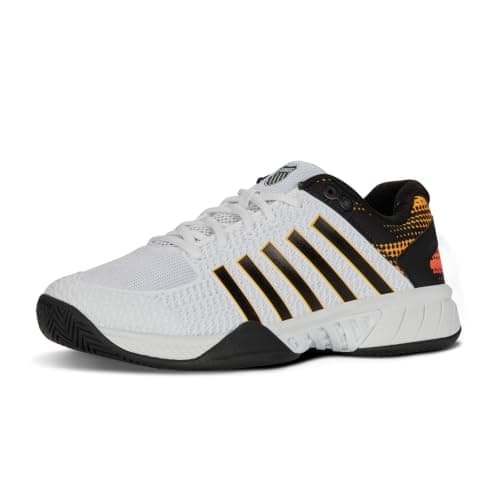
04
K-Swiss K-Swiss Express Light Pickleball
K-Swiss Express Light Pickleball

A purpose-built pickleball shoe from a court-shoe specialist — lateral support where running shoes have none.

The best all-round pickleball shoe
7.8
$79.94Amazon
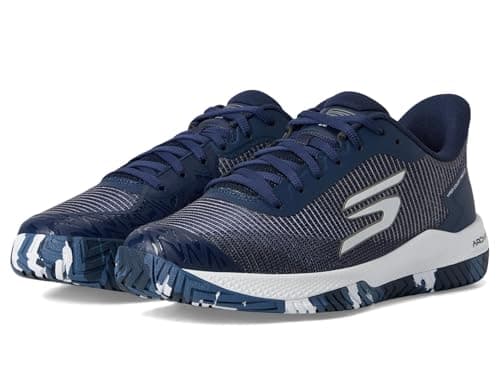
05
Skechers Skechers Viper Court Pro 2.0
Skechers Viper Court Pro 2.0

The comfort pick: a proper court shoe with Skechers' famously cushioned, out-of-the-box-comfortable feel.

Comfort and all-day wear
7.8
$99.99Amazon

#ad · Live prices from the Amazon Product API, as of October 23, 2026. Where we have no verified live price, we show none — we would rather leave a gap than print a number that has rotted.

02In detail

The picks, in full

01
Fila Fila Volley Zone (Men's)

The cheapest dedicated men's pickleball shoe

Fila Volley Zone (Men's)

Herringbone rubber outsoleEnergized EVA midsoleTPU midfoot shankPickleball-specific
7.8/10

The same dedicated pickleball shoe as the women's Volley Zone, in a men's cut and at a noticeably lower price.

Grip
8
Stability
8
Cushioning
7
Durability
7
Value
9

Pros

  • A purpose-built pickleball shoe at a price most court shoes do not reach
  • Fila publishes a TPU midfoot shank, which is the piece that resists twisting on a lateral push
  • Herringbone outsole is the traditional court tread — it grips and releases rather than sticking

Cons

  • Synthetic upper rather than the breathable mesh on the women's version
  • Fila's listing states the outsole compound but makes no non-marking claim, unlike the women's

Don't buy this if…

…your indoor venue enforces a non-marking sole and you need that confirmed in writing before you buy. The women's Volley Zone listing states non-marking; this one does not.

$39.95View on Amazon

$49.9520% off

Price as of October 23, 2026. Prices change — Amazon's is the one that counts.

#ad · we may earn a commission from this link to Fila Volley Zone (Men's)

02
Fila Fila Volley Zone (Women's)

Best women's pickleball shoe

Fila Volley Zone (Women's)

Court outsoleWomen's-specific lastNon-marking solePickleball-specific
7.6/10

A women's-specific pickleball shoe from an established court brand, usually at a friendly price.

Grip
8
Stability
8
Cushioning
7
Durability
7
Value
8

Pros

  • Cut on a women's last, so the midfoot and heel lock is better than unisex sizing
  • Court-tuned outsole grips and pivots without sticking
  • Regularly one of the better-value dedicated pickleball shoes

Cons

  • Support is solid but not the most aggressive lateral cage available
  • Color availability comes and goes

Don't buy this if…

…you have a very wide foot. Court lasts tend to run narrow for lock-down; check the width feedback before buying.

$57.95View on Amazon

$69.9517% off

Price as of October 23, 2026. Prices change — Amazon's is the one that counts.

#ad · we may earn a commission from this link to Fila Volley Zone (Women's)

03
ASICS ASICS Upcourt 6 (Men's)

Indoor pickleball on a gym floor

ASICS Upcourt 6 (Men's)

Gum court outsoleIndoor-court gripNon-marking soleLightweight build
8.0/10

A gum-soled indoor court shoe that grips a gym floor properly, at a price that does not assume you play five days a week.

Grip
9
Stability
8
Durability
6
Comfort
8
Value
9

Pros

  • Gum rubber is the right compound for a varnished wood or sprung gym floor
  • Light enough for the constant small adjustments the kitchen line demands
  • ASICS court lasts are well proven across volleyball and indoor sport

Cons

  • A gum sole wears fast if you take it outside onto concrete
  • Minimal cushioning compared with a dedicated outdoor pickleball shoe

Don't buy this if…

…you play mostly outdoors. Gum outsoles are made for clean indoor floors and will wear through quickly on an outdoor hard court.

$64.95View on Amazon

Price as of October 23, 2026. Prices change — Amazon's is the one that counts.

#ad · we may earn a commission from this link to ASICS Upcourt 6 (Men's)

04
K-Swiss K-Swiss Express Light Pickleball

The best all-round pickleball shoe

K-Swiss Express Light Pickleball

Court outsoleLateral support cageNon-marking solePickleball-specific
7.8/10

A purpose-built pickleball shoe from a court-shoe specialist — lateral support where running shoes have none.

Grip
8
Stability
9
Cushioning
7
Durability
8
Value
7

Pros

  • Built for the side-to-side movement pickleball demands — the exact thing running shoes fail at
  • Non-marking outsole is welcome (often required) on indoor gym courts
  • K-Swiss has made court shoes for decades; the durable toe drag guard shows it

Cons

  • Firmer and less plush than a cushioned running shoe on your first wear
  • Styling is functional, not fashionable

Don't buy this if…

…you only ever play a casual game once a month on a soft surface. Any decent court or tennis shoe you own will do — this is for people playing enough to need real lateral support.

$79.94View on Amazon

$110.0027% off

Price as of October 23, 2026. Prices change — Amazon's is the one that counts.

#ad · we may earn a commission from this link to K-Swiss Express Light Pickleball

05
Skechers Skechers Viper Court Pro 2.0

Comfort and all-day wear

Skechers Viper Court Pro 2.0

Court outsoleCushioned midsoleNon-marking soleRoomy fit
7.8/10

The comfort pick: a proper court shoe with Skechers' famously cushioned, out-of-the-box-comfortable feel.

Grip
8
Stability
7
Cushioning
9
Durability
7
Value
8

Pros

  • Genuinely comfortable from the first wear — little to no break-in
  • Cushioning is kind to older knees and longer sessions
  • Popular with the pickleball crowd specifically, so sizing feedback is plentiful

Cons

  • The softer, higher-stack feel is a touch less stable in a hard cut than a low, firm court shoe
  • Runs roomy — size feedback matters before you buy

Don't buy this if…

…you're a fast, aggressive player who wants the lowest, most locked-down platform for hard direction changes. A firmer, lower shoe will feel more precise.

$99.99View on Amazon

$120.0017% off

Price as of October 23, 2026. Prices change — Amazon's is the one that counts.

#ad · we may earn a commission from this link to Skechers Viper Court Pro 2.0

03The buyer's guide

The one thing that matters more than the shoe you pick

Pickleball is played sideways. It is quick lateral cuts, stops and pivots inside a small box. Running shoes are built to do the opposite — a tall, soft heel that pushes you forward in a straight line — and a tall soft sole rolls under you exactly when you plant to change direction. That is the single most common way a new player turns an ankle, and it is a design mismatch rather than bad luck.

Which means the important decision is not which of these five you buy. It is that you stop playing in running shoes. Every shoe on this page solves that problem. The ranking below is about how much you spend and which venue will let you in, not about safety.

The four criteria, in order

1. A named lateral-support component — not "supportive design"

Every court shoe listing claims support. The ones worth paying for name the part. Two components do the work: a TPU shank under the arch, which stops the shoe twisting along its length, and a wider, flatter outsole that keeps your foot over the platform instead of on its edge.

Fila publishes a TPU midfoot shank on the men's Volley Zone and New Balance publishes a nylon shank on its court line; K-Swiss names a lateral support cage on the Express Light. Those are claims a brand has to stand behind. "Engineered for stability" is not. If a cheap shoe names a shank and an expensive one does not, the cheap one has told you more.

2. Non-marking — the rule that decides whether you get to play

This is the criterion beginners never hear and then run into at the door. Indoor venues — school gyms, community centers, church halls — frequently require a non-marking outsole, because a standard rubber sole leaves black streaks on a varnished floor. It is a condition of entry, not a preference.

So check that the listing says it, in writing, before you buy. And be aware the claim is not evenly applied even within one model: the women's Volley Zone listing states a non-marking sole and the men's listing does not — it names the herringbone rubber compound and stops there. If your venue enforces the rule, that gap is a real reason to pay a little more for a shoe that puts it in print. The ASICS Upcourt 6, Express Light and Viper Court all do.

3. Which surface you actually play on

There is one fork and it is worth getting right, because the wrong answer costs you a pair of shoes rather than a bad session. Soft gum rubber grips a smooth gym floor better than anything else and wears down fast on rough outdoor concrete. Harder all-court rubber gives up a little indoor bite and survives asphalt.

The ASICS Upcourt 6 is the gum-soled indoor option here. The Volley Zone, Express Light and Viper Court are the harder all-court ones. If you genuinely play both surfaces and can only buy one pair, buy the harder sole — an outdoor-rated shoe on a gym floor is slightly less grippy, while a gum sole outdoors is consumed. The full breakdown is in indoor vs outdoor pickleball shoes.

4. Fit, which is where most of the regret comes from

Court lasts run narrower than running shoes on purpose: a hard lateral push loads the side of the shoe, and a foot that can slide inside it is a foot that rolls. Lockdown is the design brief. So do not size up out of habit — sizing up adds length more than width and leaves your foot on the edge of the platform, which costs the exact stability you are buying.

Two specifics for this field: the Skechers Viper Court runs large, which is sizing feedback rather than a published spec, and the women's Volley Zone is cut on a women's last, so the heel and midfoot lock down better than unisex sizing does. If your feet are genuinely wide, none of these is the right answer and best pickleball shoes for wide feet is — K-Swiss is the brand here that publishes real width fittings, as we cover in K-Swiss pickleball shoes, ranked.

The five, cheapest first

1 and 2. Fila Volley Zone, men's and women's — the cheapest real court shoe

Same model, two cuts, and between them the best answer for a first pair. Fila is an established court brand, this is a purpose-built pickleball shoe rather than a borrowed platform, and it publishes a TPU midfoot shank, an energized EVA midsole and a herringbone outsole — the traditional court tread that grips and releases instead of sticking. At this price that specification is unusual.

The honest cons differ by cut, and they are worth reading before you choose. The men's has a synthetic upper rather than the women's breathable mesh, and its listing makes no non-marking claim — skip it if your indoor venue enforces that and you need it confirmed in writing. The women's states non-marking and runs on a women's-specific last, but its lateral cage is not the most aggressive available and color availability comes and goes. Neither is a wide shoe.

3. ASICS Upcourt 6 — the indoor specialist

If you play on a gym floor, this is the shoe that grips it best, and it costs very little. It is a gum-soled court shoe from a brand whose indoor lasts are proven across volleyball, it is light and low, and the sole is non-marking — so it clears the venue rule as well as gripping the floor.

The con is the same thing as the pro: a gum sole is made for clean indoor floors and wears through quickly on outdoor concrete. Cushioning is also minimal compared with a comfort shoe. Buy it if you are an indoor player; do not buy it as your only pair if you play outdoors. We compare it directly with the Volley Zone in Upcourt 6 vs Volley Zone.

4. K-Swiss Express Light — the safe default if you would rather not think about it

A step up in price and the pick if you want one shoe that is right in every situation. It is pickleball-specific from a brand that has made court shoes for decades, and it has all four of the things that define the category: a court outsole, a lateral support cage, a non-marking sole and a durable toe drag guard. That last one matters more in pickleball than tennis, because pickleball players drag the front foot on lunges.

The cons are mild. It is firmer and less plush than a cushioned running shoe on the first wear, and the styling is functional rather than fashionable. It is also not the cheapest way to be safe, which is the only reason it is not rank 1 on a beginner page — it is rank 1 on best pickleball shoes, where price is not the axis.

5. Skechers Viper Court Pro 2.0 — comfort out of the box

The most forgiving first-wear experience here, which is a genuine argument for a new player who is not used to a firm court platform. It is a dedicated pickleball shoe and the cushioning is the point.

Two honest cons: it is the most expensive shoe on this page, and it runs large. The sizing note is owner feedback rather than a published spec, so treat it as a reason to try before you commit rather than a reason to order a size down blind. If cushioning is your priority, most comfortable pickleball shoes is the list built around it.

How much should a beginner actually spend?

Less than most lists suggest. The jump that matters is from running shoes to any real court shoe, and the cheapest shoe on this page clears that bar while publishing a named support component. Everything above that price buys cushioning, breathability, a width fitting or a brand you recognize — all real, none of them safety.

The one case for spending more on day one is a long-term fit problem: wide feet, a history of knee or ankle trouble, or a venue rule you have to satisfy in writing. Those are specific reasons, and if none of them is you, buy at the bottom of this page and spend the difference on a better paddle or a tube of decent balls. Our what pickleball equipment costs guide sets out the whole first-setup budget.

What to skip entirely

  • Running shoes. The whole reason this page exists. Tall soft heel, built to go forward, rolls when you plant sideways.
  • Cross-trainers and walking shoes. Usually a running platform with a flatter outsole and no shank, so they fail the torsional-stiffness test that matters most.
  • Any shoe whose listing only says "supportive". If the maker will not name the shank or the outsole compound, there is nothing to check.
  • Sizing up for comfort. It costs you the lockdown you bought the shoe for. If the shoe is too narrow, you need a width fitting, not a longer shoe.

What we are not claiming

We have not worn these shoes, rolled an ankle in a running shoe for science, or measured a shank. Every component above is read from the manufacturers' published listings for the exact ASINs our buy buttons point at, and the reasoning about how court platforms behave is category knowledge rather than a test result. Where a listing publishes nothing — the men's Volley Zone and non-marking being the clearest example — we have said so instead of assuming. Our methodology sets out the approach.

The honest bottom line

Buy the Volley Zone in whichever cut fits you, unless your indoor venue requires a non-marking sole in writing and you are looking at the men's — in which case buy the women's cut, the Upcourt 6 or the Express Light. If you only ever play on a gym floor, the Upcourt 6 grips it better than anything here. If you would rather buy once and not think about surfaces again, pay a little more for the Express Light.

And if you are still deciding whether this purchase is necessary at all: it is the cheapest injury prevention in the sport, and it is the one piece of gear where the beginner version is genuinely almost as good as the expensive one. Spend the money you save on the paddle, where it actually changes how the game feels — start at best pickleball paddles for beginners.
How we picked

We do not run a testing lab

Everyone in this category says they tested twenty paddles. We haven't tested these in a lab, and we say so. Instead we compile the published manufacturer specs, do the math, weight everything toward what a beginner actually needs — forgiveness, a large sweet spot, sane weight and a fair price — and score each product against a published rubric. The scores are judgments from that research, not measurements we took. Where a fact came from someone else, we name it in Sources.

04Questions

Frequently asked

What shoes should a beginner wear for pickleball?

A court shoe — tennis, volleyball or a pickleball-specific model — rather than running shoes. Running shoes have a tall, soft heel built to push you forward and they roll under you when you plant to change direction, which is the most common way new players turn an ankle. Any real court shoe fixes that, and the cheapest one on this page does it while publishing a TPU midfoot shank.

How much should a beginner spend on pickleball shoes?

Less than most lists suggest. The jump that matters is from running shoes to a real court shoe, and that is available at the bottom of this page. Spending more buys cushioning, breathability, a width fitting or brand recognition — all genuine, none of them safety. Spend the difference on the paddle instead.

Can I just play pickleball in my running shoes?

You can, and it is the one gear decision we would actively argue against. The sole geometry that makes a running shoe good at running — tall, soft, cushioned heel — is what rolls under a sideways plant. It is a design mismatch, not a question of shoe quality, and a cheap court shoe is safer than an expensive running shoe here.

Do pickleball shoes need to be non-marking?

Often yes, if you play indoors. School gyms, community centers and church halls frequently require a non-marking outsole as a condition of entry, because standard rubber streaks a varnished floor. Check that the listing states it in writing — the claim is not even consistent within one model, since the women's Fila Volley Zone listing states non-marking and the men's does not.

Should a beginner buy indoor or outdoor pickleball shoes?

Buy for the surface you actually play on. Soft gum soles grip a gym floor best and wear out fast on concrete; harder all-court rubber survives outdoors and gives up a little indoor bite. If you play both and can only buy one pair, buy the harder sole — the loss indoors is small, while a gum sole outdoors gets consumed.

Should I size up in pickleball shoes?

No, not as a habit. Court lasts run narrow deliberately, to lock the foot down against lateral load. Sizing up adds length more than width and leaves your foot on the edge of the platform, which costs the stability you bought the shoe for. If a shoe is too narrow, you need a published width fitting rather than a longer size.

06Read next
05Sources

Where our facts come from