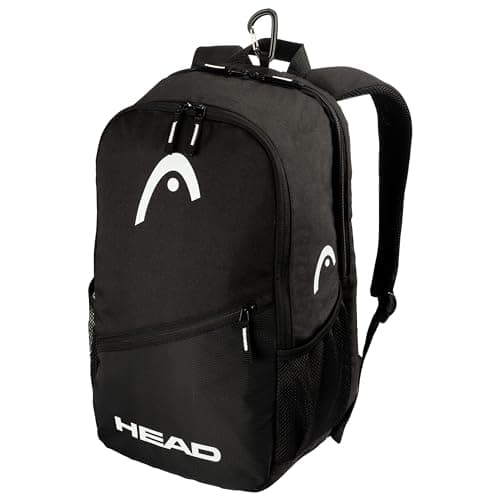
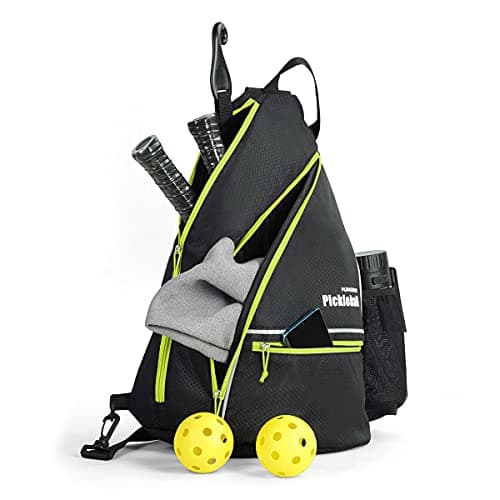
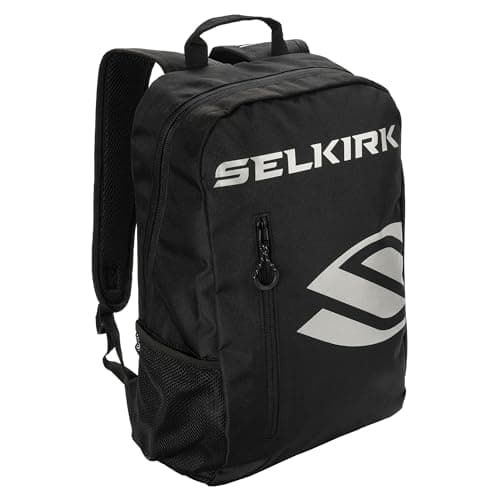
Most people end up wanting a backpack rather than a sling or a duffle, and the reason is boring and correct: two straps spread the load. Once your kit grows past a paddle and a sleeve of balls — add shoes, a water bottle, a layer, a spare paddle — a single strap starts digging in on the walk from the parking lot.
Start with the Selkirk Day Backpack if you want one answer: it is the size most players actually need, from a brand that builds properly, at a price that is not silly. Go to the Mangrove if the budget is tight, or the JOOLA Tour Elite Pro if you carry everything. If 22 litres of organized compartments is what you are after, our rank 2 sits inside the wider HEAD pickleball gear ranking, and both Selkirk bags are compared on Selkirk pickleball paddles, ranked.
03The buyer's guide
What separates a good pickleball backpack
| Feature | Why it matters | What to accept |
|---|
| Dedicated paddle storage | Keeps faces off zips and keys, which scratch texture off a face | External straps are fine; a lined pocket is better |
| Vented shoe compartment | Damp shoes in with your clothes ruins both | A separate, ventilated pocket is the single best feature here |
| Strap padding | The bag is loaded and you carry it further than you think | Contoured, padded straps; a sternum strap is a bonus |
| Water bottle pockets | Two of them, so a partner is covered too | Elastic side pockets are fine; insulated is a luxury |
| Capacity | Too small is annoying weekly; too big is annoying every day | Around 20 liters covers most recreational players |
The vented shoe pocket is the feature to buy for
If you take one thing from this page: a separate, ventilated compartment for shoes is the difference between a bag you like and a bag you tolerate. Court shoes come off damp, and damp shoes sharing a compartment with a towel and a shirt makes the whole bag smell within a week. A vented pocket is cheap to build and disproportionately improves the experience of owning the bag.
How big is big enough?
Around twenty liters is the sweet spot for a recreational player. That holds two paddles, a tube of balls, a pair of shoes, a water bottle, a layer and the small stuff. Below that you start leaving things in the car; above it you are carrying air most days. Larger tour bags earn their size if you play often, carry a spare paddle for a partner, or bring food to all-day open play. If none of that describes you, buy the smaller bag.
Backpack, sling or duffle?
A sling is quicker on and off and cheaper, and it is genuinely enough if you carry one paddle and some balls. A duffle carries the most but hangs off one shoulder, which is fine for a short walk and unpleasant for a long one. A backpack is the middle answer and the one most players land on. Some of the tour bags convert between backpack and duffle, which is a real feature rather than a marketing one. Our how to choose a pickleball bag guide walks the whole decision, and the wider best pickleball bags list includes slings and duffles.
Do you need a pickleball-specific bag?
Honestly, no. A regular backpack you already own will carry a paddle. What a pickleball bag adds is paddle-shaped storage that stops the face rubbing against everything else, and the vented shoe pocket. Both are genuine improvements, neither is essential, and if money is tight the paddle and shoes matter far more. Our what you need to start checklist puts the bag in its proper place in the priority order.
Protecting the paddle face
The one genuine risk to your gear in a bag is abrasion on the paddle face. Modern carbon faces rely on surface texture for spin, and that texture wears — car keys, zips and grit will strip it faster than play does. A fleece-lined pocket or a simple paddle cover solves it for very little money. We cover face wear in more detail in when to replace your paddle.
What to actually put in it
Once you have the bag, the failure mode shifts from "I forgot something" to "I am carrying too much." Our what to pack in your pickleball bag checklist sorts kit into always, seasonal and occasional so the bag stays useful rather than becoming storage on wheels.
How we picked
Everyone in this category says they tested twenty paddles. We haven't tested these in a lab, and we say so. Instead we compile the published manufacturer specs, do the math, weight everything toward what a beginner actually needs — forgiveness, a large sweet spot, sane weight and a fair price — and score each product against a published rubric. The scores are judgments from that research, not measurements we took. Where a fact came from someone else, we name it in Sources.