03The buyer's guide
The whole range on one spec sheet
This is every figure JOOLA prints in its own listing copy for the five paddles we rank. No row is interpolated, and the blanks are real blanks.
| Paddle | Face | Core | Dimensions | Weight | Handle |
|---|
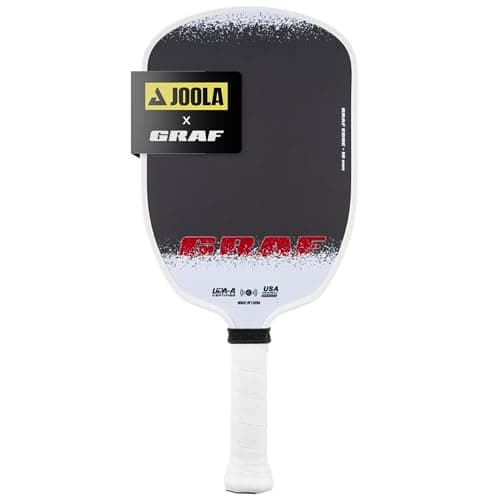
| Agassi Edge 16mm | Textured carbon fiber | 16mm honeycomb | 16.5 x 7.5 in | 7.8 oz | 5.5 in long, 4-1/4 in around |
| GRAF Edge 16mm | Textured carbon fiber | 16mm honeycomb | 16.5 x 7.5 in | 7.8 oz | 5.5 in long, 4-1/8 in around |
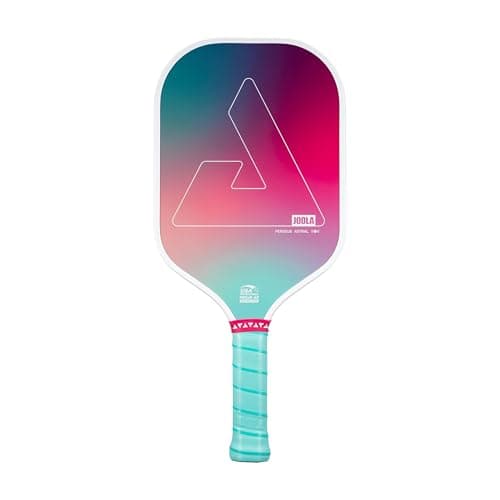
| Astral Perseus | Sandblasted carbon fiber | Not published | 16.5 x 7.5 in | 7.8 oz | 5.5 in long, circumference not published |
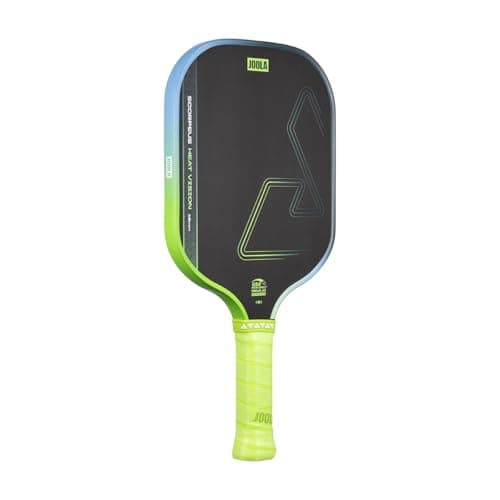
| Scorpeus Heat Vision 16mm | Textured carbon fiber | 16mm honeycomb, bonded SK film | 16 x 8 in | 7.8 oz | 5.25 in long, circumference not published |
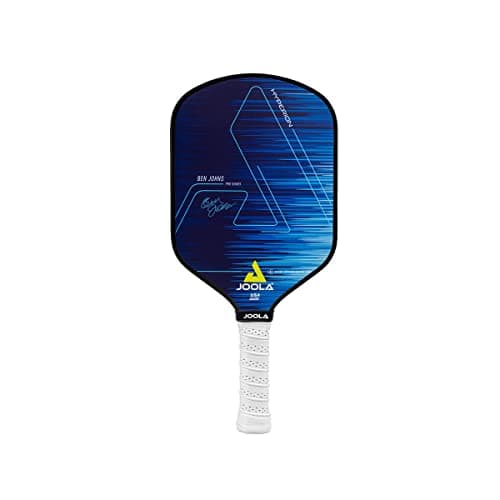
| Ben Johns Hyperion CAS 16 | Carbon Abrasion Surface | 16mm Response polypropylene | Not published | Not published | Elongated Sure-Grip, no figures published |
Three things fall straight out of that table, and they are worth more than any review adjective.
Every paddle here that publishes a weight publishes the same weight. Four of the five say 7.8 oz. That is a normal midweight, it sits in the middle of the bands in our paddle weight guide, and it means weight is not a deciding factor anywhere in this range. If weight is your limiting spec — a sore shoulder, an older player, a child — JOOLA is not where you solve it, and our paddles for seniors list is.
Every paddle here that publishes a core publishes 16mm. Thick-core, control-first construction is simply what JOOLA sells in this part of the range. Our core thickness guide spends its length on 13mm versus 16mm; on this page that argument is already settled for you. The practical consequence: nothing here is a "poppy" paddle that flatters a short swing. If you cannot yet generate your own pace and want the ball to come off faster for free, a thinner core from another brand on our under $50 list does that job better.
The most expensive paddle publishes the least.The Hyperion's listing is five bullets of technology names — Hybrid-Ply, Carbon Abrasion Surface, Response core, Sure-Grip — and not one dimension, circumference or weight. The only weight figure anywhere on that page is Amazon's item-weight field, which includes packaging, so we are not publishing a paddle weight for it. The cheapest paddles in the range tell you more about themselves than the flagship does.
Criterion 1: grip circumference, because it decides the top two
The Agassi Edge and the GRAF Edge are, by JOOLA's own listing copy, the same paddle. Same face, same core, same 16.5 x 7.5 in shape, same 7.8 oz, same 5.5 in handle length, same two certifications, same release date, same price. The bullets are word-for-word identical down to the punctuation.
The difference is grip circumference, which JOOLA does not print in its Amazon bullets at all. Pickleball Central's independent spec sheets do: 4-1/4 in on the Agassi Edge, 4-1/8 in on the GRAF Edge. That is the whole decision, and it is the reason the Agassi takes rank 1 here — 4-1/4 in is the circumference that fits the average adult hand, so it is right for more readers.
Get this the right way round and it costs you nothing; get it wrong and it is the most annoying mistake in the category. A grip can be built up with an overgrip, roughly an eighth of an inch per wrap, for the price of a coffee. A grip cannot be shaved down. So if you are between sizes, or if you have no idea, size down to the GRAF Edge and add a wrap. Our grip size guide has the ruler test; it takes twenty seconds and it is the only measurement on this page you need to take yourself.
Why it matters beyond comfort: a handle that is too big makes you squeeze to hold on, and squeezing is the mechanism behind most forearm complaints in this sport. That chain is exactly why our paddles for tennis elbow page leads on grip rather than on weight.
Criterion 2: shape, and the 24-inch ceiling everything here hits
USA Pickleball caps a legal paddle at 24 inches of length plus width combined. Add up the published dimensions and every JOOLA paddle in this range sits exactly on that ceiling, which tells you the shape choice is a pure trade-off rather than a question of getting more paddle:
- 16.5 x 7.5 in — the Edge pair and the Astral Perseus. Half an inch of extra reach, half an inch narrower. JOOLA calls this the Agassi shape on the Edge paddles and the Perseus shape on the Astral, and claims both expand the sweet spot into the upper edges of the face.
- 16 x 8 in— the Scorpeus. JOOLA calls it "wide-body" and sells it on "quick reactions in fast kitchen exchanges." Half an inch less reach, half an inch more face either side of the center line.
- Not published — the Hyperion. Its title says elongated; no figures are given.
For a developing player the wider face is the more forgiving one, because most of your contacts are not in the middle yet. For a tennis convert who wants reach on a stretch volley, the elongated shape is the familiar one. Neither is better; our elongated vs widebody guide sets out the full trade, and our paddles for tennis players page is the one to read if a racket is what you are coming from.
Criterion 3: the three badges, which are three different badges
JOOLA prints approval language on every paddle in this range, and readers reasonably assume it all means the same thing. It does not:
- USA Pickleball Approved(Astral Perseus, Hyperion, both Edge paddles) — the governing body's dimensional and surface test. It makes a paddle legal for sanctioned play. It is not a quality rating and never was; see what approval actually means.
- UPA-A certified(both Edge paddles) — the professional tour's own testing program, a separate body running separate tests.
- USAP PBCoR.43 certified (Scorpeus) — the newer power-limit standard, capping how much energy comes back off the face. A paddle can be approved without this and still be legal for rec and league play.
For a beginner, all three badges are equally irrelevant on a driveway and equally sufficient at a rec session. The one case where it matters: if you intend to enter a sanctioned tournament this year, check the requirement your event publishes rather than the badge on the box, because these standards are actively changing.
Criterion 4: the surface claims, de-marketed
Four different phrases, one idea. "Sandblasted surface" on the Astral, "textured carbon fiber surface" on the Edge pair and the Scorpeus, and "Carbon Abrasion Surface" — described as a "multi-step, abrasion sand-blasting process" — on the Hyperion. All four describe grit on a carbon face, which grips the ball and lets a developed stroke put spin on it.
We are not going to grade any of them. Surface roughness is measured with instruments we do not own, JOOLA publishes no roughness figure for any of these paddles, and the honest summary is that a textured carbon face helps a player who can already brush the ball and does very little for a player who cannot. The Scorpeus adds one claim the others do not make — a bonded SK film layer between face and core, which JOOLA says reduces vibration — and it is the only paddle here JOOLA describes as thermoformed. Our guide to thermoformed paddles explains what that construction does and does not buy.
Criterion 5: the chip, the warranty, and the model that has neither
Four of these five paddles carry an embedded NFC chip that registers the paddle and, per JOOLA, unlocks a 12-month warranty. The Astral Perseus, the Scorpeus and both Edge paddles all say so in their listing bullets. The Hyperion does not mention either — it is the oldest design in this group and its listing predates the feature.
That is a small thing that quietly reverses a shopping instinct. The flagship paddle carries the thinnest published warranty story of the five, and the two cheapest carry the fullest. Register whichever one you buy on the day it arrives; a warranty you have to produce a receipt for a year later is a warranty you will not claim.
So which JOOLA should you actually buy?
By reader, with the reasoning rather than the adjective:
- Never played, want one paddle, done. The Astral Perseus. It is the friendliest thing JOOLA makes, it is the only one in the range JOOLA explicitly designs "with beginners in mind," and it is our standing first-paddle pick across the whole site.
- Played a bit, want the most paddle for the least money. The Agassi Edge, or the GRAF Edge if your hand measures small. A published 16mm control-first core and a textured carbon face at the bottom of the range is the best value JOOLA sells, full stop. Head-to-head against the Astral: Astral Perseus vs GRAF Edge.
- Upgrading, and you keep mishitting. The Scorpeus Heat Vision. The widest face here, thermoformed, with the vibration-damping layer. It is the one JOOLA paddle on our best paddles for intermediate players list, for exactly that reason.
- Committed, and you want the paddle the best player in the world endorses. The Hyperion CAS 16. It is a genuine tournament-grade paddle and the thick-core version of the signature line, which is the version a control player wants. Read should you buy the paddle the pros use first, because the honest answer is usually no.
Who should buy none of them. If you have not decided whether pickleball is your sport, the whole JOOLA range is more paddle than the question deserves — buy the cheapest real branded paddle we rank and upgrade with zero regret if it sticks (how much to spend on a first paddle). If weight is your deciding spec, this range publishes one weight and it is unremarkable. And if you want a paddle that arrives with a net, balls and a bag rather than on its own, the starter sets are the better shape of purchase — JOOLA sells one of those too, and it appears on our gifts for couples guide.
How JOOLA compares as a brand
Two honest points about the name on the paddle. The first is that JOOLA is a real equipment company rather than a pickleball marketing exercise — its own listings describe seventy-plus years in table tennis, and the pickleball line began with a Ben Johns partnership rather than an Amazon storefront. Warranty, stock, spare grips and resale value all genuinely exist, which is the practical difference between a brand and a listing. We rank it among the brands worth buying on best pickleball paddle brands.
The second is that brand loyalty is the wrong way to shop this category. JOOLA publishes no core thickness on its beginner paddle and no dimensions at all on its flagship, while the cheap end of the market often publishes more. If you want the brand-wide view of the other end of the shelf, our Franklin pickleball gear page does the same job for the brand that makes the ball you will actually play with. And JOOLA makes no court shoe at all, so whatever paddle you land on, footwear is a separate decision — start at best pickleball shoes, or go straight to the Selkirk CourtStrike Pro 3.0 if you are the player who wears outsoles out.