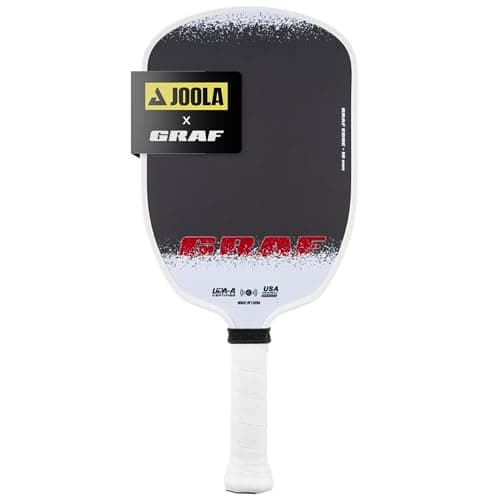
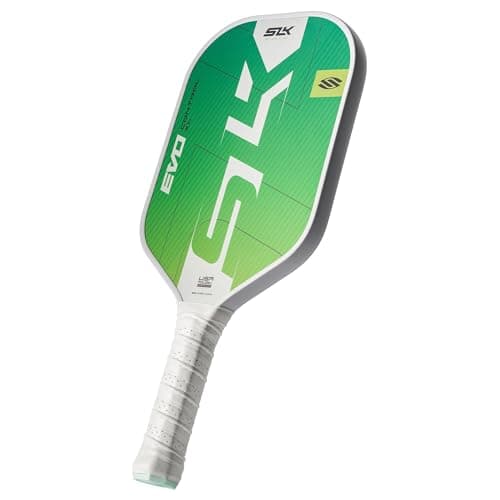
Buy the JOOLA Agassi Edge 16mm — a published 16mm polypropylene core behind a textured carbon face, a published 16.5 x 7.5 in body and, the reason it outranks its own twin, a published 4 1/4 in medium grip that fits an average adult hand with no overgrip on day one. If your hand is on the smaller side, buy the identical GRAF Edge 16mm instead, which is the same paddle at 4 1/8 in. The budget pick is the Selkirk SLK Evo Control XL, the cheapest T700 carbon 16mm face on the site and the only one here with a published 5.75 in handle. Live prices and the date each was checked sit in the table below.
A 16mm core is the sport's default control setting. Thickness is the distance between the two faces of the paddle, filled with a polymer honeycomb, and it decides how the ball leaves: thicker is softer, calmer and easier to place; thinner is firmer and gives more free pop. At 16mm you are buying the soft end of the mainstream range, which is why almost every maker's control model lands there. Our core thickness guide works through the 14mm-versus-16mm decision if you have not made it yet.
What a 16mm label does not tell you is almost everything else. Of the seven paddles here, three add foam to the core or the perimeter, four publish an elongated or hybrid body, one publishes a true 16 x 8 in widebody, two publish no dimensions at all, and only two publish a weight. Two paddles can share the millimeter and feel nothing alike. That is what this page ranks.
Who each pick is for, in one line:
- JOOLA Agassi Edge 16mm — the whole spec sheet published, a textured carbon face and a medium grip, in the cheapest band on this page.
- JOOLA GRAF Edge 16mm — the same paddle in the small grip, and the only paddle here carrying UPA-A certification.
- Selkirk SLK Evo Control XL — the budget pick: T700 carbon over a 16mm Rev-Control core, with the longest published handle on the site.
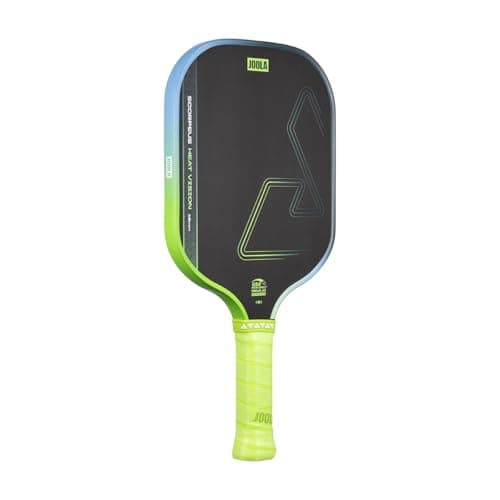
- JOOLA Scorpeus Heat Vision 16mm — the only published 16 x 8 in widebody at 16mm, thermoformed, with a published weight.
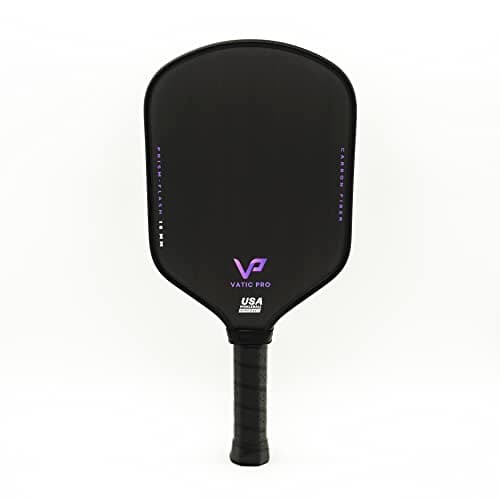
- Vatic Pro Prism Flash — raw carbon over a foam-injected 16mm core, for a player who wants the thermoformed feel without the big-brand markup.
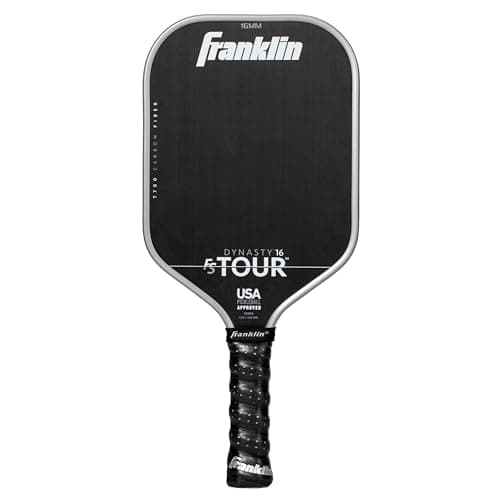
- Franklin FS Tour Dynasty Pro 16mm — the heaviest published frame here and the only one with a foam-injected perimeter and a stated weight band.
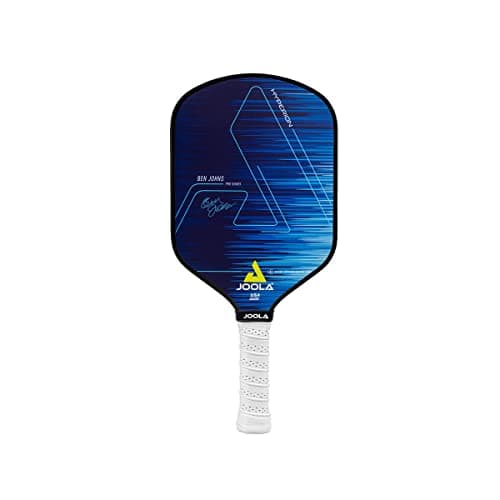
- JOOLA Ben Johns Hyperion CAS 16 — the famous one, ranked last here for the simple reason that it publishes a core thickness and then stops.
Two paddles that belong on this list are not ranked on it. The Selkirk SLK Evo Control Max publishes the same 16mm Rev-Control core in a wider body, but it has had no buyable offer for several price checks running. The TENVINA T700SC publishes a 16mm option as well and is also dark. We do not rank a paddle you cannot currently buy; if either offer returns, it goes straight in.
Our standing disclosure: we have not measured any of these paddles. Every core depth, dimension, grip circumference and weight below is published by a maker or a retailer named in Sources, and the scores are judgments from that research against our published rubric, weighted for a beginner.
If this page has talked you out of 16mm rather than into it, the complement is our 13mm and thinner ranking: five paddles that publish a core between 9.8mm and 13mm, with a straight account of what the extra pop costs you on the soft game.
03The buyer's guide
What each maker publishes at 16mm
This is the table that decides the page. Live prices with their check date are in the Quick picks table above, where every row carries its own buy button.
| Paddle | Core, as published | Face | Length x width | Grip circumference | Weight |
|---|
| JOOLA Agassi Edge 16mm | 16mm polypropylene | Textured carbon fiber | 16.5 x 7.5 in (elongated) | 4 1/4 in (medium) | Not published |
| JOOLA GRAF Edge 16mm | 16mm polypropylene | Textured carbon fiber | 16.5 x 7.5 in (elongated) | 4 1/8 in (small) | Not published |
| Selkirk SLK Evo Control XL | 16mm Rev-Control polymer | T700 carbon fiber | 16.4 x 7.4 in (hybrid length) | 4 1/4 in, on a 5.75 in handle | Not published |
| JOOLA Scorpeus Heat Vision 16mm | 16mm honeycomb, thermoformed, bonded SK film | Textured carbon fiber | 16 x 8 in ("Wide-body design") | Not published (grip length 5.25 in) | 7.8 oz |
| Vatic Pro Prism Flash | 16mm foam-injected, thermoformed unibody | Raw carbon fiber | Not published (elongated, brand claim) | Not published | Not published |
| Franklin FS Tour Dynasty Pro 16mm | 16mm polymer with a high-density foam injected perimeter | T700 raw carbon fiber surface layer | Not published (elongated, brand claim) | 4.3 in, on a 5.6 in handle | 8.5-8.8 oz (midweight) |
| JOOLA Ben Johns Hyperion CAS 16 | 16mm Response polymer | Carbon Abrasion Surface, Hybrid-Ply | Not published | Not published | Not published |
Three of the seven publish the full set of numbers a buyer needs: core, face, body and grip circumference. Two publish a core thickness and nothing else you can hold a ruler to. We have ranked them broadly in that order, because a spec you can check is worth more than a spec you cannot — the same principle behind our widebody and spin rankings.
Three things 16mm does not decide
1. Whether there is foam in the paddle
The biggest difference on this page is not the millimeter, it is foam. Three of the seven are built with it in some form: Vatic injects foam into the core of a thermoformed unibody, Franklin injects a high-density foam perimeter around a single-piece core, and JOOLA thermoforms the Scorpeus and bonds an SK film to the honeycomb. Foam and thermoforming stiffen the edge of the paddle, which pushes the lively area outward and raises power and twist resistance at the same time. A plain honeycomb 16mm paddle — the two Edge models, the Evo Control XL — is softer at the perimeter and calmer overall. If you searched for the best 16mm foam paddle, the Vatic and the Franklin are the two here that publish it; our thermoformed paddle explainer covers what the process does and does not buy.
2. What shape the paddle is
USA Pickleball caps combined length plus width at 24 in with a 17 in maximum length, so every paddle in the sport spends the same budget in a different place. At 16mm this list splits cleanly: the two Edge paddles publish 16.5 x 7.5 in and the Evo Control XL publishes 16.4 x 7.4 in, which are elongated and hybrid bodies built for reach; the Scorpeus publishes 16 x 8 in, which is a genuine widebody built for forgiveness. Two publish no dimensions at all. Reach or sweet spot is a real decision and the core thickness does not make it for you — see elongated vs widebody, or the elongated list if you already know you want length.
3. How heavy the paddle is
This is the gap that matters most and the one almost nobody fills. Only two of the seven publish a weight: the Scorpeus at 7.8 oz and the Dynasty Pro at a stated 8.5-8.8 oz midweight band. That is close to a full ounce between them, and weight is the spec that decides whether your forearm lasts three games — far more than a millimeter of core does. If you have any history of elbow or wrist trouble, buy on published weight first and core thickness second: our paddle weight guide and paddles for tennis elbow both start there.
Carbon at 16mm: raw, textured, or sandblasted
Every paddle on this page has a carbon face, which is what makes a search for the best 16mm carbon fiber paddle a slightly circular one — at this thickness, carbon is the default. The useful distinction is how the surface is finished, because that is what grips the ball.
Raw carbon is unpainted and unsealed, so the weave itself is the texture: the Vatic Prism Flash and the Franklin Dynasty Pro both publish a raw T700-class surface. Textured carbon has had a finish applied or worked into it; both Edge paddles and the Scorpeus publish that wording. The Hyperion publishes a Carbon Abrasion Surface, which JOOLA describes as a multi-step abrasion sand-blasting process. All of them grip better than a painted composite, and all of them wear — a grit surface is a consumable, and on outdoor concrete it is a faster one. Our best paddles for spin page ranks the same registry on published surface treatment alone, best outdoor paddles covers how fast that grit actually goes, and graphite vs fiberglass covers the material underneath.
Grip circumference is the spec to check before you buy
Four of the seven publish a grip circumference, and the spread is real: 4 1/8 in on the GRAF Edge, 4 1/4 in on the Agassi Edge and the Evo Control XL, and 4.3 in on the Dynasty Pro. That is the difference between a paddle that fits and a paddle you squeeze, and squeezing is where forearm strain starts.
It is also the only difference between our top two picks, which are otherwise the same paddle. JOOLA sells the GRAF Edge and the Agassi Edge with identical published cores, faces and bodies in two grip sizes. We rank the Agassi first because 4 1/4 in suits more adult hands, and the GRAF second because a smaller hand should buy the smaller handle rather than an overgrip it did not need. Do the ruler test in our grip size guide before you pick between them — it takes thirty seconds and it is the single most useful thing on this page.
Certification: what the badges on these seven actually mean
The approval claims here are not interchangeable. The GRAF Edge is the only paddle on this page carrying UPA-A certification, which caps a paddle at 2,200 RPM of imparted spin at any angle and sets a 46 lb deflection floor — a spin and stiffness test. The Scorpeus publishes USAP PBCoR.43 certification, which is a power test and says nothing about spin. The Dynasty Pro and the Hyperion state USA Pickleball approval, which is a compliance check against the equipment standard, not a performance grade. The Vatic Prism Flash makes no certification claim at all, which is fine for recreational play and a problem if your club runs sanctioned events. If you play anywhere organized, check the exact model on the approved list rather than trusting a listing title.
Should a beginner buy a 16mm paddle?
Usually yes, with one caveat. A thicker core is more forgiving of a bad swing and much kinder to your arm, which is most of what a new player needs — and at the prices on this page a 16mm carbon paddle now costs less than a mid-range fiberglass one did two years ago. The caveat is shape: four of the seven are elongated or hybrid bodies, and an elongated paddle is less forgiving of an off-center hit than a wide one. If this is your very first paddle, either take the Scorpeus for its published 16 x 8 in face, or start with one of the wide, light picks on our best beginner paddles list and come back here when your contact point has settled.
Skip 16mm if you want free power and you are willing to work for your control. A 13mm or 14mm core is firmer, pops the ball harder off the face and suits a player who drives rather than dinks — see best paddles for power, or best paddles for control if you have landed on the other side of that trade.