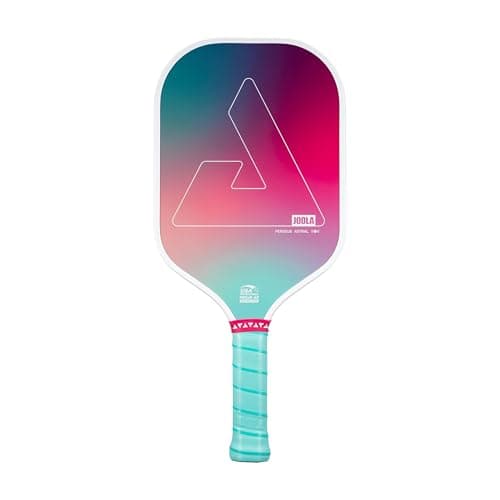
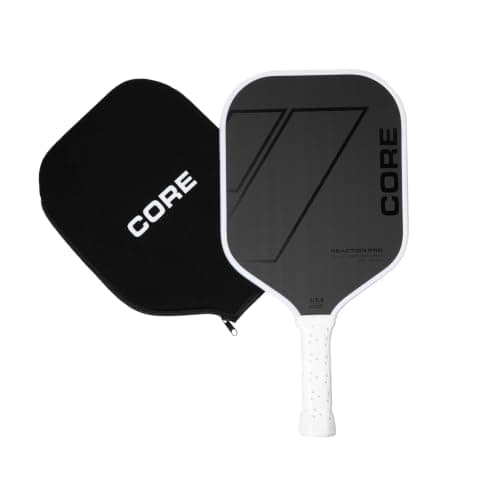
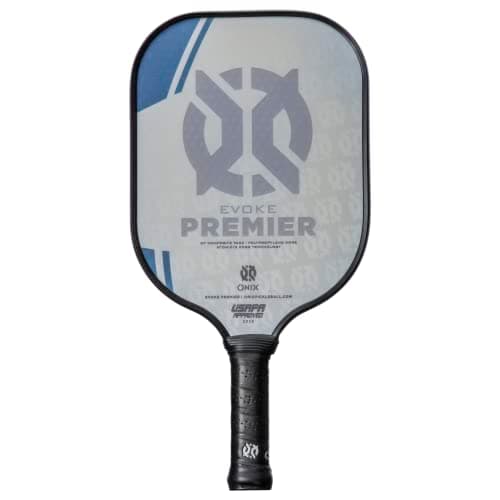
Buy the Onix Evoke Premier — a published 16 x 8 in face with a published edge guard, a composite surface with no grit layer to wear off on concrete, and the only paddle here sold in three published weight bands, so you can buy a heavier trim for windy courts. If you want carbon instead, buy the JOOLA Astral Perseus, whose texture is sandblasted into the face rather than applied on top of it, and which comes with a 12-month warranty. The budget pick is the CORE Reaction Pro, the cheapest carbon face we would send outside. Live prices and the date each was checked are in the table below.
First, the honest part. There is no such thing as an outdoor-only pickleball paddle. No maker builds one, no rule distinguishes them, and our own indoor vs outdoor paddle page says plainly that the paddle barely changes between the two. What changes is the ball: outdoor balls like the Franklin X-40 and the Dura Fast 40 are hard plastic with 40 small holes, while indoor balls use softer plastic and 26 larger ones. Harder ball, abrasive surface, moving air.
So this page does not invent a split. It ranks the registry on the three specs that really do behave differently on an outdoor court: how long the face keeps its bite, whether there is an edge guard between your paddle and the concrete, and whether you can buy enough weight to hold a line in wind. Those three, in that order.
Who each pick is for, in one line:
- Onix Evoke Premier — the durability answer: a published edge guard, a published 16 x 8 in face and a composite surface with nothing to wear off.
- JOOLA Astral Perseus — the carbon answer: a sandblasted face, a published 7.8 oz weight and a 12-month warranty, from the brand we already recommend to beginners.
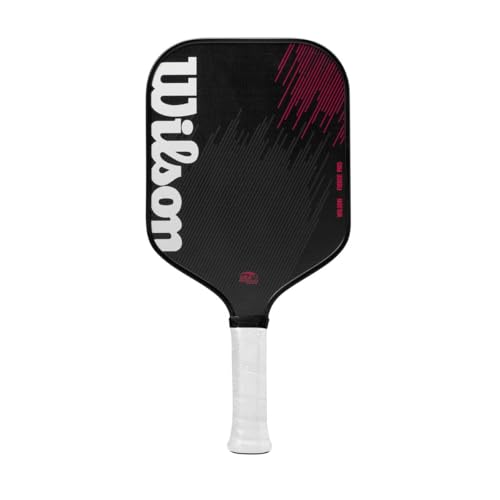
- Wilson Fierce Pro 13mm — the firm, wide one: 16 x 8 in and a thin core that punches a hard outdoor ball back rather than absorbing it.
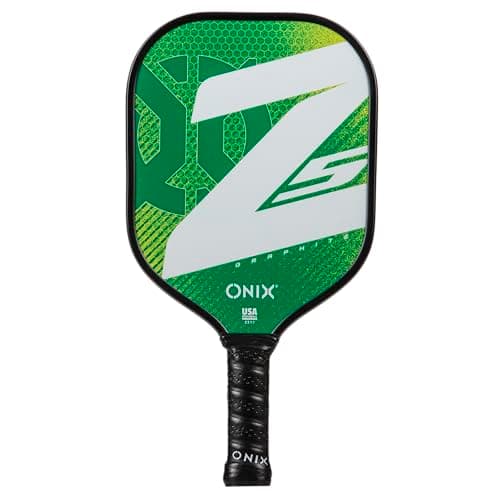
- Onix Graphite MOD Z5 — the classic outdoor shape half the sport learned on, with an edge guard and an honest caveat: Onix publishes no dimensions for it.
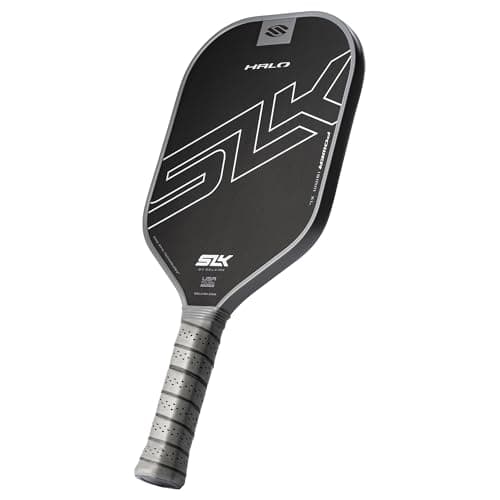
- Selkirk SLK Halo Power XL — the wind pick: an elongated power build with more plow-through, from a line Selkirk has since replaced.
- CORE Reaction Pro — the budget pick: a real carbon hitting surface and a USA Pickleball approval claim for less than anything else here.
Our standing disclosure: we have not taken any of these paddles outside. We do not run a lab and we do not run a court. Every dimension, weight, surface and edge treatment below is published by a maker or a retailer named in Sources, and the scores are judgments from that research against our published rubric, weighted for a beginner.
03The buyer's guide
The three specs that matter outside, as published
Live prices with their check date are in the Quick picks table above, where every row carries its own buy button.
| Paddle | Face, as published | Grit layer to lose? | Edge protection | Published weight |
|---|
| Onix Evoke Premier | DF Composite (fiberglass) | No — composite, not a grit surface | Atomic13 Edge Technology | 7.5-7.8 / 7.8-8.2 / 8.2-8.4 oz bands |
| JOOLA Astral Perseus | Sandblasted carbon fiber | Texture is blasted into the face, not applied | Not published | 7.8 oz |
| Wilson Fierce Pro 13mm | Textured carbon fiber | Yes — a worked surface that wears | Not published | 7.8 oz average (7.6-8.0 oz) |
| Onix Graphite MOD Z5 | Carbon fiber over a Nomex/polymer core | Not published | Edge guard on the frame | Not published |
| Selkirk SLK Halo Power XL | Carbon fiber | Not published | Not published | Not published |
| CORE Reaction Pro | Carbon fiber | Not published | Not published | Not published |
One paddle on this page publishes an edge treatment by name, one publishes a weight range you can choose from, and three publish no weight at all. That is the state of the category, and it is why the ranking leans on the paddles that print numbers.
1. Face durability: outdoor courts eat grit
The thing that makes a modern paddle spin a ball is a rough face — raw carbon weave, sandblasted carbon, or an applied texture. Roughness is a consumable. Indoors, on a wood or sport-tile floor, a ball is the only thing that touches it. Outdoors, the paddle meets grit blown onto the court, the occasional scrape off concrete when you dig out a low ball, and a harder ball striking it a few thousand times a season.
That changes which face you want. A composite or fiberglass face has no grit layer to lose — it was never the grippiest surface, so it cannot get much worse, which is exactly why the Evoke Premier's DF Composite face tops this list rather than the spin-first paddles that top our spin ranking. A sandblasted carbon face, like the Astral Perseus, has its texture abraded into the surface rather than laid on it, which is the most durable form of grip you can buy in carbon. A raw or applied-texture carbon face gives you the most bite on day one and the steepest decline. None of this is a defect — it is the trade. Just know which one you bought, and read when to replace your paddle before you decide a dead face means a bad paddle.
Cleaning matters more outside too. Grit and dust sit in a textured face and both dull the bite and accelerate wear; our paddle cleaning guide covers how to do it without stripping the surface you paid for.
2. The edge guard earns its weight on concrete
An edge guard is the plastic or composite strip around the rim. Indoors it is close to decoration. Outdoors it is the part that takes the scrape when your paddle meets the court on a low dig, and the part that stops a chipped corner turning into a delaminated face.
Only the two Onix paddles on this page publish an edge treatment: the Evoke Premier names its Atomic13 Edge Technology and the MOD Z5 carries a conventional edge guard on the frame. Nobody else states one either way. Edgeless designs — the Wilson Vesper Power on our elongated list is one — deliberately remove that strip to widen the face, which is a real gain and a real exposure. If you play exclusively on outdoor concrete and you scrape the paddle more than you would like to admit, buy the edge.
3. Wind is a weight problem, and weight is the spec nobody prints
Wind does two things: it pushes the ball, and it pushes the paddle. You cannot fix the first — that is what the 40 small holes on an outdoor ball are for. You can fix the second, with mass. A heavier paddle deflects less in a gust and carries more momentum through the ball, which is why the outdoor game rewards a mid-weight paddle over a feather.
The Evoke Premier is the only paddle here you can buy in a chosen weight. Its retailer spec sheet publishes three bands, topping out at a stated 8.2-8.4 oz, with the description giving the heavyweight range slightly differently again — a discrepancy we are reporting rather than resolving, because we did not weigh one. The Astral Perseus and the Fierce Pro both publish a single 7.8 oz figure, which is mid-weight and perfectly usable outdoors. Three of the six publish nothing at all. If wind is your normal condition, buy the paddle that publishes a heavier band, or add weight to the one you own — our paddle weight guide covers how much is sane and where to put it.
Shape helps here too. An elongated body like the Halo Power XL puts more mass further from your hand, which raises swing weight and gives the plow-through that cuts a gust — the cost is a narrower sweet spot, and elongated vs widebody has that trade in full. A wide 16 x 8 in face like the Evoke Premier and the Fierce Pro does the opposite: more forgiveness, less plow.
What does not change outdoors
Plenty. Core thickness, grip circumference and face material all behave the same way outside as in, so none of those decisions is an outdoor decision. A thicker core is still softer and calmer — see our core thickness guide and the 16mm paddle list if that is the axis you are shopping on. Grip circumference still decides whether your hand is comfortable; do the ruler test in our grip size guide. And the approval rules are identical: USA Pickleball caps combined length plus width at 24 in with a 17 in maximum length indoors and out.
One genuine caution on that last point. The Evoke Premier's retailer spec sheet states no USA Pickleball approval, and the Halo Power XL makes no certification claim either. Both are fine for recreational outdoor play with friends. Neither is a safe buy if your club runs sanctioned events — check the exact model on the approved paddle list first.
The outdoor kit the paddle does not cover
Three things matter more outdoors than any paddle spec, and all three are cheap.
The right ball
An indoor ball outdoors is unplayable in any breeze. Buy a proper 40-hole outdoor ball — our best outdoor pickleballs ranking covers the field, and balls for wind and cold handles the harder conditions.
A grip that survives sweat
Heat plus a tacky factory grip is how paddles get thrown. An absorbent overgrip costs less than a sleeve of balls and is the single cheapest upgrade in the sport — see best pickleball overgrips.
Eye protection and sun
Outdoor play adds glare, blown grit and a ball you may lose against a bright sky. Our best pickleball glasses page ranks the options, including over-the-glasses frames.
Who should buy which
Buy the Evoke Premier if outdoor concrete is your home court: the edge guard, the published wide face and the choice of weight band all point the same way, and a composite face has no bite to lose.
Buy the Astral Perseus if you want carbon and you want it to last — the sandblasted surface is the most durable textured carbon here, and it is still the paddle we hand a new player on our best beginner paddles list.
Buy the Halo Power XL if you play somewhere genuinely windy and you have the stroke for an elongated paddle. Note that Selkirk's 2026 SLK reset replaced the Halo line with the Dauntless, so this is end-of-line stock rather than a current model — fine at the price, worth knowing before you plan to buy a second one.
Skip all of this if you play indoors. Nothing on this page is a better indoor paddle than the picks on our control and spin lists, where a face that trades durability for bite is the right answer.