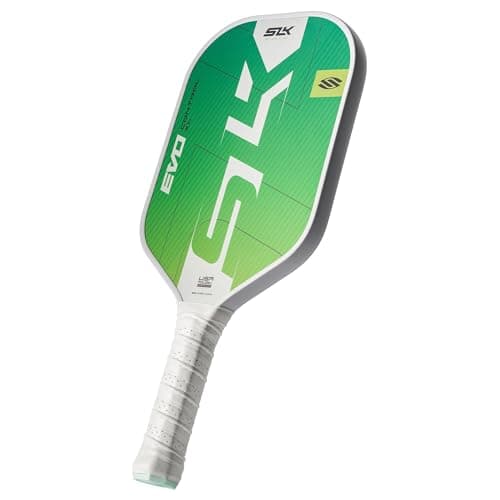
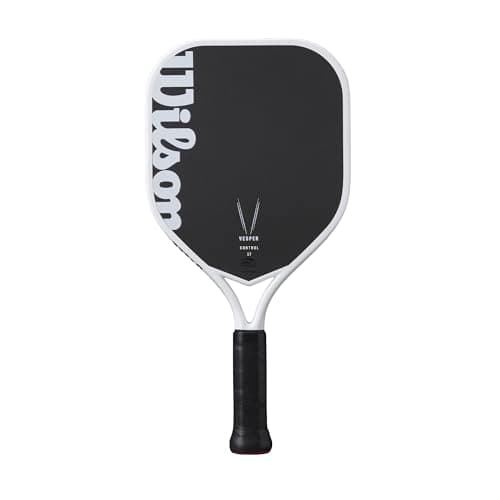
Buy the Wilson Vesper Control 17 — at a published 17mm it has the thickest core of any paddle on this site, and it is the right paddle for a player whose game is dinks, resets and third-shot drops rather than drives. The budget pick is the Selkirk SLK Evo Control XL, the cheapest real 16mm carbon control paddle we can buy. Live prices and the date they were checked are in the table below.
"Control" is the most abused word in paddle marketing, so this page ranks on numbers instead. Two published specs do nearly all the work: core thickness and face material. A thicker core flexes further on contact and holds the ball a fraction longer, which is what touch feels like and what makes an off-center hit still drop in the court. A carbon face grips the ball for spin and is stiffer than fiberglass, so it returns less free pop. Thick core plus carbon face is the control recipe, and every paddle here has at least one of the two published.
If you are still deciding which half of the court you want to win, start with control vs power and the core thickness guide. If the answer is power, our power list is the mirror of this one.
Who each pick is for, in one line:
- Wilson Vesper Control 17 — for the soft game, with the thickest published core on the site (17mm) over a raw carbon face.
- Selkirk SLK Evo Control XL — the budget pick, and the one to buy if you hit a two-handed backhand: a published 5.75 in handle, the longest here.
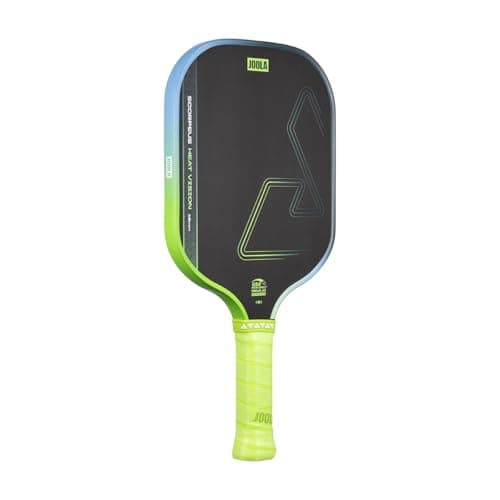
- JOOLA Scorpeus Heat Vision 16 — for a control paddle that is also thermoformed, textured and certified under the current USAP test.
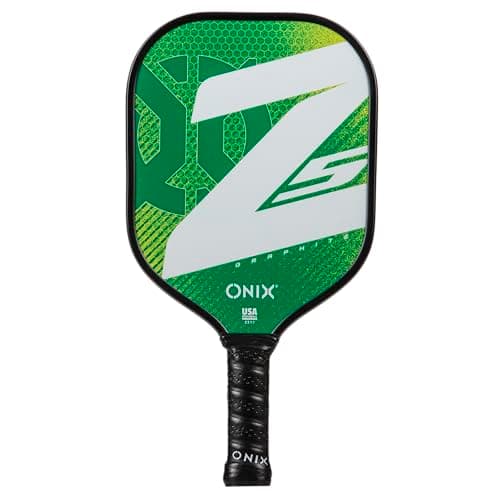
- Onix Graphite MOD Z5 — for the biggest, most forgiving face, if you miss the middle more than you would like.
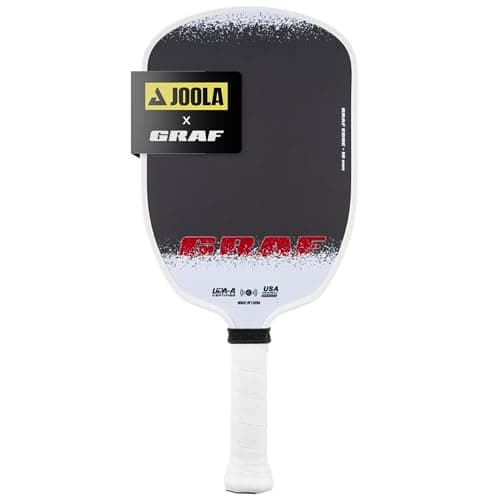
- JOOLA GRAF Edge 16mm — for an elongated 16mm carbon paddle at the lowest price a top-tier brand sells one for.
Our standing disclosure: we have not played with these paddles. We do not run a lab. Every figure below is published by a maker or a retailer named in Sources; the scores are judgments from that research against our published rubric, weighted for a beginner.
03The buyer's guide
The published specs that make these control paddles
Every figure below is printed by the maker or by a retailer we name. Empty is not a feature: where nobody publishes a number, the cell says so. Live prices with their check date are in the Quick picks table above, and each row there has its own price button.
| Paddle | Core thickness | Face | Shape (published) | Handle |
|---|
| Wilson Vesper Control 17 | 17mm polypropylene honeycomb | Raw carbon | 16 x 7.75 in (close to widebody) | 5 in, 4 1/8 in grip |
| Selkirk SLK Evo Control XL | 16mm Rev-Control polymer | T700 carbon fiber | 16.4 x 7.4 in (hybrid length) | 5.75 in, 4 1/4 in grip |
| JOOLA Scorpeus Heat Vision 16 | 16mm honeycomb, thermoformed | Textured carbon fiber | 16 x 8 in widebody | 5.25 in grip length |
| Onix Graphite MOD Z5 | Not published | Carbon fiber over Nomex/polymer core | Widebody | Not published |
| JOOLA GRAF Edge 16mm | 16mm polypropylene | Textured carbon fiber | 16.5 x 7.5 in (elongated) | 4 1/8 in grip (small) |
Read the shape column with the core column. 16mm is the mainstream control thickness and 17mm is a step past it, which is why the Vesper leads; but the Scorpeus and the Evo XL get to a similar place by pairing 16mm with a face that is textured or a shape that is wider, and the Onix gets there with sheer face area while publishing no thickness at all. That last gap is why the Z5 is ranked fourth rather than first: we will rank a paddle on forgiveness we can see in its dimensions, but we will not pretend a core figure exists.
How to tell a control paddle from a paddle that says "control"
1. A published core thickness of 16mm or more
Below 14mm you are holding a power paddle whatever the label says — the core is stiffer, the ball leaves faster and your margin for error shrinks. The mechanism, and the whole 11mm-to-20mm range, is in the core thickness guide. If a listing will not tell you the thickness, treat that as a missing spec rather than a thick core.
2. A carbon or graphite face, ideally textured
Carbon is stiffer than fiberglass, so it gives the ball back less energy, and a textured surface grips it long enough for spin. Fiberglass does the opposite — it flexes and pops, which is lovely on a drive and awful on a drop. Our graphite vs fiberglass page covers the full comparison, and best carbon fiber paddles ranks on the face alone.
3. A face big enough to forgive you
Control is not only touch; it is also hitting the middle. A widebody face at 8 in across gives you more usable paddle than an elongated one at 7.4 in, at the cost of reach. If you are still missing the sweet spot, buy the wide one. Our elongated vs widebody page lays out that trade, and the elongated list is for players who have decided they want reach instead.
The paddle we wanted to rank and could not
The Selkirk SLK Evo Control Max is the standard-shape version of our budget pick, it is the paddle our tennis-elbow list already recommends, and it had no buyable offer at the last price check. Our rule is that nothing can be a pick on a page where we show prices if the price layer cannot see an offer for it, so it is not in the ranking — the XL, which is the same core and the same face with a longer handle, stands in for it. Selkirk also announced in February 2026 that the SLK line is being replaced by new Valkyrie, Geo and Dauntless models, so if the Evo is the paddle you want, buy it while it is still in stock rather than waiting.
What control will not fix
A thick-cored carbon paddle makes a good drop better. It does not teach you the drop. If your soft game is the problem, the cheapest useful purchase on this site is not a paddle at all — it is a rebounder or a target net and an hour a week, backed up by how to dink and the beginner drills. We would say that even though the paddle pays us more.