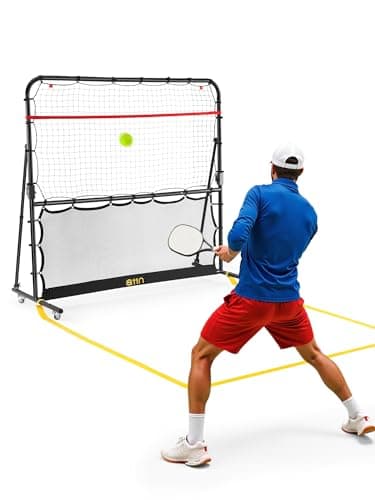
The gap between a 3.0 player and a 3.5 player is almost entirely the soft game — dinks, drops and resets — and the soft game is built by repetition, not by playing more games. Our pick is the A11N SPORTS Rebounder: a four-angle rebound net on wheels that returns the ball to you, which is the closest thing to a patient practice partner you can keep in the garage. The same brand's nets, sets and balls are ranked together on A11N pickleball gear.
There are three genuinely different tools on this page and they do different jobs. Rebounders return the ball so you can hit continuously. Target nets score your placement so a boring drill becomes competitive. Tethered trainers give you the cheapest possible reps in a garage. Buy for the job you actually have — and if you are not sure what an hour on your own should even look like, start with how to practice pickleball alone, which lays out the session these tools are meant to serve.
03The buyer's guide
Rebounders vs targets vs tethers
Rebounders: continuous hitting
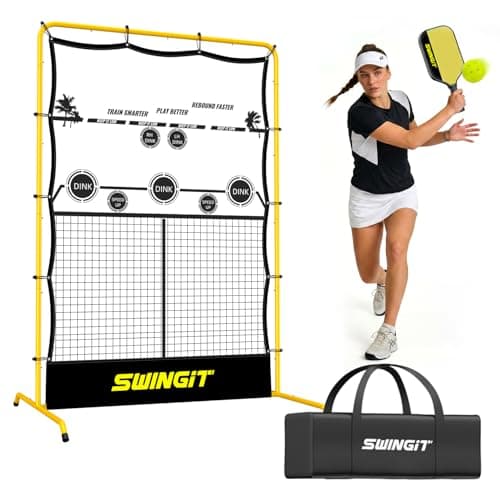
A rebound net is a tensioned mesh on a frame, angled so the ball comes back to you. The practical benefit is volume: you can hit two hundred dinks in ten minutes without ever bending down. Angle adjustment is what separates a good one from a bad one — a steep angle returns a high, slow ball for dink practice; a flatter angle returns a faster, lower ball for volleys and resets.
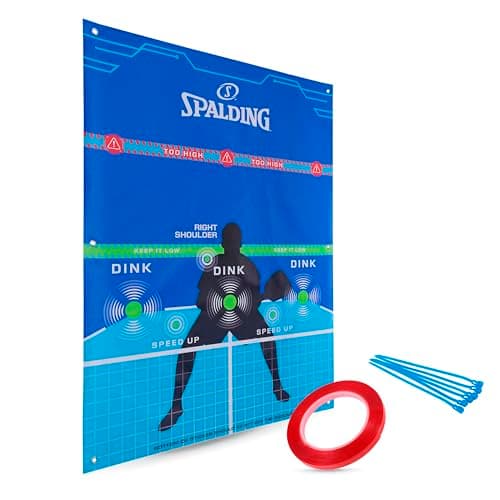
The honest limitation: a rebound is more predictable than a person. It arrives at the same speed to roughly the same place. That is exactly what you want when grooving a stroke and exactly what you do not want when learning to read an opponent. And before you spend anything: a flat wall does much of this for free, and does not do the rest at all. We put the two side by side in rebounder vs a wall.
Target nets: accuracy under pressure
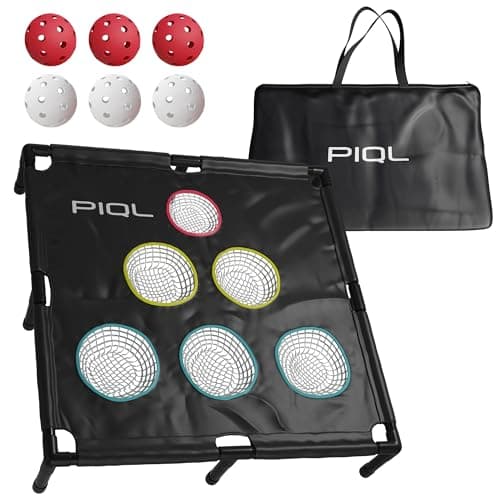
A target system does not return the ball. What it does is give you a score, and a score is why people finish a drill instead of abandoning it after five minutes. If your problem is that solo practice is boring rather than that you have nobody to hit with, a target net solves the right problem.
Tethered trainers: reps on a budget
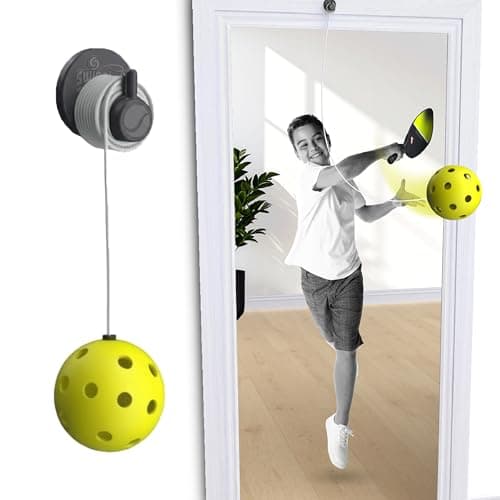
A ball on an elastic tether attached to a wall mount. It costs almost nothing and returns the ball every single time. The trade is realism: a tethered ball travels on an arc determined by the tether, not by pickleball physics, so it builds swing repetition and contact timing rather than genuine ball reading.
What size do you need?
Rebounder faces here run from 4x6 ft to 6x6 ft, and the difference matters more than it sounds. A 4x6 fits in a single-car garage and is fine for dinks, where you are aiming carefully anyway. A 6x6 catches drives that a smaller net would miss, which is the difference between a productive session and chasing the ball down the driveway. If you have the space, buy the bigger one.
Where you can actually use these
- Driveway or patio. The most common setup. You need a reasonably flat surface — freestanding rebounders wander on a slope.
- Garage. Works for a small rebounder or a tethered trainer. Mind the ceiling and anything breakable.
- Public court. Fine for target nets, and usually fine for a rebounder at a quiet time. Do not take up a court with a rebounder when people are waiting to play.
- Indoors on a hard floor. Use an indoor ball. An outdoor ball indoors is loud and skids.
What to actually practice
Owning the tool is the easy part. The three drills that pay off fastest for a beginner:
- Continuous dinks. Soft, arcing shots that would land in the kitchen. Aim for consistency, not winners — count how many you can string together.
- The third-shot drop. From further back, a soft ball that would land in the opponents' kitchen. This is the single highest-value shot in the game and the hardest to practice without a partner, which is exactly why a rebounder earns its money.
- Reset volleys. Take the incoming ball out of the air with a soft paddle face so it dies rather than bouncing back hard. This is the shot that keeps you at the kitchen line under pressure.
Our beginner drills guide has the full set, and the kitchen rule explains why so much practice revolves around that one seven-foot strip.
How this compares with a ball machine
A ball machine feeds you balls at a chosen pace and angle, which a rebounder cannot do — but it costs three to twenty times as much and needs a hopper full of balls and somewhere to store it. For most players the honest order is: rebounder first, machine later if you find you are drilling several times a week.
One thing worth knowing before you buy
Rebound nets are only as good as their tension. A slack net absorbs the ball and returns nothing; a properly tensioned one returns it crisply. That is why frame rigidity and the tensioning system matter more than the size of the brand name — and why the cheapest rebounders tend to disappoint after a season, as the elastic ties stretch.