PPost & Paddle
04Gear

The best pickleball ball machines

A ball machine turns an empty court into a practice partner who never gets tired and never wants to just play games. It is also the most expensive thing on this site — here is what each tier buys.

By Stephen V.Editor, Post & PaddleUpdated

Heads up: Post & Paddle is reader-funded. If you buy through our links we may earn a commission, at no extra cost to you. It never changes which product we recommend. How this works.

Ball machines span a startling price range — roughly $200 to $2,100 among our picks — and the difference between the ends is not subtle. Our pick for most people is the Franklin Sports Pickleball Launcher: a real brand's machine with enough speeds and angles to run genuine drills, at roughly a third of club-machine money.

Before the picks, the honest question: should you buy one at all? A machine is a repetition tool. It makes an existing stroke more consistent by letting you hit two hundred of the same shot. It does not teach you a stroke you do not have, and it cannot teach you to read an opponent. If you are in your first season, a lesson and a $70 rebounder will do more for your game than a $2,000 machine, and we would say so even though the machine pays us more.

01The short answer

Quick picks

#ProductBest forScorePrice
01
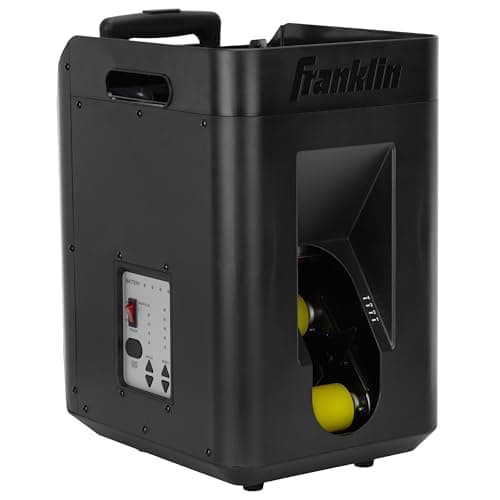
Franklin Sports Franklin Sports Pickleball Launcher
Franklin Sports Pickleball Launcher

A real brand's machine at roughly a third of the club-grade price — enough speeds and angles to drill properly without a four-figure outlay.

The first machine worth owning
8.0
$599.99Amazon
02
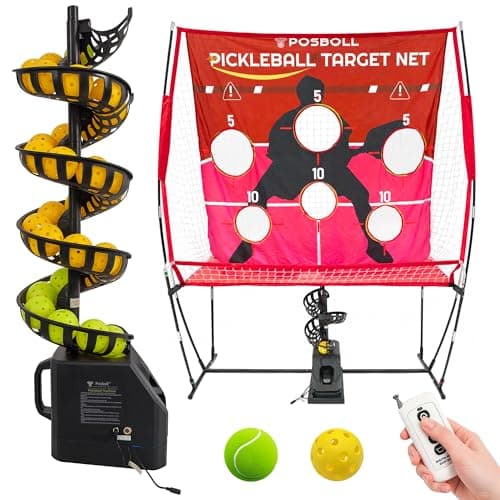
Posboll Posboll All-in-One Pickleball Launcher
Posboll All-in-One Pickleball Launcher

The cheapest machine here that still feeds balls at a usable pace — the entry point for solo practice without a club budget.

Solo practice on a tight budget
7.3
$299.99Amazon
03
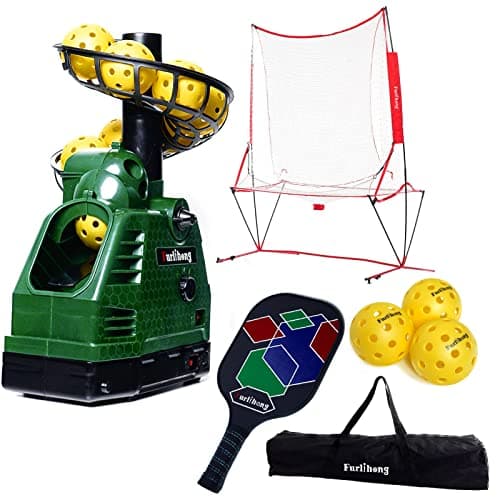
Furlihong Furlihong 680PBH Starter Kit
Furlihong 680PBH Starter Kit

A launcher bundled with a recycling net, a paddle and balls — the cheapest way to find out whether machine practice suits you at all.

Trying machine practice before committing
7.0
$219.99Amazon
04
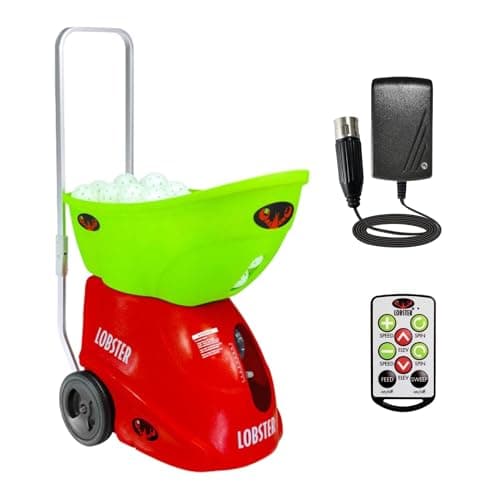
Lobster Sports Lobster Sports Pickle Two
Lobster Sports Pickle Two

The club-standard machine: spin control, random oscillation, two-line drills and a 125-ball hopper, run from a ten-function remote.

Serious, repeatable drilling
7.8
$1,599.00Amazon
05
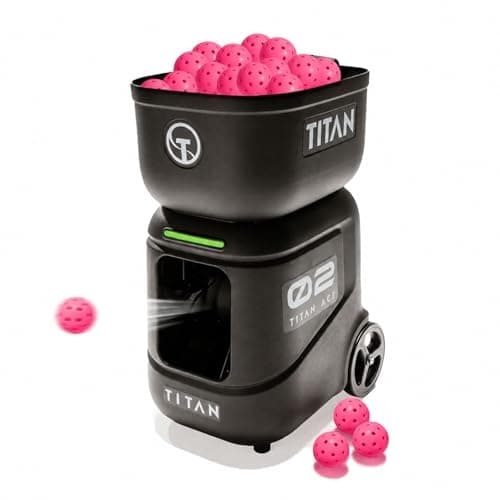
Titan Titan ACE Pickleball Machine
Titan ACE Pickleball Machine

The app-controlled option — a 39 lb body with an invertible hopper and internal oscillation, aimed at players who move it constantly.

A machine that travels between courts
7.8
$2,099.00Amazon

#ad · Live prices from the Amazon Product API, as of Sep 8, 2026. Where we have no verified live price, we show none — we would rather leave a gap than print a number that has rotted.

02In detail

The picks, in full

01
Franklin Sports Franklin Sports Pickleball Launcher

The first machine worth owning

Franklin Sports Pickleball Launcher

5 speeds4 launch anglesShuffle modeRechargeable (battery not included)
8.0/10

A real brand's machine at roughly a third of the club-grade price — enough speeds and angles to drill properly without a four-figure outlay.

Drill range
8
Portability
8
Capacity
7
Value
9

Pros

  • Franklin is an established pickleball brand, so parts and support are a real prospect
  • Five speeds and four angles cover dinks, drives and lobs — the drills that matter
  • Shuffle mode stops you grooving one identical swing for an hour

Cons

  • The battery is sold separately, which is a genuine hidden cost
  • No remote control, so you walk back to the machine for every change

Don't buy this if…

you are still learning where the ball goes. A machine drills a stroke you already have; spend the money on a paddle and a few lessons first.

$599.99View on Amazon

Price as of Sep 8, 2026. Prices change — Amazon's is the one that counts.

#ad · we may earn a commission from this link to Franklin Sports Pickleball Launcher

02
Posboll Posboll All-in-One Pickleball Launcher

Solo practice on a tight budget

Posboll All-in-One Pickleball Launcher

All-in-one bodyAdjustable launchPortable sizeBattery powered
7.3/10

The cheapest machine here that still feeds balls at a usable pace — the entry point for solo practice without a club budget.

Drill range
6
Portability
9
Capacity
5
Value
9

Pros

  • Costs a fraction of a club machine while still feeding a genuine drill rhythm
  • Small enough that one person can carry it from car to court
  • Simple controls — nothing to learn before your first session

Cons

  • A smaller hopper means you are reloading far more often than on a club machine
  • A newer, smaller brand, so long-term parts availability is unproven

Don't buy this if…

you will use it several times a week. Budget machines wear under club-level duty; the money is better spent once on a Lobster or Titan.

$299.99View on Amazon

Price as of Sep 8, 2026. Prices change — Amazon's is the one that counts.

#ad · we may earn a commission from this link to Posboll All-in-One Pickleball Launcher

03
Furlihong Furlihong 680PBH Starter Kit

Trying machine practice before committing

Furlihong 680PBH Starter Kit

Launch machineBall recycling netPaddle + 3 ballsCarry bag
7.0/10

A launcher bundled with a recycling net, a paddle and balls — the cheapest way to find out whether machine practice suits you at all.

Drill range
5
Portability
9
Capacity
5
Value
9

Pros

  • The recycling net catches your returns, which halves the ball-collecting misery
  • Everything needed for a solo session arrives in one box
  • Cheap enough to treat as an experiment rather than an investment

Cons

  • A basic launcher — limited speed and angle range compared with a real machine
  • The included paddle is a throwaway; it is not a paddle you would choose

Don't buy this if…

you want to drill specific shots at match pace. This feeds balls; it does not simulate a rally.

$219.99View on Amazon

Price as of Sep 8, 2026. Prices change — Amazon's is the one that counts.

#ad · we may earn a commission from this link to Furlihong 680PBH Starter Kit

04
Lobster Sports Lobster Sports Pickle Two

Serious, repeatable drilling

Lobster Sports Pickle Two

125-ball capacitySpin controlRandom oscillation10-function remote
7.8/10

The club-standard machine: spin control, random oscillation, two-line drills and a 125-ball hopper, run from a ten-function remote.

Drill range
10
Portability
6
Capacity
9
Value
6

Pros

  • Random oscillation makes you move, which is the whole point of drilling alone
  • The remote means you change drills from the baseline instead of walking back
  • Lobster has made ball machines for decades — support and spares genuinely exist

Cons

  • Costs more than most people's entire pickleball setup several times over
  • Heavy enough that loading it into a car is a two-handed job

Don't buy this if…

you play twice a month. This is priced for a coach, a club or a household that drills weekly for years.

$1,599.00View on Amazon

Price as of Sep 8, 2026. Prices change — Amazon's is the one that counts.

#ad · we may earn a commission from this link to Lobster Sports Pickle Two

05
Titan Titan ACE Pickleball Machine

A machine that travels between courts

Titan ACE Pickleball Machine

110-ball capacity39 lb bodyInternal oscillationFree app control
7.8/10

The app-controlled option — a 39 lb body with an invertible hopper and internal oscillation, aimed at players who move it constantly.

Drill range
9
Portability
8
Capacity
8
Value
6

Pros

  • Thirty-nine pounds is light for this class — one person can genuinely move it
  • Internal oscillation keeps the profile compact instead of swiveling the whole head
  • App control turns a phone into the remote, so there is one less thing to lose

Cons

  • The most expensive machine on this list
  • App-dependent control is a single point of failure if the app breaks or the phone dies

Don't buy this if…

the machine will live at one court. A heavier fixed machine gives you more hopper and more drills for the same money.

$2,099.00View on Amazon

Price as of Sep 8, 2026. Prices change — Amazon's is the one that counts.

#ad · we may earn a commission from this link to Titan ACE Pickleball Machine

03The buyer's guide

What each price tier buys

Under $250: launchers

At this price you are buying a feeder, not a machine. Expect a small hopper (often twenty to forty balls), a limited speed range, few or no angle settings, and no oscillation. That is genuinely useful for grooving a dink or a drop, and it is cheap enough to be an experiment rather than an investment. The Furlihong kit and the Posboll live here.

$500 to $700: real drill machines

Multiple speeds, several launch angles, a shuffle or randomize mode, a hopper you are not refilling every four minutes, and battery operation that lasts a session. This is the tier where a machine starts changing how you practice rather than just saving you from throwing balls to yourself. The Franklin Launcher sits here.

$1,500 and up: club machines

Spin control (topspin and backspin, not just pace), true random oscillation across the court, programmable two-line drills, hoppers north of a hundred balls, and remote control. These are built for coaches, clubs and households that drill weekly for years. The Lobster Pickle Two and Titan ACE are here.

The specs that matter, in order

1. Oscillation

The single most important feature, and the one cheap machines lack. Oscillation means the machine moves the ball side to side, so you have to move to it. Without it, you stand in one place and hit the same shot from the same spot — which grooves a stroke but does nothing for footwork, and footwork is what most players actually lack. Random oscillation is better than fixed sweep, because a predictable sweep is still predictable.

2. Hopper capacity

This is really a measure of how much of your session you spend playing versus collecting. A 40-ball hopper at one ball every four seconds is under three minutes of feeding followed by several minutes of picking up. A 125-ball hopper changes the ratio completely. Pair any machine with a ball hopper or a recycling net and the maths improves again.

3. Remote or app control

Sounds like a luxury; is not. Without it, every change of drill is a walk to the machine and back. With it, you adjust from where you stand — which means you actually vary the drill instead of doing one thing for an hour because changing it is annoying.

4. Battery life and weight

Check whether a battery is included — several machines, including our top pick, sell it separately, which is a real hidden cost. Weight determines whether the machine travels: under about 40 lb, one person can genuinely load it into a car; above that, it lives where you put it.

5. Spin

Only the top tier offers real spin control. It matters if you want to practice returning topspin drives or backspin resets specifically. For most recreational players, pace and placement matter more.

Practical things nobody mentions

  • You need a lot of balls. A 125-ball hopper needs 125 balls. Budget for a bulk box — see the outdoor ball roundup, where the large packs are usually far better value.
  • Cheap balls are fine for machine work. The machine does not care, and you will be hitting them into a fence.
  • Machines are hard on balls. The feed wheel compresses the ball on every launch. Expect faster wear than in normal play.
  • Check your court's rules. Plenty of public courts prohibit machines at busy times, and some prohibit them outright.
  • Ball collection is the real cost. A hopper or a recycling net is not optional if you value your back.

Cheaper ways to get the same benefit

If the goal is repetition rather than the machine itself, a rebounder or target net gives you a large fraction of the practice value for a tenth of the price, and a wall gives you some of it for nothing. Our beginner drills guide covers what to actually practice once you have any of the three.

How we picked

We do not run a testing lab

Everyone in this category says they tested twenty paddles. We haven't tested these in a lab, and we say so. Instead we compile the published manufacturer specs, do the math, weight everything toward what a beginner actually needs — forgiveness, a large sweet spot, sane weight and a fair price — and score each product against a published rubric. The scores are judgments from that research, not measurements we took. Where a fact came from someone else, we name it in Sources.

04Questions

Frequently asked

Are pickleball machines worth it?

For a player who already has a stroke and wants to make it consistent, yes — a machine gives you volume of repetition nothing else does. For a beginner, a lesson and a rebounder deliver more improvement per dollar, because a machine drills a stroke rather than teaching one.

How much should I spend on a pickleball ball machine?

Under $250 buys a simple feeder with a small hopper. Around $500 to $700 buys multiple speeds and angles with a usable hopper — the tier that changes how you practice. Above $1,500 buys spin control, random oscillation, programmable drills and remote control.

What is oscillation on a ball machine and do I need it?

Oscillation moves the ball delivery side to side so you have to move to the ball. It is the most valuable feature on any machine, because without it you groove a stroke while doing nothing for footwork. Random oscillation beats a fixed sweep.

How many balls do I need for a ball machine?

At least as many as the hopper holds, and more in practice — 50 to 150 depending on the machine. Buy a bulk box of outdoor balls; cheap ones are fine for machine work, and machines wear balls faster than normal play because the feed wheel compresses each one.

Can I use a ball machine on a public court?

Often, but not always. Many public facilities restrict machines at busy times or ban them outright, and some clubs require you to book a specific court. Check before you buy something that only works at a venue that will not allow it.

06Read next
05Sources

Where our facts come from