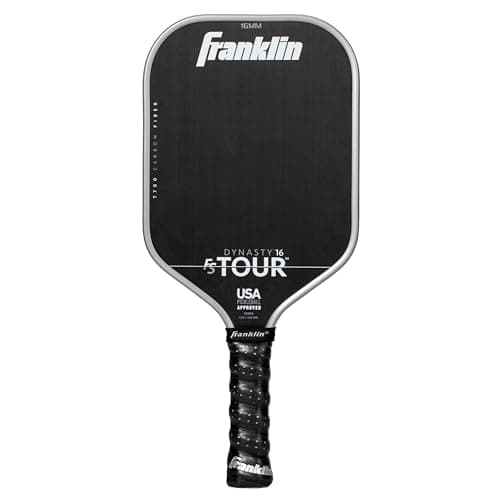
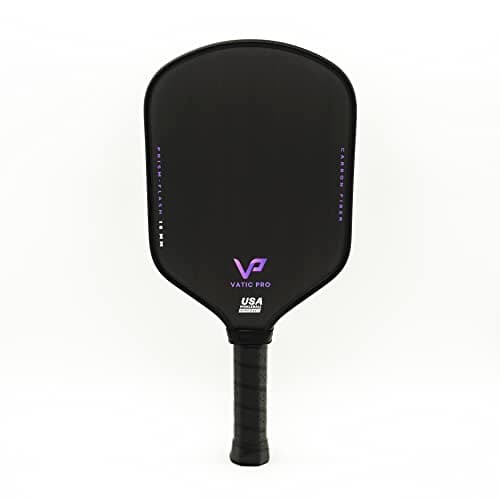
Buy the Vatic Pro Prism Flash — it is the only paddle on this list whose listing says raw carbon fiber, meaning the weave itself is the hitting surface with no finish over it, and an unsealed weave is the grippiest legal face you can easily buy. If you are still finding the middle of the paddle, buy the JOOLA Scorpeus Heat Vision instead: a published 16 x 8 in face is far more forgiving, and its textured carbon still bites. The budget pick is the CORE Reaction Pro, the cheapest carbon face here by a clear margin. Live prices and the date each was checked sit in the table below, under every buy button.
Here is the uncomfortable thing about shopping for spin: three of the six paddles below describe their face as "carbon fiber" and stop there. Carbon is a material, not a surface. A sheet of carbon fiber with a glossy printed graphic over it grips the ball barely better than fiberglass; the same sheet left unpainted grips it a great deal more. Only three listings on this page tell you which one you are getting, and the ranking below is built on exactly that — what each maker is willing to put in writing.
The second thing worth knowing before you spend is that a gritty face is a consumable. Texture wears smoother with every session, and the spin fades with it. No manufacturer publishes a wear rate, so neither do we. It means the cheapest paddle here is not automatically the worst value and the dearest is not automatically the best — a raw carbon face that holds its grit for two seasons and a budget carbon face that goes slick in one can land in the same place.
Who each pick is for, in one line:
- Vatic Pro Prism Flash — the most surface, stated plainly: raw carbon on a thermoformed 16mm body, for a player whose stroke already brushes the ball.
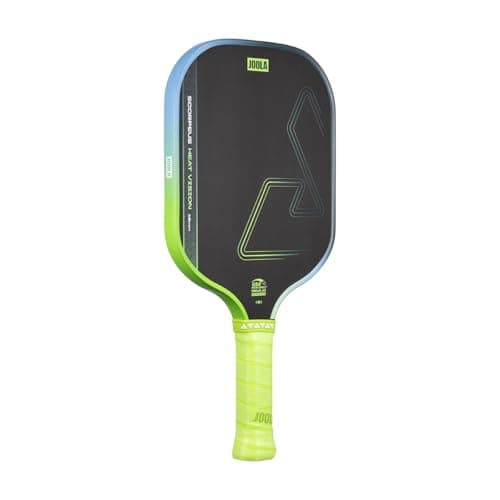
- JOOLA Scorpeus Heat Vision 16mm — textured carbon on a published 16 x 8 in face: spin without giving up the forgiveness a developing player still needs.
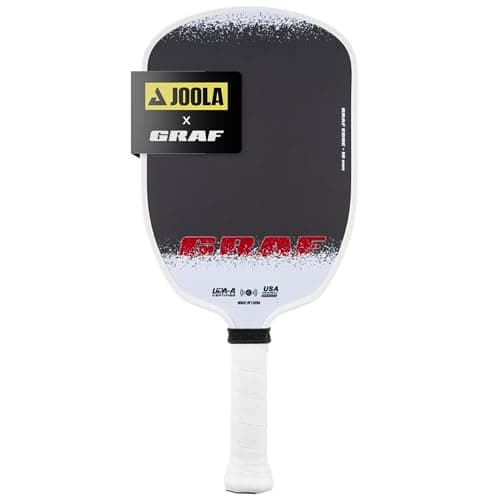
- JOOLA GRAF Edge 16mm — the cheapest textured carbon face from a top-tier brand, and the only paddle here whose spin has been tested to a published number.
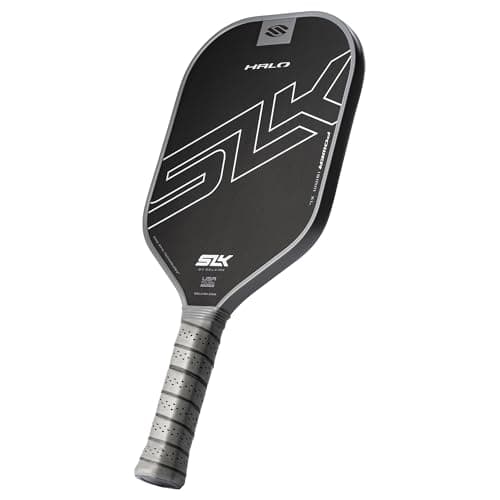
- Selkirk SLK Halo Power XL — for a tennis convert who wants to hit heavy topspin drives: carbon face, elongated leverage, less touch.
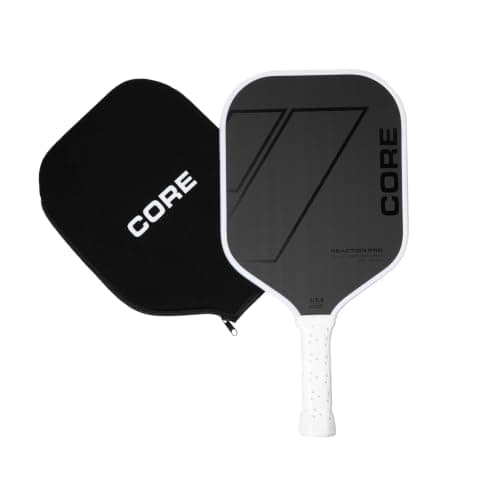
- CORE Reaction Pro — the budget pick: a real carbon hitting surface at fiberglass money, for finding out whether you like the feel.
- Franklin FS Tour Dynasty Pro 16mm — the tour-series build for a player who wants one paddle to settle on, at the top of the sensible range.
One paddle is missing on purpose. The TENVINA T700SC publishes the most specific surface claim in our whole registry — a T700SC textured carbon face — but it had no buyable offer at the last price check, and we do not rank a paddle you cannot currently buy. It still appears on our paddles under $100 list from when it was in stock; if the offer returns, it belongs on this page too.
Our standing disclosure: we have not measured the spin of any of these paddles. We do not own an RPM rig. Every surface description below is the maker's or a retailer's published wording, named in Sources, and the scores are judgments from that research against our published rubric.
03The buyer's guide
What each listing actually publishes about its face
This is the table that decides the page. Live prices with their check date are in the Quick picks table above, where every row has its own buy button.
| Paddle | Face, in the maker's words | Surface treatment stated? | Core | Spin-tested to a number? |
|---|
| Vatic Pro Prism Flash | "Raw carbon fiber face" | Yes — raw, so unpainted and unsealed | 16mm foam-injected, thermoformed unibody | No certification claim |
| JOOLA Scorpeus Heat Vision 16mm | "Textured carbon fiber surface" | Yes — textured | 16mm honeycomb with bonded SK film, thermoformed | USAP PBCoR.43 certified — a power test, not a spin test |
| JOOLA GRAF Edge 16mm | "Textured carbon fiber face" | Yes — textured | 16mm polypropylene | Yes — UPA-A certified, which caps spin at 2200 RPM |
| Selkirk SLK Halo Power XL | "Carbon fiber face" | No | Thick polymer, thickness not published | No certification claim |
| CORE Reaction Pro | "Carbon fiber face" | No | Polymer honeycomb, thickness not published | USA Pickleball approved, which is not a spin test |
| Franklin FS Tour Dynasty Pro 16mm | "Carbon fiber face" | No | 16mm | USA Pickleball approved, which is not a spin test |
Read the third column twice. Two paddles here tell you the surface is textured, one tells you it is raw, and three say only "carbon fiber". That is not an accusation of anything — a coated carbon face is a perfectly good paddle — but if spin is the reason you are shopping, a listing that will not describe its own surface is telling you something by omission.
How a paddle makes the ball spin
The mechanism, in one paragraph
When you brush up the back of the ball instead of hitting through it, the ball either grips the face and rotates, or slides across it and does not. Everything a paddle can contribute to spin comes down to holding onto the ball for a few thousandths of a second longer. A rougher, harder surface does that better. That is the whole mechanism — which is why spin is a surface question rather than a core, weight or shape question.
Raw, textured, coated: the three words that matter
Raw carbon is unpainted and unsealed, so the weave of the fabric is itself the hitting surface. Textured usually means the face has been treated — sandblasted, abraded or given a gritty finish — to leave a rough surface. A coated or painted face has finish over the weave, which photographs well and grips less. A glossy printed graphic running edge to edge is a reliable tell that you are not looking at a raw surface. Our carbon fiber paddle guide works through the material itself; this page is about what has been done to the outside of it.
Thermoforming does not add spin
Two paddles here are thermoformed — heat-pressed into a single unibody shell, usually with foam around the core perimeter. That stiffens the edges and widens the effective sweet spot, which makes your off-center brush shots behave more like your middled ones. It is a real benefit and it is not a spin benefit. See thermoformed paddles for what the construction buys and the failure mode nobody advertises.
There is a legal ceiling on grip, and it is lower than the marketing suggests
USA Pickleball's equipment standards include a limit on how rough a paddle face may be, which is the reason no legal paddle can be arbitrarily gritty: the whole approved field sits inside a fairly narrow band of surface roughness. A paddle advertised as a spin monster is competing at the top of that band, not outside it.
The second ceiling is the professional one. UPA-A certification caps a paddle at 2200 RPM at any angle and also requires an average deflection force of 46 lb or more per face at 70-75 degrees F. UPA-A is the body behind the PPA Tour and Major League Pickleball, and its certification is required only in professional divisions — amateur competition accepts USA Pickleball approval on its own. The GRAF Edge is the one paddle on this page carrying it, which is why its row is the only "yes" in the last column. Practically speaking, that badge will never be checked at your club; what it does tell you is that somebody put this model through a spin test and it passed. Full detail is in our JOOLA GRAF Edge review and in USA Pickleball approved paddles, explained.
The part the paddle cannot do for you
A grippy face converts a brushing stroke into rotation. If your stroke drives straight through the ball, a raw carbon face adds almost nothing you can feel, and you will have paid a premium for a surface you are not using. This is the single most common way money gets wasted in this category.
The honest sequence is: learn to hit the middle, learn to brush the ball, then buy the surface. If you are at the first step, our best beginner paddles list is the better spend, and the roll and dink drills in beginner drills are what builds the stroke a surface rewards. If you are at the second, start at the bottom of this page rather than the top: a sub-$50 carbon face will tell you whether you like the feel, and you can spend properly once you know.
Spin by price, honestly
The entry band
You are buying a carbon face, not a carbon paddle. Construction is conventional, the core is standard polymer, and the surface will go smooth sooner than a premium one. The CORE Reaction Pro and the GRAF Edge live here, and the GRAF Edge is the better paddle of the two for a player who is staying — a 16mm control core plus a stated textured face is the best spin-per-dollar on the site.
The middle band
The Halo Power XL sits here, and it is the odd one out on this page: carbon face, elongated shape, tuned for power rather than touch. If your spin ambition is a heavy topspin drive from the baseline rather than a roll at the kitchen line, this is the shape that does it — at the cost of forgiveness, because a narrower face punishes an off-center brush.
The top band
Thermoformed construction, stiffer perimeters, and the two best-described faces here. The Prism Flash is the value story of the band and the Scorpeus is the forgiving one; the Franklin Dynasty Pro is the tour-series build for someone who wants a finished paddle rather than a stepping stone. The gains over the entry band are real and they are small, which is worth saying out loud before you spend roughly twice the money. Our how much to spend on a paddle page has the same argument across the whole category.
Three things that will cost you more spin than the paddle will buy
A dirty face. Court dust fills the texture and kills grip faster than wear does, and it wipes off. Our paddle cleaning guide has the method and the things not to do.
A worn ball. A scuffed, out-of-round outdoor ball spins differently and less predictably than a fresh one. If you are chasing feel, change the ball before you change the paddle — see best outdoor balls.
A grip that is too big. Brushing the ball needs wrist movement, and an oversized grip locks the wrist. Our grip size guide has the ruler test; note that four of the six paddles here do not publish a grip circumference at all.