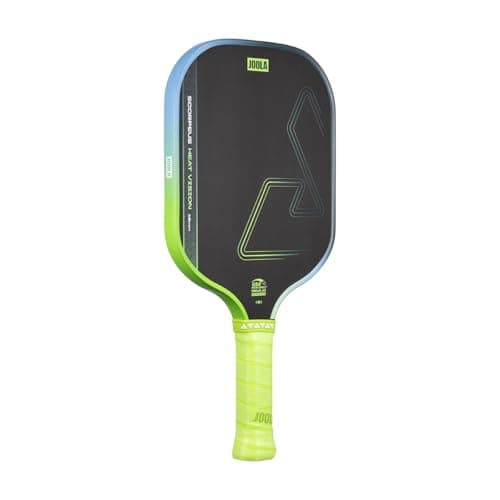
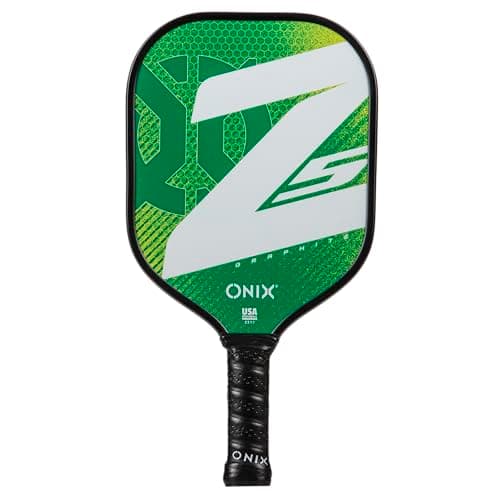
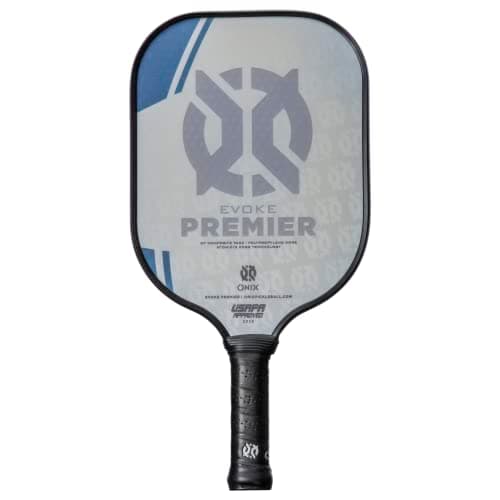
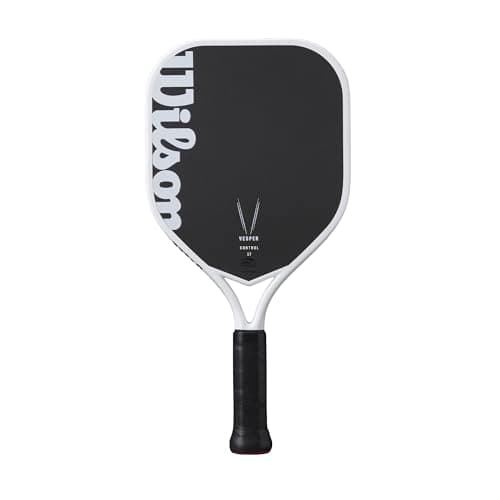
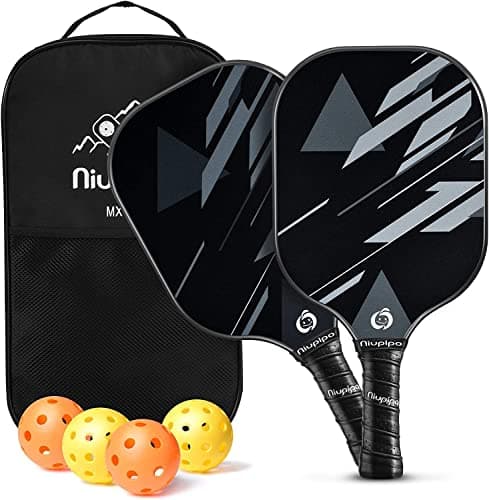
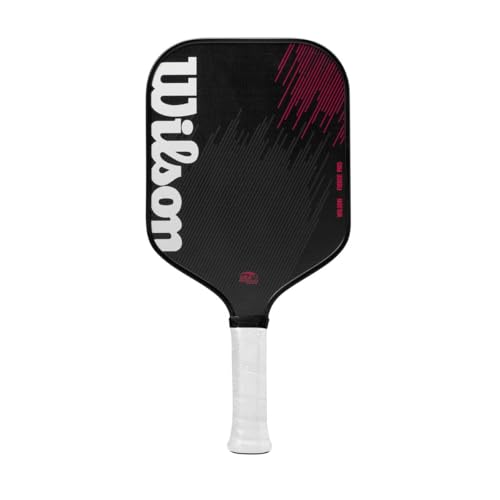
Buy the Wilson Fierce Pro 13mm — a published 16 x 8 in face with a 72 sq in head, a textured carbon surface and, uniquely on this list, a published 4 1/4 in medium grip, for roughly half what the dearest paddle here costs. If you want the same width with a thicker, calmer core and you can spend about twice as much, buy the JOOLA Scorpeus Heat Vision 16mm instead. The budget pick is the niupipo two-paddle set, which is the cheapest widebody face on the site by a wide margin — though it publishes no dimensions at all. Live prices and the date each was checked are in the table below.
"Widebody" is a shape claim, and like every shape claim it is really two numbers: length and width. The standard pickleball paddle is about 16 x 8 in. An elongated paddle trades width for length, usually 16.5 x 7.5 in, buying reach at the cost of a narrower sweet spot. A widebody keeps the width — and width is the single most forgiving spec on a paddle, because the band of face that behaves well is wider than your mistakes.
USA Pickleball caps combined length plus width at 24 in, with a maximum length of 17 in. That is why the two shapes exist at all: 16 x 8 in and 16.5 x 7.5 in both total exactly 24 in, so every paddle in the sport is spending the same budget in a different place. Nobody gets both.
Who each pick is for, in one line:
- Wilson Fierce Pro 13mm — the value answer: a published 8 in face, textured carbon, a medium grip out of the box and the lowest price here among single paddles.
- JOOLA Scorpeus Heat Vision 16mm — the same published 8 in width with a thicker 16mm core, for a player who wants the soft game as well as the sweet spot.
- Onix Graphite MOD Z5 — the classic wide shape half of pickleball learned on, now with a carbon face; Onix claims the shape but publishes no dimensions for it.
- Onix Evoke Premier — a published 16 x 8 in tournament shape with a 5 in handle, if a fiberglass face suits you better than carbon.
- Wilson Vesper Control 17 — the widest-but-one face and by far the thickest core here, for a player whose game is dinks and resets.
- niupipo two-paddle set — the budget pick: two wide fiberglass faces, four balls and a bag for about the price of one cheap paddle.
One paddle that belongs on this list is not ranked on it. The Selkirk SLK Evo Control Max publishes 16 x 7.85 in, which makes it a genuine widebody, but it has had no buyable offer for several price checks running and we do not rank a paddle you cannot currently buy. If the offer returns it goes straight in.
Our standing disclosure: we have not measured any of these paddles. Every dimension below is published by a maker or a retailer named in Sources, and the scores are judgments from that research against our published rubric, weighted for a beginner.
03The buyer's guide
Published dimensions, widest face first
This is the table that decides the page. Live prices with their check date are in the Quick picks table above, where every row carries its own buy button.
| Paddle | Length x width | Shape, as published | Handle | Grip circumference | Core |
|---|
| Wilson Fierce Pro 13mm | 16 x 8 in (72 sq in head) | Retailer calls it a hybrid shape | 5.2 in | 4 1/4 in (medium) | 13mm polypropylene honeycomb |
| JOOLA Scorpeus Heat Vision 16mm | 16 x 8 in | "Wide-body design" | 5.25 in grip length | Not published | 16mm honeycomb, thermoformed |
| Onix Evoke Premier | 16 x 8 in | Tournament shape (not labeled widebody) | 5 in | 4-1/8 in standard, 4 in light | Polypropylene, thickness not published |
| Wilson Vesper Control 17 | 16 x 7.75 in | Marketed as elongated; the retailer spec says otherwise | 5 in | 4 1/8 in (small) | 17mm polypropylene honeycomb |
| Onix Graphite MOD Z5 | Not published | "Widebody shape" (brand claim) | Not published | Not published | Nomex/polymer, thickness not published |
| niupipo set (2 paddles) | Not published | Widebody face (brand claim) | Not published | Not published | Polypropylene honeycomb, thickness not published |
Three of the six publish a full 8 in width. One publishes 7.75 in while its own marketing calls it elongated. Two publish no dimensions at all and ask you to take the word "widebody" on trust. We have ranked them in that order deliberately, because a shape you can check is worth more than a shape you cannot.
The Vesper Control row deserves a note, because we got it wrong once ourselves. Wilson markets it as an elongated paddle; the retailer spec table publishes 16 in by 7.75 in, which is a quarter of an inch off a full widebody and three quarters of an inch wider than a real elongated face. We corrected our own Wilson Vesper Control review on that point, and it is the reason this page is built on a table rather than on marketing copy.
What the extra width actually buys
A wider band of face that behaves
Every paddle has a region where contact feels solid and the ball goes roughly where you aimed. Away from it, the paddle twists in your hand and the ball drops short or sails. Taking the face from 7.5 in to 8 in adds about half an inch of that forgiving band across the middle, and the half inch you lose in length comes off the tip, which was the least forgiving part of the paddle anyway. For a player who is still learning where the middle is, that is the best trade in the sport.
Less twist on an off-center hit
A ball struck toward the edge tries to rotate the paddle around the handle. A wider head puts more material either side of the contact point, which resists that twist. This is the same physics as a thermoformed perimeter or added edge weight, and on a wide paddle it comes free with the shape. Our paddle weight guide covers how where the mass sits changes the feel.
And what it costs: reach, and a little leverage
Half an inch of length is a real difference on a ball dropping just past the kitchen line, on a wide dig, and on a two-handed backhand that needs room on the handle. You also give up a little free power, because moving mass further from your hand is what raises swing weight. Players arriving from tennis usually notice both — see paddles for tennis players and elongated vs widebody, which is the mechanism behind this whole list.
Width is not the only spec on the table
Core thickness decides the feel
The three 8 in paddles here run 13mm, 16mm and an unpublished thickness, and they do not play alike. A thinner core is firmer and gives more pop, with more of the impact arriving at your hand; a thicker core is softer, calmer and better for dinks and resets. The Fierce Pro at 13mm is the liveliest of these, the Scorpeus at 16mm is the balanced one, and the Vesper Control at 17mm is the softest paddle on the site. Full mechanism in our core thickness guide.
Grip circumference is the spec most people get wrong
Only three of the six publish a grip circumference, and two of those are 4 1/8 in — the small size. The Fierce Pro is the only paddle here published at 4 1/4 in, which is why it is our top pick for an average adult hand: nobody has to buy an overgrip on day one just to make it fit. Note that handle length and grip circumference are different measurements, and the one that affects comfort most is the circumference. Our grip size guide has the ruler test.
Face material changes the shot, not the forgiveness
Four of these are carbon-faced and two are fiberglass or composite. Carbon grips the ball for spin; fiberglass is springier and gives easier free power with less bite. Neither makes a wide paddle more or less forgiving — that is the shape's job. If spin is what you are shopping for, our best paddles for spin list ranks the same registry on published surface treatment instead, and graphite vs fiberglass works through the materials.
Who should buy a widebody, and who should not
Buy one if you are new. A beginner misses the middle of the paddle constantly, and width is the cheapest fix for that. Our best beginner paddles list leads with wide faces for exactly this reason, and the same logic runs through paddles for seniors and paddles for kids.
Buy one if your game lives at the kitchen line. Fast hands exchanges reward a short, wide, quick paddle over a long one. Reach matters less when the ball is two feet away and the rally is being decided by reaction time.
Skip one if you play singles or drive from the baseline. Reach and leverage are what wins those points, and that is an elongated paddle's whole case. Skip one too if you hit a two-handed backhand and need handle room — the hybrid and elongated shapes publish longer handles.
Is a widebody paddle legal?
Yes, and comfortably so. USA Pickleball's limit is 24 in combined length plus width with a 17 in maximum length, so a 16 x 8 in paddle sits exactly at the combined limit and well inside the length rule. The approval claims on these six paddles vary a great deal, though: some state USA Pickleball approval, the Evoke Premier's retailer spec sheet states none, and the niupipo set is marketed as "USAPA Approved" without an entry we could verify for the set itself. If you play anywhere organized, check the model on the approved list rather than trusting a listing title.