03The buyer's guide
The StrikeFoam trap: Wilson is replacing both Vespers right now
Wilson currently sells, through the same catalog, a Vesper Control 17 and a Vesper SF Control 17, and a Vesper Power 14 and a Vesper SF Power 14. "SF" is StrikeFoam, a different core construction, and the SF versions sit at roughly double the price of the originals — Tennis Warehouse lists the StrikeFoam Power 14 at $259 while the original Power 14 sells for about a third of that.
The paddles this page ranks are the originals. They are current, in stock, and not cast-offs; they are also not the paddles Wilson is promoting, and the names are two letters apart. That cuts two ways, exactly as it does with K-Swiss shoes, where the same problem has its own section. If you read a review of the "Vesper SF Control" and buy a "Vesper Control", the review does not describe your paddle. And if you find the original at a third of the SF price, that is usually a genuine saving on a well-regarded paddle rather than a trap — superseded is not the same as bad.
Check the exact model name in the listing title against whatever convinced you, every time. It is the single most common way a buyer in this category ends up disappointed, and it has nothing to do with quality.
Control and Power are four different specs, not one
The Vesper pair is sold as two trims of one paddle, which invites you to think the only difference is the core. The retailer spec sheets say otherwise. Here is every published figure for the three paddles side by side, with the source for each column named in Sources:
| Spec | Vesper Control 17 | Fierce Pro 13 | Vesper Power 14 |
|---|
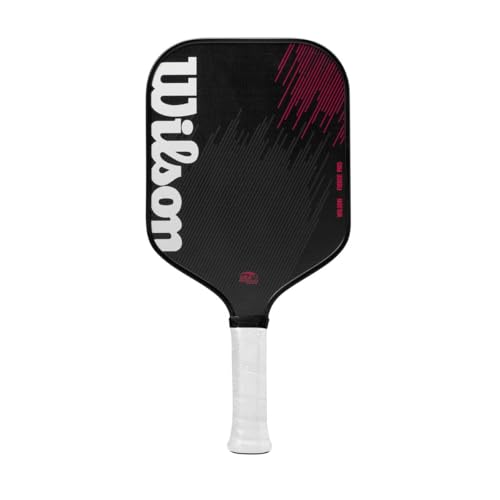
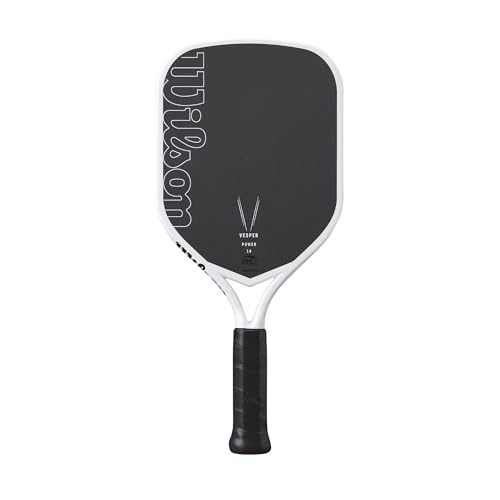
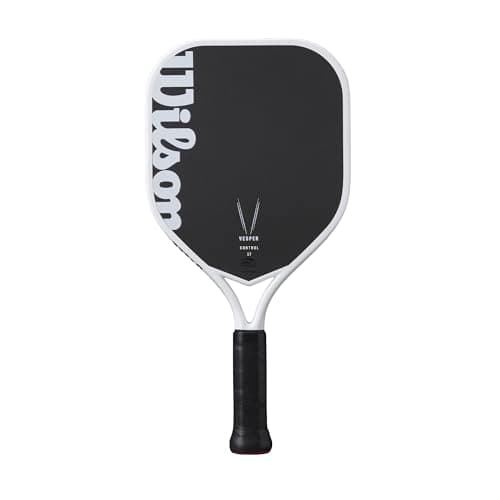
| Core | 17mm polypropylene honeycomb | 13mm polypropylene honeycomb | 14mm (.551 in) polypropylene honeycomb, 360CellX |
| Face | Raw carbon | Textured carbon fiber | Raw hybrid (fiberglass x carbon fiber) |
| Length x width | 16 x 7.75 in | 16 x 8 in (72 sq in head) | 16.5 x 7.5 in, elongated edgeless |
| Handle | 5 in | 5.2 in | 5.25 in |
| Grip circumference | 4 1/8 in | 4 1/4 in (medium) | 4 1/8 in (small) |
| Weight | 8.1 oz | 7.8 oz avg (7.6-8.0) | 8.1 oz avg (7.9-8.3) |
| Approval on the spec sheet | "Approved: USAP" | Not printed | "Approvals: USAP" |
| Published warranty | None | None | None |
Four rows do the work. The Vespers differ in core thickness, face material, shape and handle length — the Power is 3mm thinner, part fiberglass, half an inch longer and a quarter inch narrower, with a quarter inch more handle. Choosing between them is not choosing a feel setting; it is choosing a different paddle.
The handle row is the one that settles it for a lot of people. If you hit a two-handed backhand, 5.25 in is the figure you want and 5 in is not enough — the same argument that puts the Selkirk XL ahead of the standard model on our Vesper Control review. The grip row is the sleeper: both Vesper listings we link are published at 4 1/8 in, the small size, and only the cheapest paddle here ships at 4 1/4 in. If you have big hands, the Fierce Pro saves you an overgrip, and our grip size guide has the ruler test to check before you order.
A correction to our own page, made today. Our Vesper Control 17 review printed "Elongated" for the shape and "not published" for weight, handle and dimensions. Tennis Warehouse publishes all three, and 16 x 7.75 in is not an elongated paddle — it is close to a standard widebody. The review has been corrected rather than quietly left alone; the elongated paddle in this lineup is the Power 14, at 16.5 x 7.5 in.
The three criteria that actually decide it
1. Which half of the court you want to win
Core thickness is the lever. A thicker core flexes more on contact and holds the ball a fraction longer, which reads as touch and makes a mis-hit drop into the court; a thinner core is stiffer and poppier, giving you free pace and much less margin. Our core thickness guide sets out the whole range, and control vs power covers the choice itself.
Wilson gives you all three positions: 17mm is a step past the usual control thickness, 14mm is mainstream power, and 13mm is the thinnest it sells here. For a beginner the honest answer is almost always the thick one, because the soft game is what you have to learn and a forgiving paddle is what lets you learn it. That is why the Control 17 is rank 1.
2. Face material, and the one hybrid
Two of these are carbon and one is not quite. The Control 17 is raw carbon and the Fierce Pro is textured carbon fiber; the Power 14 is a raw hybrid of fiberglass and carbon, and that is a deliberate choice rather than cost-cutting. Fiberglass flexes more and gives free pop, which is exactly what a power paddle wants; carbon is stiffer and grips the ball for spin. See graphite vs fiberglass for the full comparison.
What none of them are is thermoformed. None of these spec sheets claims a thermoformed build or a foam-injected perimeter, which is where the premium end of the market has gone — our thermoformed paddles guide explains what that construction adds and what it costs. The SF versions are Wilson's answer to that, and they are double the money.
3. Weight — where Wilson gives you no choice at all
This is the quiet limitation of the whole range. The published averages are 8.1 oz, 7.8 oz and 8.1 oz: every Wilson here is mid-weight, and the spread across the entire lineup is about a third of an ounce. There is no light Wilson.
For most players that is fine — mid-weight is the sensible default and our paddle weight guide explains why. But if your shoulder or forearm is what gives out in hour two, the brand has nothing for you and you should be shopping at the light end instead; the lightest paddles we rank are on niupipo paddles, ranked and paddles for seniors. Note also that Pickleball Central publishes a range rather than a figure for two of the three — 7.6-8.0 oz and 7.9-8.3 oz — so the paddle that arrives can sit nearly half an ounce either side of the average, which is normal for the category and worth knowing if you are matching two paddles.
The three, ranked
1. Vesper Control 17 — the one to buy by default
Rank 1, and for a beginner it is not close. Seventeen millimeters of polypropylene honeycomb under a raw carbon face is the most forgiving combination Wilson sells, a 16 x 7.75 in body is close to a standard widebody so the sweet spot sits where your hand expects it, and the retailer spec sheet prints "Approved: USAP". It is the cheapest route to a mid-tier spec sheet in this lineup.
The honest cons: a 17mm control core is a deliberate decision to give up power, not a free upgrade, and if your instinct when a ball sits up is to end the point it will feel like it is swallowing your drives. The handle is the shortest of the three at 5 in, which rules it out for a two-handed backhand. And the grip is published at 4 1/8 in — the small size. Our full Wilson Vesper Control 17 review takes it apart against the two other carbon paddles at the same money.
2. Fierce Pro 13 — the cheapest Wilson, and the one that fits bigger hands
Second, and it is the value pick by a distance: a textured carbon fiber face on a 13mm polypropylene core at the lowest price Wilson charges, in the widest body here at a published 16 x 8 in and a 72 sq in head. Width is forgiveness, so this is a more generous face than the Control 17 despite the much thinner core. It is also the only one of the three whose listing ships at 4 1/4 in, which for a lot of players is the difference between a paddle that fits and a paddle plus an overgrip.
The honest cons, and there are three. A 13mm core is the thinnest Wilson sells here, so more of every impact reaches your hand — wrong paddle if your elbow is the problem, and our paddles for tennis elbow list exists for exactly that. The retailers disagree about it: most publish a 16 in length while the Amazon listing says 15.5 in, and at least one shop describes the face as graphite rather than carbon, so the specs are less settled than the Vespers'. And unlike both Vespers, the spec sheet we read does not print an approval status at all — that is an absence of information rather than a refusal, but if you need tournament legality, check the record before you buy.
3. Vesper Power 14 — the specialist, and the longest handle
Third, and the ranking is about fit for a beginner rather than quality. An elongated edgeless 16.5 x 7.5 in body on a 14mm core with a part-fiberglass face is a drive paddle, and it carries the longest published handle in the lineup at 5.25 in. If you came from tennis, hit a two-handed backhand, and your problem is that your current paddle will not put a ball away, this is the Wilson for you — and paddles for tennis players is the list that ranks that whole case.
The honest cons: an elongated shape moves the sweet spot up the face and away from the throat, which costs you forgiveness on exactly the mis-hits a new player makes most; the grip is published at 4 1/8 in, the small size; and it is the most expensive paddle here while being the least suitable for the reader this site is written for. Buy it second, not first.
What nobody publishes — including the warranty
Across all three paddles, no warranty is published by Wilson or by any retailer spec sheet we read. Pickleball Central offers a 30-day "love your paddle or send it back" returns policy on the Vesper Power, which is a returns policy and not a guarantee against a cracked core in month four. We mention this because Wilson's name invites an assumption — a century-old racquet company with a warranty department — and we could not find a published paddle warranty to back it. If a written commitment matters to you, JOOLA publishes a 12-month warranty on the paddles we cover and our JOOLA paddles, ranked page says so.
Two other gaps worth naming. Nobody publishes a core cell size or a deflection figure, so "360CellX" on the Power 14 is a technology name rather than a number. And on the approval question, the two Vesper spec sheets state USAP approval but we were unable to locate the matching entries in USA Pickleball's public database by search on the day we published — so what we have is the retailer's statement, not the registry record. That is a weaker claim than the one we can make for the niupipo MX-38, where the record is findable, and we would rather say so than round it up.
Which one, by player
- Your first serious paddle: Vesper Control 17. Thickest core, closest to a widebody, most forgiving thing Wilson sells.
- Spending as little as possible on a carbon face: Fierce Pro 13.
- Big hands: Fierce Pro 13, the only Wilson here published at 4 1/4 in.
- A two-handed backhand: Vesper Power 14, for the 5.25 in handle. Nothing else in the lineup gives you the room.
- You want to end points: Vesper Power 14, and read control vs power first to be sure that is really your game.
- A sore elbow or wrist: Vesper Control 17 of these three, but look at paddles for tennis elbow before you commit — thicker is better and Wilson stops at 17mm.
- A shoulder that tires early: none of these. Every Wilson here is mid-weight; shop the light end instead.
What we are not claiming
We have not played with these paddles, weighed one, or measured a core. Every figure above is published by Tennis Warehouse, Pickleball Central or the live Amazon listing for the exact ASIN our buy button points at, and we have said which, because a retailer spec sheet is a second-hand claim and should be read as one. Where the retailers contradict each other — the Fierce Pro's length, its face material — we have printed the disagreement rather than picking a winner. Our methodology sets out the approach in full.
The honest bottom line
Wilson makes good paddles and tells you almost nothing about them. The spec sheets that do exist describe a sensible, narrow range: three mid-weight carbon-faced paddles at 17mm, 14mm and 13mm, covering control, power and price, with no light option and no published warranty. For the reader this site is written for, the thick one is the answer, and it costs less than the thin one.
The real risk here is not buying a bad paddle — it is buying the wrong generation. Wilson is replacing both Vespers with StrikeFoam versions at roughly double the money, and the names differ by two letters. Match the model name in the listing to the model name in the review you are relying on, and this decision gets easy.