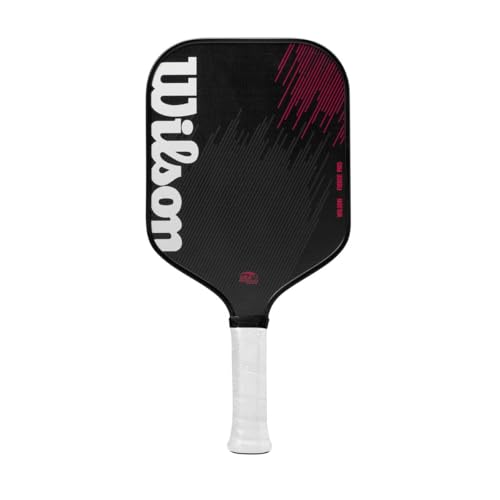
Buy the Wilson Fierce Pro 13mm — the only paddle at this core depth that publishes the complete set of numbers: a 13mm polypropylene honeycomb core, a textured carbon face, a 16 x 8 in body with a stated 72 sq in head, a 4 1/4 in medium grip and a 7.8 oz average weight. It is for a player who wants the extra pop of a thin core without shrinking the sweet spot to do it. The budget pick is the GAMMA Micron 5.0, a published 12mm core at the lowest honest price on this site, and the cheapest way to find out whether you like a firm paddle at all. Live prices and the date each was checked are in the Quick picks table below, where every row carries its own buy button.
Core depth is the distance between the two faces of the paddle, filled with a polymer honeycomb, and it is the single spec that decides how the ball leaves. Thicker is softer, calmer and easier to place; thinner is firmer and gives more free pop. The sport's default has drifted to 16mm because control is what wins games between good players. 13mm and below is the other end: the ball comes off faster for the same swing, which flatters a short swing and punishes a late one. Our core thickness guide works through the decision, and the 16mm list is the other half of this pair.
The five paddles here are not a tier, they are a span. The thickest is 13mm and the thinnest is 9.8mm — a 3.2mm spread, which at this end of the range is proportionally enormous. Dropping from 13mm to 10mm is roughly a quarter of the core gone. That changes the paddle far more than the same 3mm would at the thick end, which is why this page ranks by core depth and published spec completeness together rather than treating "thin" as one thing.
Who each pick is for, in one line:
- Wilson Fierce Pro 13mm — the full spec sheet at the thickest end of thin, on a 16 x 8 in widebody, so the pop does not cost you the sweet spot.
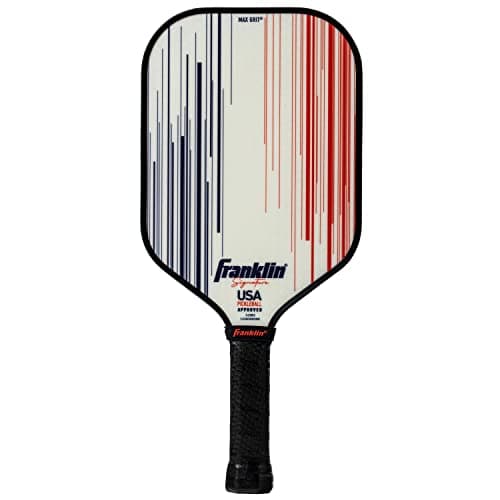
- Franklin Signature Pro 13mm — the same 13mm core behind a fiberglass face at a much lower price, with every number published, including a 4.25 in grip.
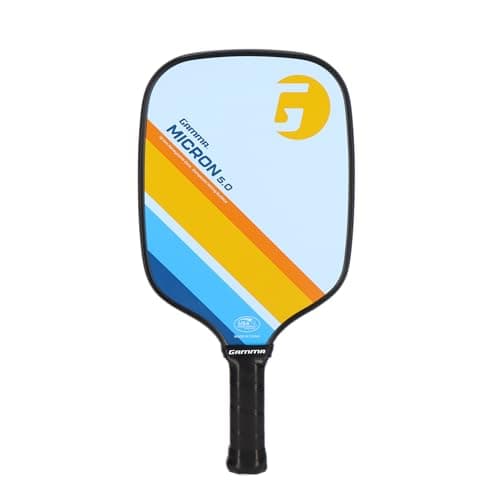
- GAMMA Micron 5.0 — the budget pick: a published 12mm core and 7.9 oz at the cheapest price on the site, with the smallest published grip here at 4-1/8 in.
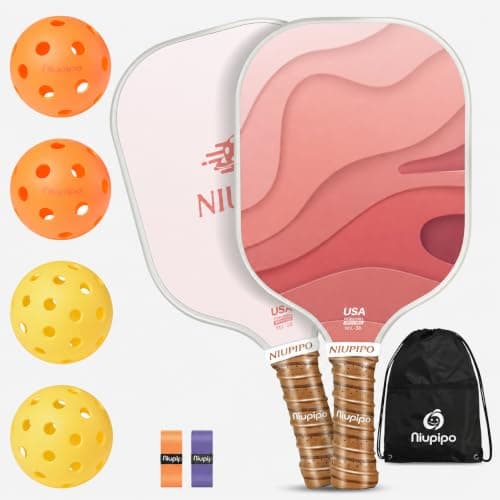
- niupipo Lightweight Fiberglass set — the thinnest published core on the page at 9.8mm, verified on the USA Pickleball approved list, in a two-paddle set.
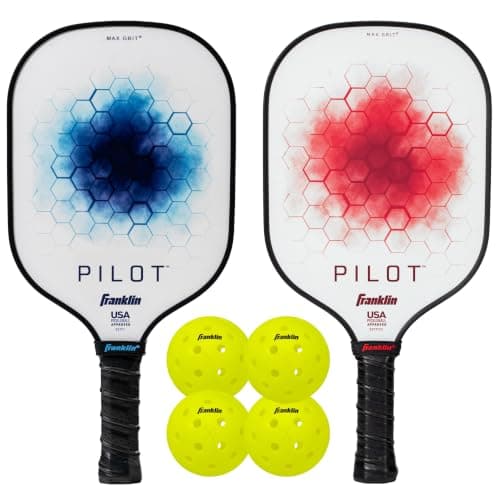
- Franklin Pilot set — a published 10mm core for two players, the cheapest route into the firm end, with four approved outdoor balls in the box.
One paddle that almost belongs here is deliberately out. The Wilson Vesper Power 14 is published at 14mm — one millimeter above the line, and one millimeter is not a reason to move a page's boundary after the fact. It is ranked on our fiberglass list instead. The TENVINA T700SC publishes a 13mm option as well, but it has had no buyable offer for several price checks running, and we do not rank a paddle you cannot currently buy. If that offer returns it goes straight in.
Our standing disclosure: we have not measured any of these paddles. Every core depth, dimension, grip circumference and weight below is published by a maker, a retailer or the USA Pickleball equipment list, all named in Sources. The scores are judgments from that research against our published rubric, weighted for a beginner.
03The buyer's guide
What each maker publishes at 13mm and below
This is the table that decides the page. Live prices with their check date sit in the Quick picks table above; every row there has its own buy button.
| Paddle | Core, as published | Face | Length x width | Grip circumference | Weight |
|---|
| Wilson Fierce Pro 13mm | 13mm polypropylene honeycomb | Textured carbon fiber | 16 x 8 in, 72 sq in head | 4 1/4 in (medium), on a 5.2 in handle | 7.8 oz average, 7.6-8.0 oz range |
| Franklin Signature Pro 13mm | 13mm polypropylene | MaxGrit fiberglass | 16.5 x 7.5 in | 4.25 in, on a 5.6 in handle | 7.5-8 oz |
| GAMMA Micron 5.0 | 12mm polypropylene | Composite | 16 x 8 in | 4-1/8 in honeycomb cushion grip | 7.9 oz |
| niupipo Lightweight Fiberglass (MX-38) | 9.8mm polypropylene honeycomb, 6mm cell | Glass fiber with a matte surface | 15.6 x 7.79 in | 4.25 in | 7.6-7.8 oz |
| Franklin Pilot set (2 paddles) | 10mm polypropylene | MaxGrit fiberglass | Not published | Not published | Not published |
Four of the five publish a core depth, a body size and a weight. The fifth publishes a core depth and a certification and nothing else you can hold a ruler to. Two independent sources agree on every figure for the Micron 5.0, which is why its numbers are here at all — a paddle this cheap is usually published by nobody.
What a thin core actually costs you
1. Margin on the soft game
The shot a thin core makes hardest is the one that decides rec games: a dink or a reset that has to land short and die. A firm face returns more of the energy you gave it, so a ball you meant to drop at the kitchen line travels further and sits up. If your current problem is that your dinks pop up and get attacked, a thinner paddle makes that worse, not better. That is the trade, in one sentence, and it is why our control list contains no paddle from this page.
2. Nothing about the weight
Core depth and paddle weight are independent, and the four paddles here that publish a weight land between 7.6 oz and 7.9 oz — all inside a third of an ounce. A thin paddle is not a light paddle; it is a firm paddle that happens to be built light in these five cases. If weight is the spec that decides whether your arm lasts a session, buy on the published ounces first and the millimeters second — our weight guide and lightweight list handle that decision directly.
3. Nothing about the shape, which varies more than the core does
Two of these publish a true 16 x 8 in widebody — the most forgiving shape USA Pickleball allows, since the rules cap length plus width at 24 in with a 17 in maximum length. One publishes an elongated 16.5 x 7.5 in body, which trades sweet spot for reach. One publishes a smaller 15.6 x 7.79 in body, and one publishes nothing. A 13mm label and a widebody is a forgiving paddle with pop; a 13mm label and an elongated body is a demanding paddle with pop. See elongated vs widebody if you have not made that call.
Who should buy at this end of the range
Three honest profiles. A tennis or table-tennis convert with a fast, compact swing, who wants the ball to leave quickly and already knows how to shorten up — our tennis-player list covers that case in more detail. A player whose drives keep landing short, because the thin core supplies the depth their swing does not. And anyone buying their first paddle on the smallest possible budget: the two cheapest things on this page are a 12mm paddle and a 10mm two-paddle set, and both are better ideas than a wood paddle. Everybody else — and especially anyone whose main goal is a calm, placeable ball — should be reading the 16mm list instead.
How we picked
Everyone in this category says they tested twenty paddles. We haven't tested these in a lab, and we say so. Instead we compile the published manufacturer specs, do the math, weight everything toward what a beginner actually needs — forgiveness, a large sweet spot, sane weight and a fair price — and score each product against a published rubric. The scores are judgments from that research, not measurements we took. Where a fact came from someone else, we name it in Sources.