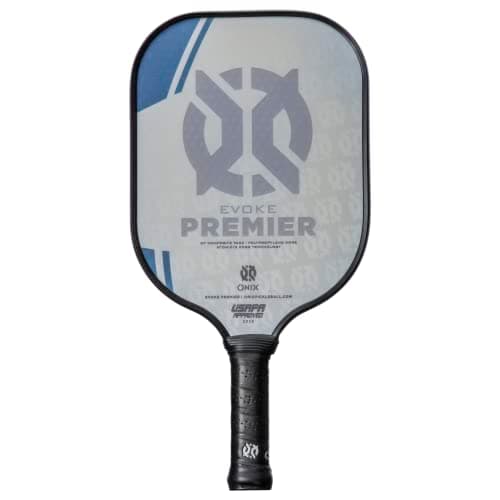
Buy the Onix Evoke Premier — a published DF Composite (fiberglass) face on a published 16 x 8 in body, which is the most forgiving shape the sport allows, and the only paddle on this page published in three separate weight bands so you can pick the one your arm can carry. It is for an improving beginner who wants a large sweet spot and does not want to learn on a stiff carbon face. The budget pick is the niupipo Lightweight Fiberglass set, which is two glass-faced paddles, four balls and a bag for less than any single paddle here, and the only one on the page with its own entry on the USA Pickleball approved list. Live prices and the date each was checked are in the Quick picks table below, where every row carries its own buy button.
Fiberglass — sold as glass fiber, composite, or under a brand name like Franklin's MaxGrit or Onix's DF Composite — is the material almost every first paddle is made of, and the one the enthusiast internet is rudest about. The physics are not complicated. Glass is less stiff than carbon, so a glass face flexes more on contact, holds the ball a fraction longer and throws it back with more free pop and less bite. That trade is bad for a 4.5-rated player chasing spin and terrible for anyone who wants to reset a ball softly into the kitchen. It is genuinely good for someone whose main problem is getting the ball over the net at all. Our graphite vs fiberglass explainer works through the mechanism; this page ranks what you can actually buy.
The ranking is not a ranking of the material, because the material is the one thing all six share. It is a ranking of how much of the rest of the paddle each maker publishes, because that is the only part a buyer can check. Franklin publishes the most of anyone on this site — body, handle length, grip circumference, weight band and core depth, on every model. Onix publishes a body and three weight ranges through its retailers. Wilson publishes a full retailer spec table. niupipo has a USA Pickleball equipment-list entry with a measured core depth. The Pilot set publishes a core depth and a certification and almost nothing else.
Who each pick is for, in one line:
- Onix Evoke Premier — the beginner who wants the biggest legal sweet spot: a published 16 x 8 in face, a 5 in handle and three published weight bands.
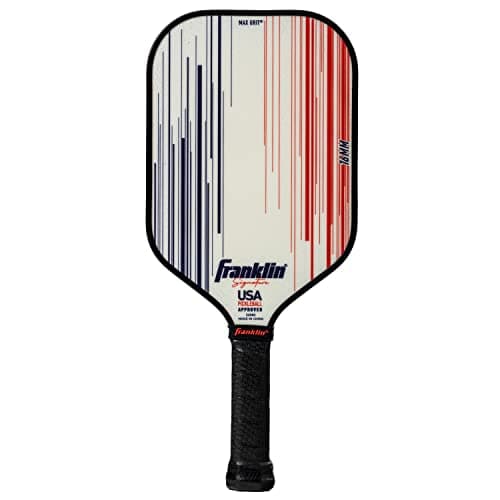
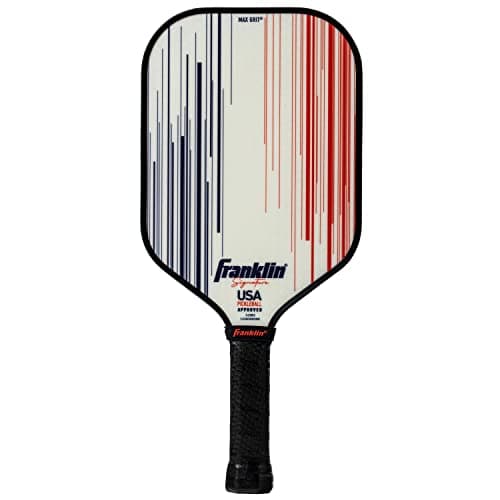
- Franklin Signature Series Pro — the player with large hands, because its published 4.5 in handle circumference is the biggest grip on this entire site.
- Franklin Signature Pro 13mm — the same paddle with a thinner core, for someone who wants free pop rather than a calm, controlled ball.
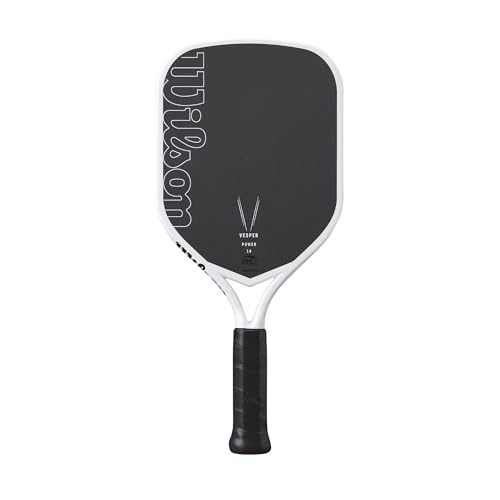
- Wilson Vesper Power 14 — the upgrade path: a raw hybrid fiberglass and carbon face on an elongated edgeless body, for a player who likes glass but wants reach.
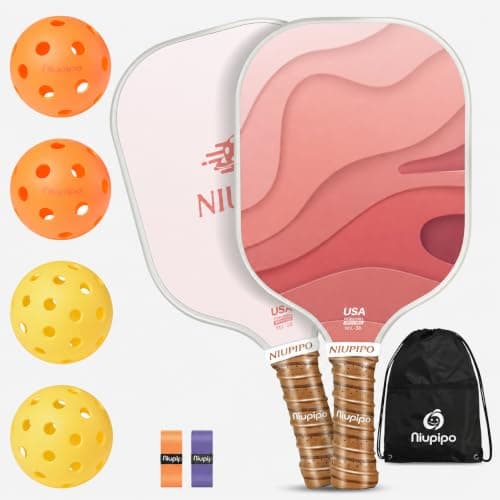
- niupipo Lightweight Fiberglass set — the budget pick: two paddles at 7.6 oz with a published 9.8mm core and a real approval record, for a wrist or shoulder that tires early.
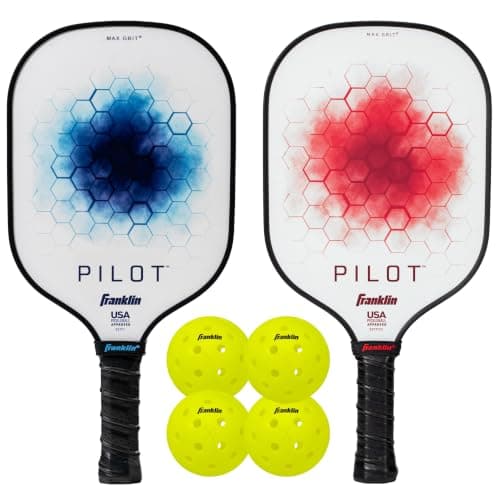
- Franklin Pilot set — two people starting at once, on the thinnest published core on the page, with four tournament-approved outdoor balls in the box.
Two paddles that belong on this list are not ranked on it. The HEAD Radical Elite and the GoSports GS1 both describe a fiberglass face on their listings, and both are ranked on our sub-$50 list on that basis — but neither publishes a core depth, a body size, a grip circumference or a weight anywhere we could cite, so there is nothing to rank them on here. A page built on published specs has to leave out the paddles with no published specs, and say so.
Our standing disclosure: we have not measured any of these paddles. Every face material, core depth, dimension, grip circumference and weight below is published by a maker, a retailer or the USA Pickleball equipment list, all named in Sources. The scores are judgments from that research against our published rubric, weighted for a beginner.
03The buyer's guide
What each maker publishes behind the glass
This is the table that decides the page. Live prices with their check date sit in the Quick picks table above; every row there has its own buy button.
| Paddle | Face, as published | Core | Length x width | Grip circumference | Weight |
|---|
| Onix Evoke Premier | DF Composite (fiberglass) | Polypropylene, thickness not published | 16 x 8 in | 4-1/8 in standard, 4 in light | 7.5-7.8 / 7.8-8.2 / 8.2-8.4 oz bands |
| Franklin Signature Series Pro | MaxGrit fiberglass | 16mm polypropylene | 16.5 x 7.5 in | 4.5 in, on a 5.6 in handle | 7.9-8.3 oz |
| Franklin Signature Pro 13mm | MaxGrit fiberglass | 13mm polypropylene | 16.5 x 7.5 in | 4.25 in, on a 5.6 in handle | 7.5-8 oz |
| Wilson Vesper Power 14 | Raw hybrid, fiberglass x carbon fiber | 14mm polypropylene honeycomb, 360CellX | 16.5 x 7.5 in (elongated, edgeless) | 4 1/8 in (small), on a 5.25 in handle | 8.1 oz average, 7.9-8.3 oz range |
| niupipo Lightweight Fiberglass (MX-38) | Glass fiber with a matte surface | 9.8mm polypropylene honeycomb, 6mm cell | 15.6 x 7.79 in | 4.25 in | 7.6-7.8 oz |
| Franklin Pilot set (2 paddles) | MaxGrit fiberglass | 10mm polypropylene | Not published | Not published | Not published |
Three of the six publish every number a buyer needs. One publishes a core depth and a certification and stops. We have ranked them broadly in that order, tempered by how forgiving the published shape is for a beginner — the same principle behind our widebody and 16mm rankings.
Three things the word "fiberglass" does not tell you
1. How thick the core is — and the spread here is enormous
Core depth does more to the feel of a paddle than the face material does, and the five paddles here that publish one span 9.8mm to 16mm — a range of more than 6mm, which is most of the usable range in the whole sport. A 16mm glass paddle (the Signature Series Pro) is a calm, controlled paddle with a soft face on it. A 9.8mm or 10mm glass paddle (the niupipo set, the Pilot set) is firm and poppy in both directions at once, which is the cheapest way to make a paddle feel powerful and the hardest version to control. Read the core thickness guide before you buy on the face alone, and see our 13mm and thinner list if firm and poppy is what you are after.
2. Whether the grip will fit your hand
The published grip circumferences on this page run from 4 in to 4.5 in — half an inch, which is several grip sizes in racquet-sport terms and far more than most buyers expect to find inside one material. The Franklin Signature Series Pro's published 4.5 in handle is the largest grip circumference published by any paddle on this site; the Onix Evoke Premier's light build is published at 4 in, the smallest. That is a real decision and the face material does not make it for you. Our grip size guide has the hand measurement, and the large-grip list ranks every paddle here that publishes 4 1/4 in or more.
3. What the approval claim is actually worth
Four of the six carry a USA Pickleball or USAPA certification claim on the listing, and one — the niupipo MX-38 — has a verifiable entry on the USA Pickleball approved paddle list with a measured core depth and a Pass result against its model number. Those are not the same thing. A claim is a sentence a seller wrote; an entry is a record you can look up. If you intend to play sanctioned events, check the exact model name and year against the approved paddle list, not the box.
When to buy carbon instead
Three honest triggers. Buy carbon if you already hit with topspin and can feel the ball sliding on a smooth face; if your main shot problem is that drives land long, because glass adds the pop that makes that worse; or if you have decided inside your first season that you want to play competitively, in which case paying once for a carbon paddle is cheaper than buying glass twice. Everybody else is better served by the cheaper material and the bigger sweet spot — which is also why several of the paddles here show up on our beginner-to-intermediate list in some form.