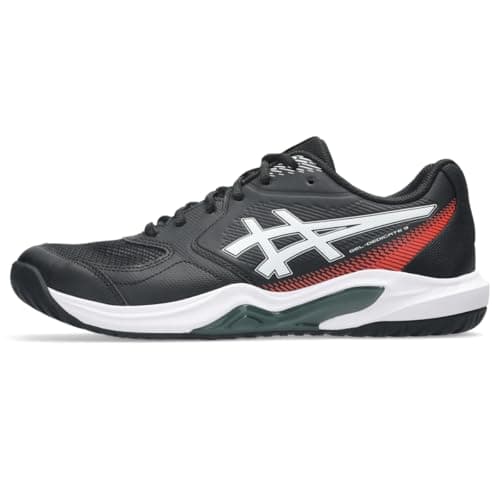
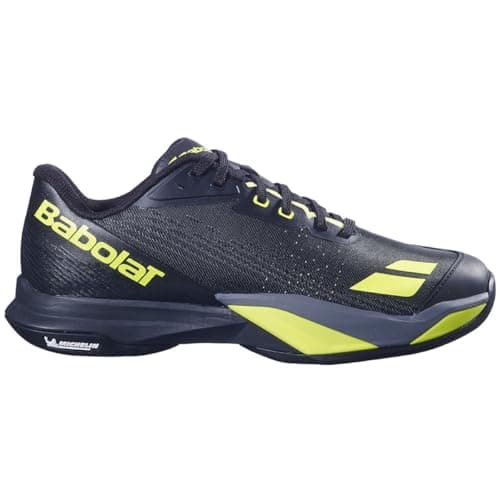
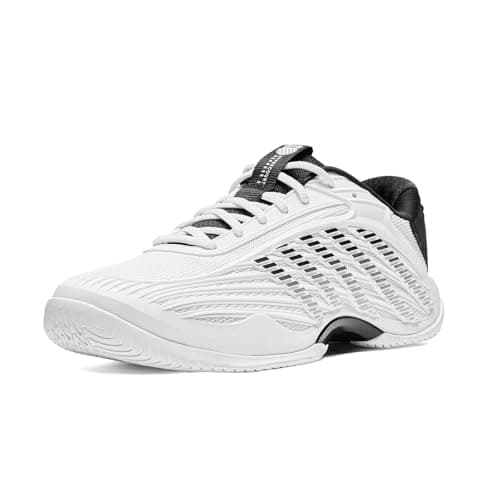
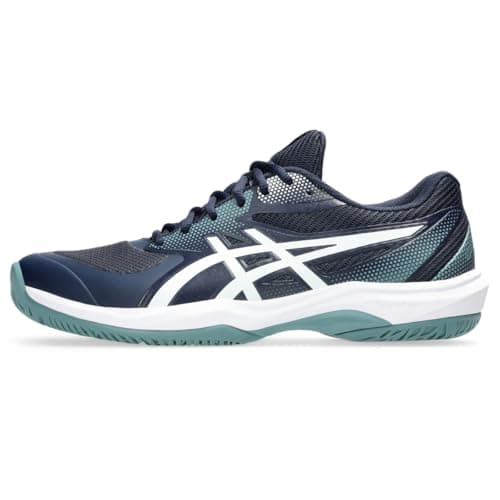
Buy the ASICS Game FF — a tennis shoe with a published AHAR high-abrasion rubber outsole in a two-piece split-sole design, with a midfoot shank sitting between the two pieces specifically to add stability on lateral movements. That is the exact load pickleball puts on a shoe, and it is the only shoe here whose maker also badges it for pickleball. It is for the outdoor player on asphalt or concrete who wants a tennis shoe's durability. The budget pick is the ASICS Gel-Dedicate 9, the same AHAR compound in a multi-directional pattern with a Trusstic midsole, at entry-tennis money. One warning that applies to all four and that we put above the table on purpose: none of these four publishes a non-marking claim, so none of them is a safe assumption for a booked indoor gym floor. Live prices and the date each was checked are in the Quick picks table below.
The question behind this page is one real buyers ask in exactly these words: can I just wear tennis shoes for pickleball? The short answer is yes, far more safely than running shoes, and for a reason that is purely mechanical. Pickleball and tennis both load a shoe sideways — split-steps, lateral pushes, sudden stops — while running shoes are built to load it forwards and are deliberately soft and tall under the heel, which is what rolls an ankle on a side-step. A tennis or all-court shoe is a court shoe. The differences that remain between tennis and pickleball shoes are smaller than the gap between either and a running shoe, and our pickleball vs tennis shoes comparison works through them one at a time.
What is left is a short list of real differences, and they are what this page ranks on. Pickleball has a smaller court, so pickleball-specific models tend to be built lower and lighter; pickleball is played on more surfaces, including indoor wood where a marking outsole will get you thrown off; and pickleball players drag the toe on serves and dinks less than tennis players do, so toe-drag protection matters a bit less. Three of these four are sold without any pickleball badge at all, which is a labelling fact, not a performance one.
Who each pick is for, in one line:
- ASICS Game FF — outdoor hard courts: AHAR outsole, split sole, a published midfoot shank for lateral stability, and the only pickleball badge here.
- ASICS Gel-Dedicate 9 — the budget pick: the same high-abrasion rubber in a multi-directional pattern with GEL cushioning, at the lowest price on the page.
- Babolat Jet Mach 4 All Court — the player who wants a light, snug all-court shoe and already knows their size in a narrow last.
- K-Swiss Hypercourt Express 3 — long days and wider feet: a published roomier forefoot and a no-break-in claim, from the brand with the deepest pickleball line.
Our standing disclosure: we have not tested any of these shoes. Every outsole compound, shank, midsole and fit claim below is published by a maker or a retailer named in Sources, and where retailer-published weights disagree with each other — as they do for the Gel-Dedicate 9 — we say so instead of picking one. ASICS product pages return 403 to us, so every ASICS figure here is retailer-published and labeled as such. The scores are judgments from that research against our published rubric.
03The buyer's guide
What each maker publishes
Live prices with their check date sit in the Quick picks table above; every row there has its own buy button.
| Shoe | Outsole, as published | Midfoot support | Midsole | Published weight | Non-marking claim? |
|---|
| ASICS Game FF (men's) | AHAR high-abrasion rubber, two-piece split sole | Mid-foot shank between the outsole pieces, for lateral movements | FLYTEFOAM with TRUSSTIC | About 10.7 oz, size 10.5 US (retailer) | None in the listing |
| ASICS Gel-Dedicate 9 (men's) | AHAR rubber, multi-directional pattern | Trusstic system | EVA with GEL cushioning | Retailer figures conflict; none quoted | None in the listing |
| Babolat Jet Mach 4 All Court | All-court outsole | Not published | Not published | Not published | None in the listing |
| K-Swiss Hypercourt Express 3 | Durable rubber outsole | Not published | Surgelite+ | Not published | None in the listing |
Only one of the four publishes an outsole compound, a named midfoot support and a weight. Two publish an outsole in words and nothing structural at all. That is why the Game FF leads the page: on a list where the axis is "will this survive lateral load on a hard court", the shoe that publishes the lateral-stability part wins. K-Swiss publishes no weight, stack height, drop or outsole warranty on any model in its pickleball collection, which we have recorded before on our K-Swiss page.
The non-marking problem, which is the real catch
This is the one thing that can make a tennis shoe the wrong purchase, and it has nothing to do with how it plays. Indoor venues — school gyms, church halls, community centers — almost always require non-marking soles, and not one of these four listings makes a non-marking claim. Tennis shoes are built for outdoor hard courts and clay, where nobody cares about scuffing, so the compound is chosen for abrasion resistance rather than for leaving the floor clean. If your pickleball is indoors on wood, buy from our indoor court list instead, where every pick publishes the claim. If your pickleball is outdoors on asphalt or a converted tennis court, the absence of a non-marking claim costs you nothing and the high-abrasion compound is actively an advantage — see best outdoor court shoes and indoor vs outdoor shoes.
Three more things to check before you buy a tennis shoe for pickleball
1. Weight, which tennis shoes carry more of
A tennis shoe is built to survive a two-hour match on an abrasive surface, and that armour weighs something. The one published figure on this page is about 10.7 oz for the Game FF in a men's 10.5, which is heavier than several dedicated pickleball models. Pickleball courts are a third the size of a tennis court, so you cover less ground and the weight penalty is smaller than it sounds — but if you play three or four games back to back it is real. Our lightweight list ranks the same field on that spec.
2. Width, which is where most returns come from
Two of these four publish something useful about fit: the Game FF is published as a snug medium width with a low arch and no break-in period, and the Hypercourt Express 3 is published with a roomier forefoot and no break-in period. The Babolat Jet is a snug-midfoot all-court shoe. If you know you need width, the Hypercourt is the pick here and it is not close. Our wide-feet list handles that case across the whole site.
3. Nobody here guarantees the outsole
An outsole warranty is a maker putting money behind a durability claim, and it is rare. None of these four publishes one — the K-Swiss collection publishes no outsole warranty on any model, and the Pickleball Central spec table for the K-Swiss Express Light prints "Outsole Guarantee: No" in those words. The only shoes on this site that publish an outsole warranty are the Selkirk CourtStrike Pro 3.0 pair, at six months, which is worth knowing if you are the player who wears through soles. They are ranked on our club and tournament list.
So should you buy a tennis shoe or a pickleball shoe?
A straight answer. If you play outdoors, buy whichever of the two fits your foot better and costs less, because the published differences do not favor either category — the Game FF is a tennis shoe with a pickleball badge and the compound was chosen for abrasion either way. If you play indoors, buy a shoe that publishes a non-marking claim, which rules out all four of these. And if you own tennis shoes already and are wondering whether to buy anything at all, keep playing in the tennis shoes and spend the money on a paddle instead — our do you need pickleball shoes page makes that case in full, and the honest version of it is that your tennis shoes are already the right class of shoe.