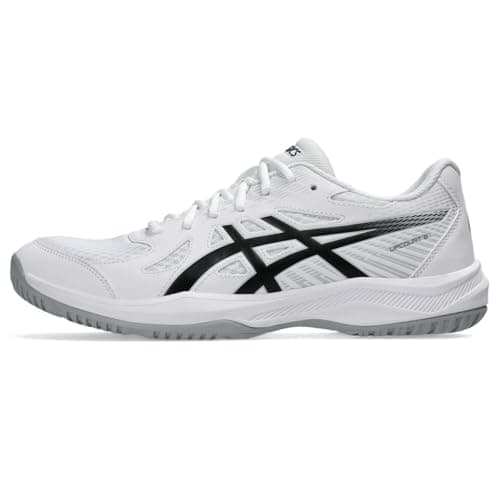
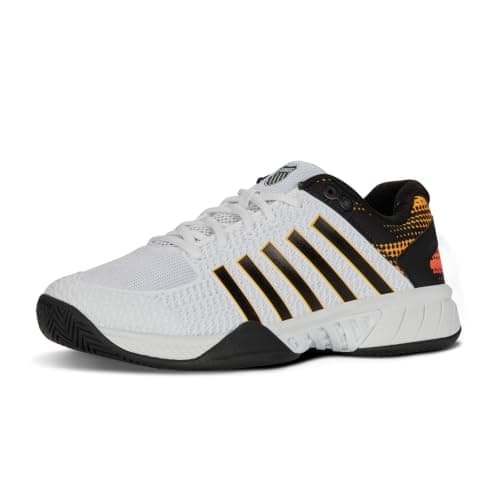
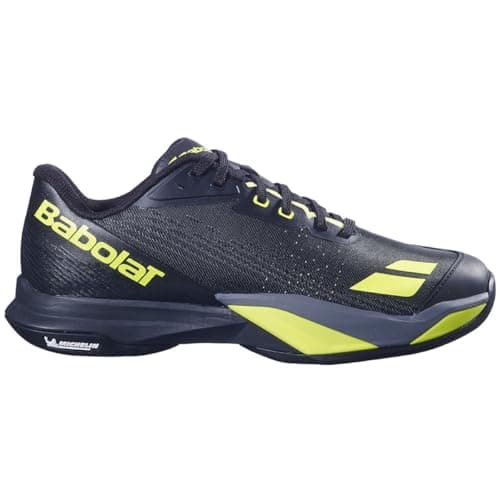
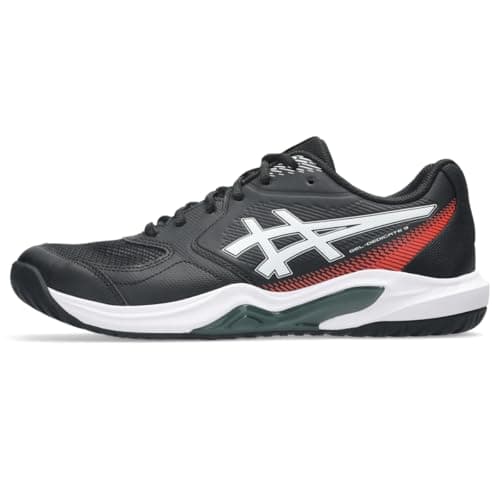
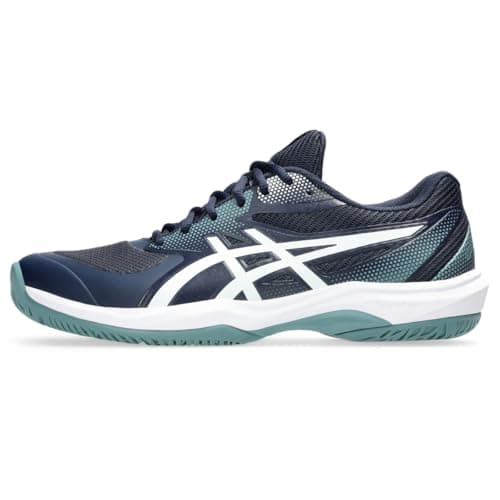
Buy the ASICS Game FF — at roughly 10.7 oz in a size 10.5 it carries the lightest published weight of any court shoe on this site, and its split outsole exists, in its retailer's words, "to cut down on weight". It is the shoe for a fast mover on an outdoor hard court. The budget pick is the ASICS Upcourt 6, which publishes no weight but is built light, costs the least here, and is the one to buy for a gym floor because it is explicitly non-marking. Live prices and the date they were checked are in the table below.
This page starts with a blackout. Not one shoe maker we cover publishes a weight for its pickleball shoes — not K-Swiss, not ASICS, not Babolat, not Skechers, not Fila, not New Balance. K-Swiss' own pickleball collection page lists seven models and prints no weight, stack height, drop or outsole warranty for any of them. Every figure on this page therefore comes from a retailer spec table, and we label it that way, because a retailer figure and a manufacturer figure are not the same kind of claim.
And here is the finding that should change how you shop: the K-Swiss Express Light — the shoe with "Light" in its name, and our top pick overall on the best pickleball shoes — is published by Pickleball Central at 12.7 oz, which is the heaviest published figure we have for any court shoe. The word on the box is a model name, not a measurement. It is still a very good shoe; it is not the light one.
Who each pick is for, in one line:
- ASICS Game FF (approx. 10.7 oz, size 10.5) — for a fast, aggressive mover on outdoor hard courts; the lightest published figure here, with a split sole built to save weight.
- ASICS Upcourt 6 (no published weight) — the budget pick, and the indoor choice: a gum non-marking outsole and a light build at the lowest price on the list.
- K-Swiss Express Light (12.7 oz) — for the player who wants the best-supported pickleball-specific shoe and will take the weight to get it.
- Babolat Jet Mach 4 All Court (no published weight) — for a snug, fast-feeling fit if you move like a tennis player.
- ASICS Gel-Dedicate 9 (published weights conflict) — for a cushioned all-court platform at entry-tennis money, if you want more foam under you.
Our standing disclosure: we have not weighed a single one of these shoes. We do not run a lab. Every figure below is published by a retailer we name in Sources, and the scores are judgments from that research against our published rubric.
03The buyer's guide
Every published weight we could find
Five shoes, three weights, and two makers who publish nothing. Live prices with their check date are in the Quick picks table above, and each row there carries its own price button.
| Shoe | Published weight | Who published it | Weight-saving construction | Non-marking? |
|---|
| ASICS Game FF | Approx. 10.7 oz (size 10.5 US) | Tennis Warehouse | Two-piece split-sole AHAR outsole "to cut down on weight", mid-foot shank between the pieces, open mesh upper | No non-marking claim on the listing |
| ASICS Gel-Dedicate 9 | Conflicting: 12.5 oz (men's 10.5), 354 g (10.5), 10.3 oz (women's 8.5) | Retailer listings, which disagree | EVA midsole with GEL cushioning; no weight-saving claim made | No non-marking claim on the listing |
| K-Swiss Express Light | 12.7 oz | Pickleball Central | None claimed; 180-degree plantar support chassis and Durawrap add material | Yes — non-marking sole |
| ASICS Upcourt 6 | Not published | — | Listed as a lightweight build; gum court outsole | Yes — non-marking sole |
| Babolat Jet Mach 4 All Court | Not published | — | Listed as a lightweight build with a snug midfoot | Yes — non-marking sole |
Read the last column with the first. The two lightest-published shoes here are the two that make no non-marking claim, because both are tennis shoes being sold into pickleball. If you play indoors on a wooden or coated floor, that matters more than an ounce: many venues will turn away a shoe that marks. Our best indoor court shoes list is the one to use for a gym, and what is a court shoe explains why the sole matters more than the badge.
What a lighter shoe does, and what it costs
It saves work, cumulatively
You take a few thousand steps in a session and almost all of them are short, lateral and repeated. Two ounces per foot is not much on one step and is a real difference across two hours. That is the honest case for light, and it is why tennis brands advertise split soles.
It usually means less material under and around you
Weight in a court shoe is support: a thicker outsole lasts longer on abrasive outdoor concrete, a shank resists twisting, an overlay stops the upper tearing when you drag your toe. The Express Light's 12.7 oz is partly its 180-degree plantar support chassis and its Durawrap toe protection. If you grind through outsoles, the heavier shoe is the cheaper shoe per month — see how long pickleball shoes last and shoes for club and tournament play.
And the weight nobody prints: yours, plus the surface
Outdoor concrete eats soles. Indoor wood does not. A light tennis-style shoe on an outdoor court will wear out faster than a heavier pickleball-specific one, which is the trade most buyers of "lightweight" shoes do not price in. Our indoor vs outdoor shoes page sets out which surface asks for which sole.
How to compare weights that are not published
Three things you can check yourself before buying, in order of usefulness:
- Look for a split or cut-out outsole. A two-piece sole with a shank between the halves is the most common way a maker removes weight without removing stability. ASICS says so outright on the Game FF.
- Look at the upper. Open mesh is lighter than synthetic leather; the more overlays and toe guards you count, the heavier and more durable the shoe.
- Check the retailer, not the brand. Tennis Warehouse and Pickleball Central publish weights for shoes whose makers do not. If neither has a figure, treat "lightweight" in the title as a claim and nothing more.
One thing not to do: buy down in size for a lighter shoe. Fit is the spec that decides whether you roll an ankle. How to choose pickleball shoes has the fit checks, and best shoes for wide feet covers what to do when a light shoe is also a narrow one — which, at 68mm heel and 77mm midsole on the Express Light, is a real pattern in this category.
How we picked
Everyone in this category says they tested twenty paddles. We haven't tested these in a lab, and we say so. Instead we compile the published manufacturer specs, do the math, weight everything toward what a beginner actually needs — forgiveness, a large sweet spot, sane weight and a fair price — and score each product against a published rubric. The scores are judgments from that research, not measurements we took. Where a fact came from someone else, we name it in Sources.