03The buyer's guide
The problem: the standard advice and a court shoe want opposite things
AAOS's published guidance on supportive shoes is specific. It says that "shoes with thick soles and extra cushioning can reduce pain with standing and walking", that "a cushioned shoe or insert reduces this tension and the microtrauma that occurs with every step", and that "pre-made or custom orthotics (shoe inserts) are also helpful". It also says to avoid shoes that do not provide support or are worn out.
Now read that against what a court shoe is. Court shoes are built deliberately low and firm, because a soft, tall midsole compresses unevenly and rolls under a hard sideways push — and sideways is the whole game. A thick, cushioned sole is the single worst thing you can put under a lateral plant, which is why running shoes turn ankles on a court and why our what is a court shoe page treats a low, firm platform as the defining feature rather than a compromise.
So the two goals genuinely conflict, and anyone selling you a "plantar fasciitis pickleball shoe" is papering over that. There is no thick-soled court shoe, and if there were, it would be a bad court shoe. What you can do instead is get the three things that are compatible with a court platform:
- An insole that comes out, so the cushioned insert or orthotic AAOS names can go in without jamming your foot against the upper.
- A published arch structure or shank, so the midfoot is held by the shoe rather than by your plantar fascia.
- A shoe you actually replace, because AAOS says in as many words to replace athletic shoes "before they wear out and no longer support your feet", and a dead court shoe is a flat plank.
That is the entire ranking logic on this page. It is also why the cheapest shoe wins: this is not a contest about who has the most foam.
The four criteria, in order
1. Does the insole come out?
This is first because it is the one criterion that directly delivers something AAOS names. A removable sockliner means you can put a pre-made cushioned insert or a custom orthotic into a shoe that is otherwise correctly low and firm — you get the court platform and the cushioning, in the only arrangement where they do not fight.
It is also the spec most often simply absent from a listing. Of the shoes we cover, Pickleball Central's spec table explicitly lists a removable insole for the men's K-Swiss Express Light, and Selkirk publishes a removable supercritical foam insole sitting over a separate die-cut insole board for the CourtStrike Pro 3.0 — which is the most detailed answer anyone in this category gives. One practical warning: an orthotic is thicker than the sockliner it replaces, so it eats volume. If you wear one, size and fit become a different problem, and best shoes for wide feet covers the room question.
2. Is there a published arch structure or shank?
A shank is a stiff plate under the midfoot. Its job in a court shoe is to stop the shoe folding when you push off sideways, and the side effect is that the midfoot is supported by a structure rather than by soft tissue. That is the mechanism worth paying for here, and it is a construction fact rather than a health claim.
Three of the four publish something. Pickleball Central's table names a 180-degree plantar support chassis and a Strobel board on the men's Express Light — that is the manufacturer's own term for the component, and it is the only place in this whole category where the word appears in a published spec. Selkirk publishes a TPU shank. New Balance publishes a nylon shank on the Coco Delray. K-Swiss publishes a Surgelite+ midsole on the Hypercourt and no shank.
Be clear about what a name buys you: none of these publish a stiffness figure, so "plantar support chassis" and "TPU shank" tell you a component exists, not how much it does. Our court shoe explainer has the twist test you can do in a shop, which is the only stiffness measurement available to a buyer.
3. Heel cushioning and the number nobody publishes
Plantar fasciitis is heel pain, and the figures that would tell you how a shoe treats a heel are stack height (how much material sits under it) and heel-to-toe drop (how much higher the heel sits than the forefoot, which changes how much the calf and fascia are stretched at each step).
Not one shoe we cover publishes either number. Not K-Swiss, not Selkirk, not ASICS, not New Balance, not Skechers. We have checked the brand pages and the retailer spec sheets and the figures are simply not there. That is the honest limit of this page, and anyone ranking court shoes by heel cushioning is working from feel reports rather than published data. What you can get instead, for a few dollars, is the thing AAOS actually names: it describes soft silicone heel pads as inexpensive and says they work by elevating and cushioning the heel. A heel pad in a shoe with a removable insole is a more direct answer than any shoe on this page.
4. Will you replace it before it dies?
AAOS says to replace athletic shoes before they wear out and no longer support your feet. A court shoe that has gone flat is exactly the "shoe that does not provide support" that guidance warns against, and the midsole gives up long before the upper looks finished — which is the trap our how long do pickleball shoes last page is about.
This criterion favors the cheap shoe, not the expensive one. Two pairs of an $80 shoe replaced on schedule supports your foot better than one pair of a $130 shoe worn into year three. The one shoe here that puts a number on its own lifespan is the CourtStrike Pro 3.0, with a published six-month outsole warranty — a wear commitment rather than a cushioning one, but the only published commitment in the category.
The four, ranked
1. K-Swiss Express Light — the only published plantar support structure
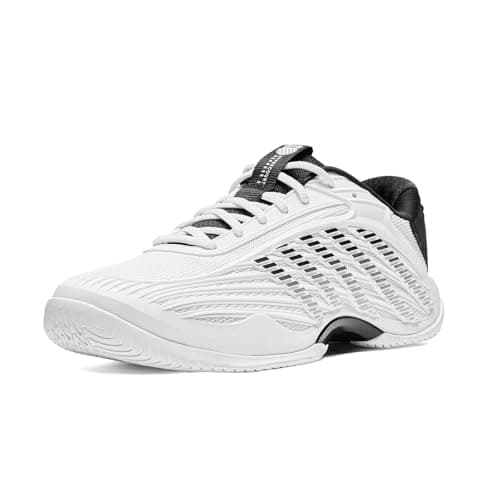
Rank 1, and on this page the reasoning is unusually concrete. Pickleball Central's spec table for the men's Express Light lists a 180-degree plantar support chassis, a Strobel board, a special EVA midsole and a removable insole. That is a named midfoot structure plus a sockliner you can swap for an insert — criteria one and two, both satisfied, on a purpose-built pickleball shoe with a court outsole, a lateral support cage, a non-marking sole and a toe drag guard. It is also the cheapest shoe on this page, which matters for criterion four. It is rank 1 on our main shoe list on separate merits.
The honest cons. The same table calls it slightly narrow in the heel (68mm) and midsole (77mm) with a standard toe box, and narrow is a problem once an orthotic is taking up volume — if your feet are wide, K-Swiss publishes a Wide and a 2E fitting for this family on its own site, but the ASIN our button points at is a standard width, so check before you order. It is firmer than a cushioned running shoe on first wear. There is no outsole warranty — that same table states "Outsole Guarantee: No". And there is the generation question covered on K-Swiss pickleball shoes, ranked: the brand sells an Express Light Pickleball 2 on its own site, so match the model name in the listing to whatever you read.
2. Selkirk CourtStrike Pro 3.0 — the deepest published structure, at a price
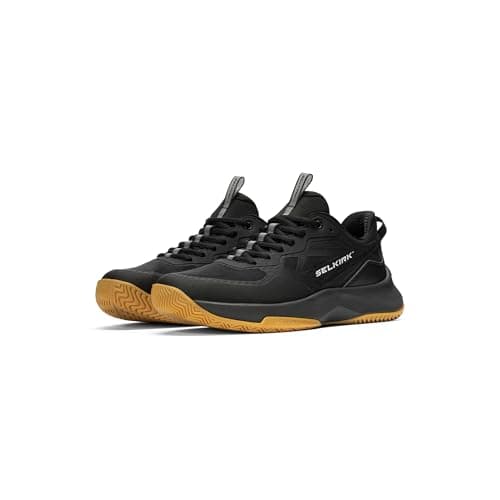
Second, and it would be first on construction alone. Selkirk publishes a removable supercritical foam insole over a lighter die-cut insole board, a TPU shank, an EVA PureFoam midsole, a stability outrigger on the outside of the forefoot, and a six-month outsole warranty. No other shoe in this category documents its midfoot and insole in that much detail, and the warranty is the only published answer anywhere to criterion four. The women's version is built on a gender-specific mold with the identical insole, shank, outrigger and warranty.
The honest cons, and they are real enough to cost it the top spot. It is priced at the top of this page, well over half again what the Express Light costs, which works against replacing it on schedule. Selkirk itself positions it as grip-and-stability rather than plush, so if what you want is cushioning underfoot this is not that shoe. And no weight, stack height, drop or width is published by Selkirk or by the retailer spec sheet, so "supercritical foam" is a material name without a density or a height behind it. Our CourtStrike Pro 3.0 review works through all of it.
3. New Balance Coco Delray — a nylon shank and published widths (women's)
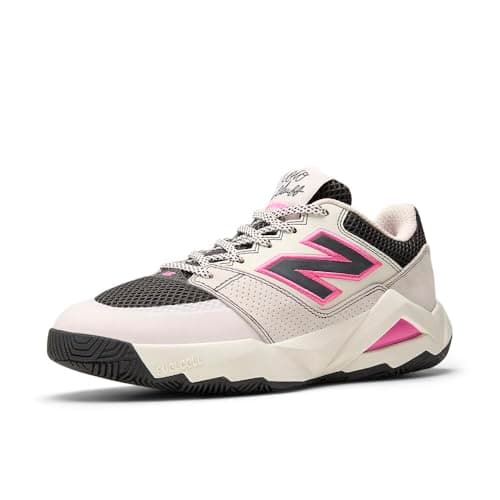
Third, and the only shoe on this page that answers the volume problem properly. New Balance publishes a nylon shank for midfoot stability, a FuelCell foam midsole — a cushioning platform borrowed from its running line rather than a token court foam — an Ndurance rubber court outsole, and, unusually for a court shoe, width options. If you wear an orthotic, a published width is worth more than any amount of marketing about support, because the insert needs somewhere to go.
The honest cons. It is a women's shoe and there is no men's equivalent in our registry, which rules it out for half of readers. It is priced near the top of the range for a beginner. It is heavier than a minimal court shoe, and the cushioned platform trades a little court feel for comfort — which is the right trade here but is still a trade. And like everything else, no stack height or drop is published. Our Coco Delray review has the detail, and best pickleball shoes for women ranks it against the field.
4. K-Swiss Hypercourt Express 3 — the room-for-an-insert option
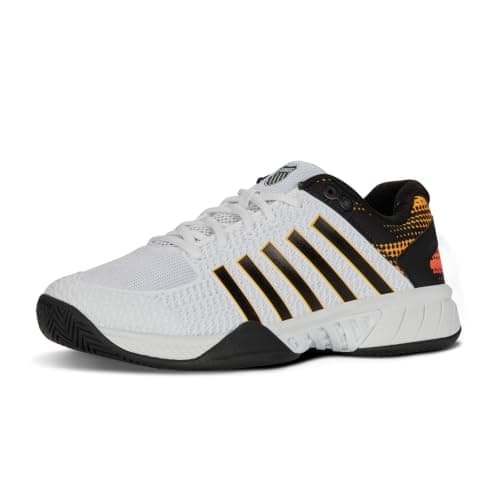
Fourth, and it earns its place on one specific published claim rather than on structure. K-Swiss states that the Hypercourt Express 3 has no break-in period and a roomier forefoot, over a Surgelite+ midsole and a durable rubber outsole. Room is the practical constraint when you are adding an orthotic or a heel pad to a shoe, and this is the roomiest platform we rank that is still a real hard-court shoe. No break-in also matters if your foot is already sore — a stiff new upper is not what a painful heel needs on day one.
The honest cons. A roomier forefoot is less locked-down than a narrow performance last, so if your feet are narrow this is a downgrade rather than a feature. It publishes no shank and no plantar support structure, so it is the weakest of the four on criterion two. It is a tennis shoe that its listing also names for pickleball, and it does not appear in K-Swiss's own published pickleball collection. It is also priced at the top of this page — it trades places with the Selkirk as prices move — while publishing the least structure of the four, and K-Swiss states no outsole guarantee on it.
What about the comfort picks?
The obvious question: if cushioning helps, why is the plushest shoe not rank 1? Because cushioning you cannot verify is not a spec. The Skechers Viper Court Pro 2.0 is the most comfortable court shoe we rank and tops most comfortable pickleball shoes, and it is a perfectly reasonable buy for a sore foot — but no published removable insole, no published shank, no stack height, and its own softer, higher-stack feel is less stable in a hard cut, which is the trade-off this page is trying to navigate rather than ignore. If comfort out of the box is your only criterion, buy it and put a heel pad in; we would rather tell you that than pretend a spec sheet exists where it does not.
The same goes for the one thing no shoe can fix. AAOS lists tight calf muscles as a risk factor and says that decreasing or stopping the activities that make the pain worse is the first step. Calf and foot stretching before you play costs nothing and is the intervention with the most published support behind it; our warm-up guide covers the routine. No shoe on this page is a substitute for that, and a shoe that lets you keep playing through worsening pain is not doing you a favor.
Which one, by player
- Most people, most budgets: K-Swiss Express Light, plus a cushioned insert or heel pad in place of the stock insole.
- You wear a custom orthotic: Express Light or CourtStrike Pro 3.0 — both publish a removable insole. Check the width.
- Wide feet or a bulky orthotic: Coco Delray if you are shopping women's (published widths), Hypercourt Express 3 otherwise (published roomier forefoot).
- On court three-plus times a week: CourtStrike Pro 3.0, for the TPU shank and the six-month outsole warranty. Club and tournament play ranks on that.
- Your heel hurts right now and you need no break-in: Hypercourt Express 3.
- It has hurt for more than a few weeks: see a clinician before you buy anything. A shoe is not a treatment.
What we are not claiming
We have not worn these shoes, worn through an outsole, or measured a stack height — nobody publishes one. We are not clinicians, we have not treated anybody, and nothing here is a diagnosis or a course of treatment. Every clinical statement on this page is a quote from AAOS's published patient guidance, named in Sources; every shoe claim is a published construction detail from the maker or from a retailer spec sheet, and we have said which. The ranking is a judgment about which published specs answer which piece of published guidance — not a claim that any of these shoes relieves pain. Our methodology sets out the approach in full.
The honest bottom line
There is no plantar fasciitis court shoe, because the thick cushioned sole the guidance asks for is the thing a court shoe cannot have. What exists is a small number of shoes that let you add the cushioning yourself and hold your midfoot while you do it, and the best of them is also the cheapest: the Express Light publishes a plantar support chassis and a removable insole for well under a hundred dollars, which leaves you money for the insert and for replacing the pair before it goes flat.
Spend the difference on two things rather than one shoe. A cushioned insert or a silicone heel pad does the job AAOS actually describes, and replacing your shoes on schedule does the job it warns about. Both are cheaper than upgrading the shoe, and both are better supported by what is published than any claim on a box.