Buy the Franklin Sports Pickleball Launcher — at five published speeds, four launch angles and a shuffle mode that varies them for you, it is the only machine under $1,000 that can run a genuine drill, and it is the right buy for a player who will practice weekly. The budget pick is the Posboll all-in-one launcher, the cheapest machine here that still feeds at a usable pace, for solo practice without a club budget. Every price on this page comes from our live price layer with the date it was checked — the stamp is under the table below and under every buy button.
Where the $1,000 line falls is the whole point of this page. Three of the five machines we recommend were under $1,000 at the last price check; the other two were at roughly $1,600 and $2,100. That is not a gentle slope, it is a cliff, and what sits on the far side of it is oscillation, spin control, a 110-to-125-ball hopper and a remote. Under $1,000 you get a thrower: it puts a ball in roughly the same place at roughly the same pace, over and over, and that is genuinely enough to groove a stroke.
Before any of it, the honest question — and it is the same one on our full machine list: should you buy one at all? A machine makes an existing stroke more consistent. It cannot teach you a stroke you do not have and it cannot teach you to read an opponent. In your first season, a lesson plus a $60 rebounder will do more for your game than any machine on this page, and we would say so even though the machine pays us far more.
Who each pick is for, in one line:
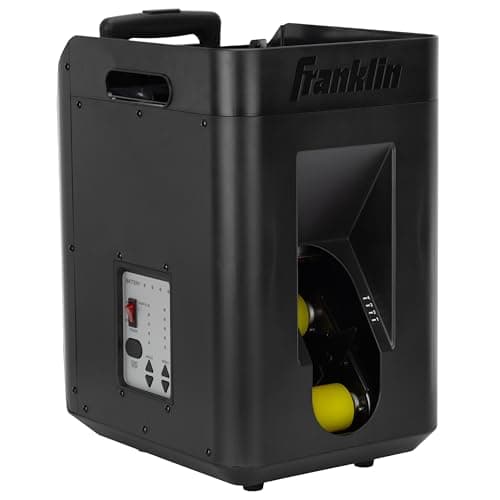
- Franklin Sports Pickleball Launcher — for the player who will drill weekly and wants real speed and angle control from a brand clubs recognize.
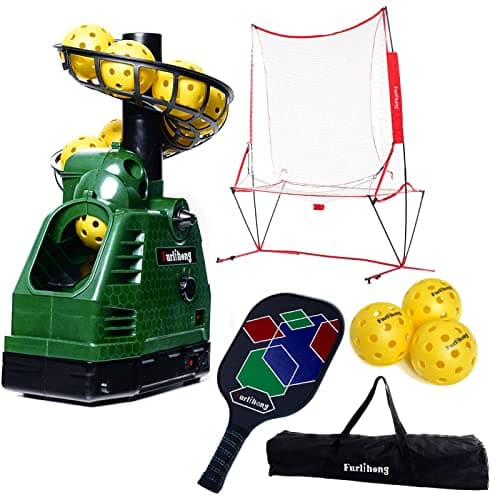
- Furlihong 680PBH starter kit — for finding out whether machine practice suits you at all: launcher, recycling net, paddle and balls in one box.
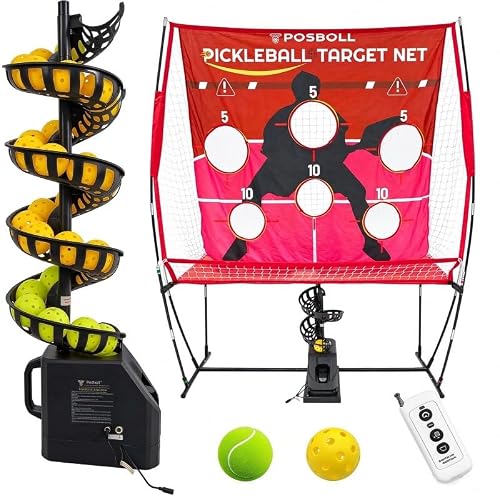
- Posboll all-in-one launcher — the budget pick: the cheapest machine here that feeds a usable rhythm, and small enough to carry from the car alone.
03The buyer's guide
What each machine publishes
Every figure below is published on the live listing we link, and the gaps are real gaps — none of the three publishes a hopper capacity or a ball-per-minute figure. Prices and the date they were checked are in the Quick picks table above, where each row carries its own price button.
| Machine | Speed control | Angle control | In the box | Power |
|---|
| Franklin Sports Pickleball Launcher | 5 speed levels | 4 angles, plus a shuffle mode that varies them automatically | Machine only | Rechargeable — battery NOT included (a Ryobi One+ 18V 6.0Ah, model PBP007, is the recommended pack) |
| Furlihong 680PBH starter kit | Not published | Not published | Launcher, ball recycling net, a paddle, 3 balls, carry bag | Not published |
| Posboll all-in-one launcher | Adjustable launch (levels not published) | Adjustable launch (angles not published) | Machine only | Battery powered |
The battery row is the one that catches people out: the Franklin is sold without the battery that runs it, and the pack its listing recommends is a cordless-tool battery you may or may not already own. Price that in before you compare it with the cheaper machines. If you already have Ryobi One+ tools in the garage, the Franklin is cheaper than it looks; if you do not, add the cost of a 6.0Ah pack and a charger.
What the sub-$1,000 tier does not do
Oscillation
Club machines sweep the ball side to side so you have to move to it. Nothing here does that beyond the Franklin's shuffle mode, which varies the angle rather than sweeping. Practice on these machines is a stationary drill: same spot, same shot, many repetitions. That is exactly right for grooving a third-shot drop and wrong for footwork.
Spin
None of the three publishes a spin setting. A ball with no spin behaves differently in the air and off your paddle than a topspin drive, so a machine at this price prepares you for a clean ball and not for a good opponent's ball.
A hopper you do not have to refill
No listing here publishes a capacity, and in this tier that is because the number is small. You will stop and reload often, which is why the Furlihong's recycling net is worth more than it sounds — catching your own returns halves the fetching. Buy balls in bulk for machine work: the arithmetic is on how many pickleballs you need, and a 60-pack is on best indoor balls.
What to drill with it, so it does not end up in the garage
The point of a thrower is reps on one shot until it stops being a decision. Three sessions that work, in order:
- Third-shot drops. Set a low speed and a flat angle, stand at the baseline and land fifty balls in the kitchen. This is the shot that wins recreational games — how to dink and the kitchen rule explain why.
- Resets from the transition zone. Medium speed, stand mid-court, absorb and drop. A control paddle makes this easier and the machine makes it repeatable.
- Drives, then recovery. Highest speed you can return cleanly, hit, then move forward to the kitchen line before the next ball. This is the one drill here that builds a habit rather than a stroke.
Our practice alone guide and the beginner drills cover the rest, and a portable net turns a driveway into somewhere you can actually aim.
When to spend more than $1,000 instead
One case, and it is a real one: if you will use a machine several times a week, budget machines wear under that duty and the money is better spent once. Oscillation, spin control, a 125-ball hopper and a 10-function remote start at about $1,600 in our list — the tier-by-tier comparison is on best pickleball ball machines. And if you are going the other way — less money, not more — the honest answer is a rebounder: training aids under $100 and rebounder vs wall.
How we picked
Everyone in this category says they tested twenty paddles. We haven't tested these in a lab, and we say so. Instead we compile the published manufacturer specs, do the math, weight everything toward what a beginner actually needs — forgiveness, a large sweet spot, sane weight and a fair price — and score each product against a published rubric. The scores are judgments from that research, not measurements we took. Where a fact came from someone else, we name it in Sources.