Buy the 4x6 ft mini rebounder — it is the only freestanding rebounder that came in under $100 at the last price check, it fits a single-car garage, and it is the right buy for anyone who wants to practice dinks and resets alone. The budget pick is the Swingball wall trainer at about a fifth of that: a tethered real ball, a paddle in the box, and a hundred swings in fifteen minutes. Every price on this page comes from our live price layer and carries the date it was checked — the stamp is under the table below and under every buy button.
The $100 line matters in this category, so here is exactly where it falls. Four of the six training aids we recommend were under $100 at the last price check; the full-size 4-angle rebounder sits just above it, and one 6x6 ft rebounder has had no buyable offer for three consecutive price checks. That means under $100 does not buy you a smaller version of the big rebounder — it buys you a smaller frame, or a target instead of a frame. Those are different tools, and the table below says which is which.
Before any of it, the honest question: do you need a training aid at all? If you can get to a court with a wall, you already have the best rebounder ever made and it is free — our rebounder vs wall page makes that case properly. Buy one of these when the wall is not available, when you want a kitchen line and a target to aim at, or when fifteen minutes in the garage is the only practice time you have.
Who each pick is for, in one line:
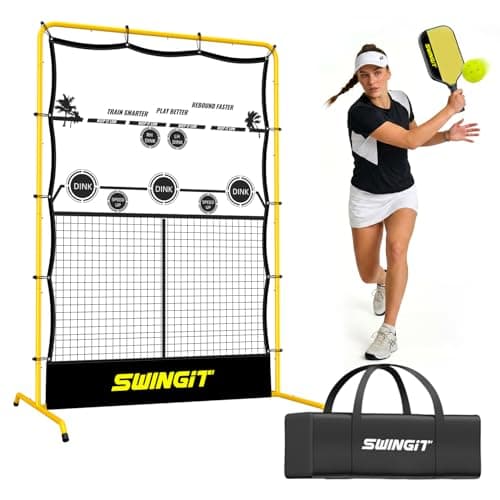
- 4x6 ft mini rebounder — for a garage or a short driveway: the cheapest freestanding rebound frame here, for dinks and resets.
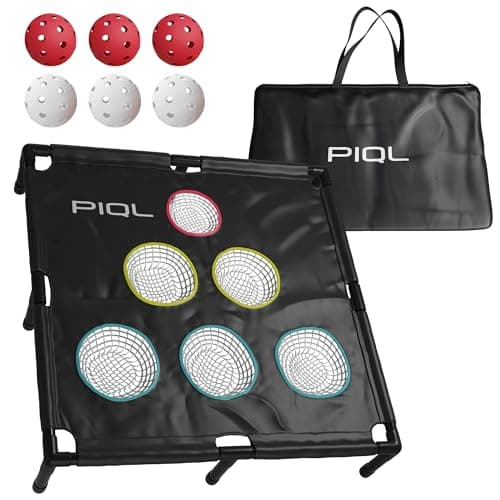
- PIQL Pro target net — for a player who needs a score: dink pads plus drive and drop targets, freestanding.
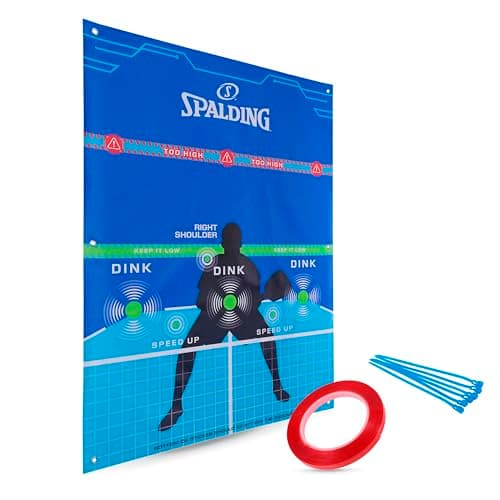
- Spalding training target — for cheap, portable accuracy work you can carry to a court in one hand.
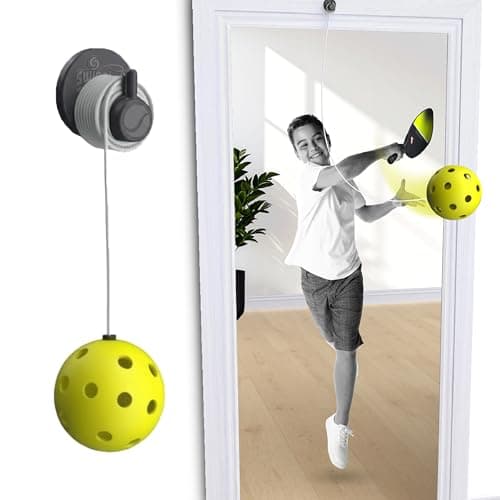
- Swingball wall trainer — the budget pick: a tethered real ball on a suction mount, for raw repetition on almost no money.
03The buyer's guide
What the under-$100 field looks like
Every figure below is published on the live listing we link. Prices and the date they were checked are in the Quick picks table above, where each row carries its own price button.
| Aid | What it is | Published size / contents | What it teaches | Space needed |
|---|
| 4x6 ft mini rebounder | Freestanding rebound net, metal frame | 4 x 6 ft frame, indoor or outdoor use | Dinks, resets, soft hands — the ball comes back | A single-car garage |
| PIQL Pro target net | Freestanding target net with a scoring system | Dink pad plus drive and drop targets | Accuracy, and a number to beat | Court or large driveway |
| Spalding training target | Portable target | Court-ready, lightweight | Placement on serves and drops | Anywhere you can stand back from it |
| Swingball wall trainer | Suction-mounted tethered ball | Real ball and a paddle in the box, ages 6+ | Swing repetition and contact point | A smooth wall and two meters |
Two of these return the ball to you and two do not, and that is the only distinction that matters when you are choosing. A rebounder or a tethered trainer gives you repetitions; a target gives you feedback. If your problem is "I have nobody to hit with", buy a returner. If it is "my drop lands anywhere", buy a target.
What each one cannot do
The mini rebounder: it is small
A 4 x 6 ft face is big enough for soft-game work and too small for drives — a hard, slightly off ball misses the net entirely and you spend the session fetching. If drives are what you want to practice, the full-size 4-angle rebounder just above the $100 line is the honest recommendation, and it is rank 1 on our full training aids list. There is no warranty path worth using on a generically branded frame, either; buy it as a consumable.
The tethered trainer: the ball flies wrong
A ball on a tether travels on an arc that no pickleball ever takes, so it builds a swing and a contact point rather than the ability to read a ball. It also needs a smooth, clean surface for the suction mount — rough brick or stucco will not hold it. At its price those are easy trade-offs to accept, and we would still rather you knew.
The targets: they do not feed you
A target makes practice measurable. It does not give you a single extra repetition, which is why a target plus a bucket of balls plus a court is the real setup — see how to practice pickleball alone and the beginner drills for what to actually do with them. Buy balls in bulk for this: our how many pickleballs do you need page does the arithmetic.
When to spend more than $100 instead
Two cases. If you want to drill drives and fast hands, the bigger 6x6-class rebounder with adjustable angles is a materially better tool and it costs just over this band — the comparison is on best pickleball training aids. If you want to feed yourself a hundred identical balls at a chosen pace, no rebounder does that and you are looking at a machine; the cheapest honest entry point is on ball machines under $1,000, and the full tier-by-tier view is best ball machines.
And one case for spending nothing: a wall. If there is a practice wall at your courts, use it first for a month. Our rebounder vs wall page is the argument in full, and we make it even though a wall pays us nothing.
How we picked
Everyone in this category says they tested twenty paddles. We haven't tested these in a lab, and we say so. Instead we compile the published manufacturer specs, do the math, weight everything toward what a beginner actually needs — forgiveness, a large sweet spot, sane weight and a fair price — and score each product against a published rubric. The scores are judgments from that research, not measurements we took. Where a fact came from someone else, we name it in Sources.