Buy the PIQL Pro Pickleball Target Net — a freestanding target with a published scoring system, a dink pad and separate drive and drop targets, which is the only aid under $50 that turns practice into a number you can beat next week. It is for the player who will actually do solo work and needs it to feel like a game. The budget pick is the Swingball Wall Trainer Set, a suction wall trainer that ships with a real ball and paddle, which is the cheapest way to hit a ball indoors with no partner and no court. Live prices and the date each was checked are in the Quick picks table below.
The most useful thing this page can tell you is what is not on it. There is no rebounder under $50 on this site. The cheapest — a 4 x 6 ft metal-framed mini rebounder — sits just above the line, and the full-size steel one is almost twice it. That is not a gap in our research, it is the shape of the category: a rebounder is a frame and a tensioned net, and frames cost money. So at this budget the honest field is targets and wall trainers, which do a different job: they tell you where the ball went instead of sending it back.
That difference matters more than the price does. A rebounder gives you repetitions. A target gives you feedback. If your problem is that you have nobody to hit with, you want repetitions and you should save up — our training aids under $100 page is where the rebounders start. If your problem is that you hit plenty of balls at a club and none of them land where you intended, a target under $50 is the better purchase of the two, and the cheaper one.
What each pick is for, in one line:
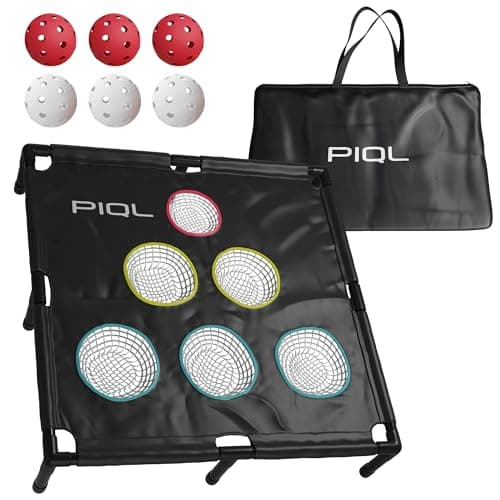
- PIQL Pro Target Net — making accuracy competitive: a published scoring system with a dink pad and drive and drop targets, freestanding.
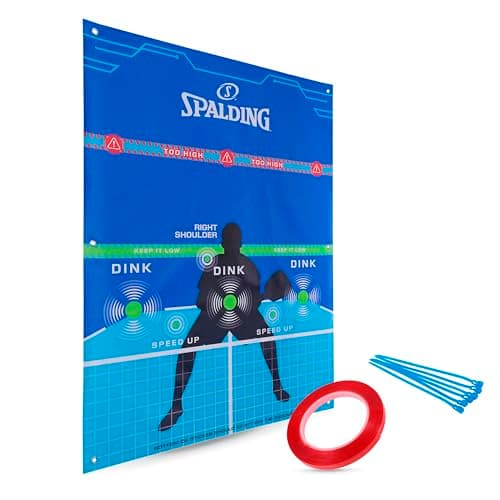
- Spalding Accuracy Target — cheap, portable aim work: a lightweight court-ready target you can throw in a bag with the balls.
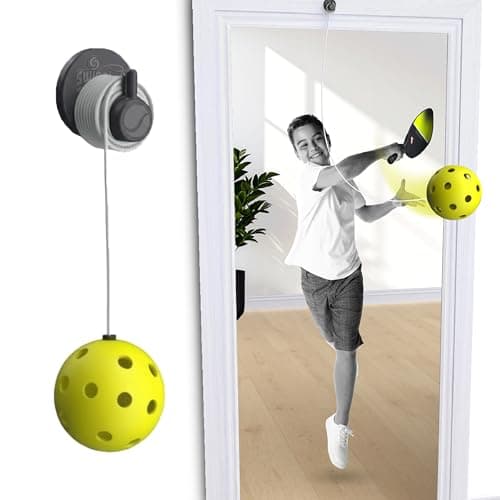
- Swingball Wall Trainer Set — the budget pick: a suction wall trainer with a real ball and paddle included, for a garage, a hallway or a fence.
Our standing disclosure: we have not tested any of these aids. Every target, pad, frame and inclusion claim below is published by the maker on its own listing and named in Sources. None of the three publishes a dimension, a weight or a material specification, which the table records as "not published" rather than filling in.
03The buyer's guide
What each one publishes, and what $50 buys
Live prices with their check date sit in the Quick picks table above, where every row carries its own buy button.
| Aid | Type | Published features | Returns the ball? | Under $50? |
|---|
| PIQL Pro Target Net | Scoring target | Target scoring system, dink pad, drive and drop targets, freestanding | No | Yes |
| Spalding Accuracy Target | Portable target | Portable, court-ready, lightweight | No | Yes |
| Swingball Wall Trainer Set | Suction wall trainer | Suction mount, real ball and paddle included, indoor or outdoor, ages 6+ | Yes, on a tether | Yes |
| Mini Pickleball Rebounder Net | Rebounder | 4 x 6 ft metal frame, quick setup, indoor or outdoor | Yes | No — just above the line |
| A11N SPORTS Rebounder | Rebounder | 4-angle adjustment, 360-degree wheels, steel frame, marked kitchen zone | Yes | No |
| G-SQAURED 2-in-1 Rebounder | Rebounder and game net | 6 x 6 ft frame, heavy-duty iron frame, tensioned rope system | Yes | No buyable offer |
Everything under $50 in this category is a target or a tether. Everything that returns a free ball is above it. That is the single most useful sentence on this page, and it is why we have not tried to sell a sub-$50 rebounder that does not exist here.
What to do with each one
The scoring target: dinks, with a number attached
The shot that decides rec games is the dink, and the reason people are bad at it is that nobody counts. A target with a published dink pad and separate drive and drop zones fixes that: you set a number of balls, you count how many land in the pad, and next week you try to beat it. Ten minutes of counted dinks beats half an hour of uncounted ones, and the counting is the entire product. Our how to dink page covers the technique the target measures, and drills for beginners has the programme.
The portable target: third-shot drops, anywhere
The cheaper target is lighter and simpler, and its real advantage is that it goes in the bag with the balls. Put it at the kitchen line, stand at the baseline, and hit drops at it. The third shot is the one shot in pickleball where a target is more useful than a partner, because a partner returns a bad drop and lets you forget you hit one. A target just sits there not being hit.
The wall trainer: hands and reflexes, in a garage
A tethered suction trainer is the cheapest thing on this page and the one most likely to be used, because it needs no court, no net and about six feet of floor. It will not teach you depth control — the tether decides where the ball goes — but it will give you contact repetitions and hand speed in a garage in winter, which is more than nothing and considerably more than a paddle in a cupboard. If you have a flat wall and a tolerant neighbour you can get much of the same benefit for free, and we make that argument properly in rebounder vs a wall.
When to spend more instead
Three triggers for skipping this page and saving up. One: you have no hitting partner at all, in which case a rebounder that returns the ball is worth the wait, and the cheapest one is only a little above this line. Two: you want to drill the same shot fifty times in a row, which only a rebounder or a machine makes possible — machines under $1,000 is where that budget starts, and it is a long way up. Three: your practice space is a driveway rather than a garage, where a 4 x 6 ft or larger frame is usable and a suction mount is not. Otherwise, buy the target, count your dinks, and put the difference toward a better paddle. Our how to practice alone page is the drill-by-drill version of all of this.
How we picked
Everyone in this category says they tested twenty paddles. We haven't tested these in a lab, and we say so. Instead we compile the published manufacturer specs, do the math, weight everything toward what a beginner actually needs — forgiveness, a large sweet spot, sane weight and a fair price — and score each product against a published rubric. The scores are judgments from that research, not measurements we took. Where a fact came from someone else, we name it in Sources.